Petri Cristian, Campa Francesco, Holway Francis, Pengue Luca, Arrones Luis Suarez
Section of Physical Education and Sport, Department of Sport and Informatics, Pablo de Olavide University, 41013 Sevilla, Spain.
A.C.F. Fiorentina S.r.l., 50137 Florence, Italy.
Sports (Basel). 2024 Feb 23;12(3):69. doi: 10.3390/sports12030069.
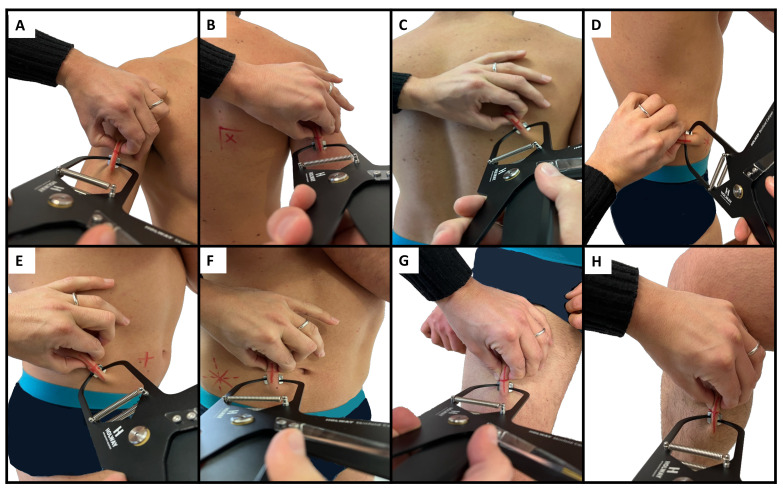
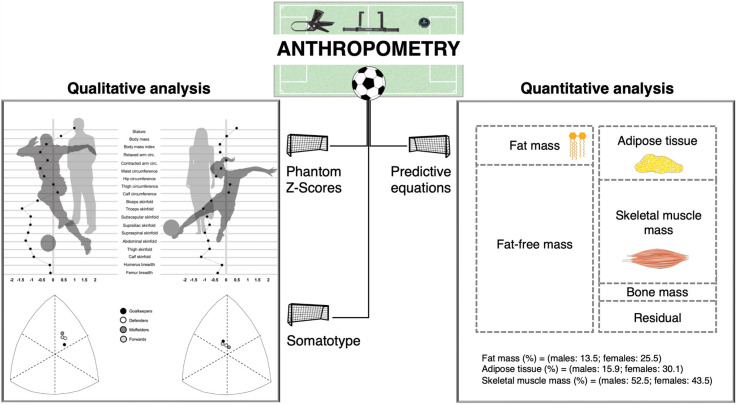
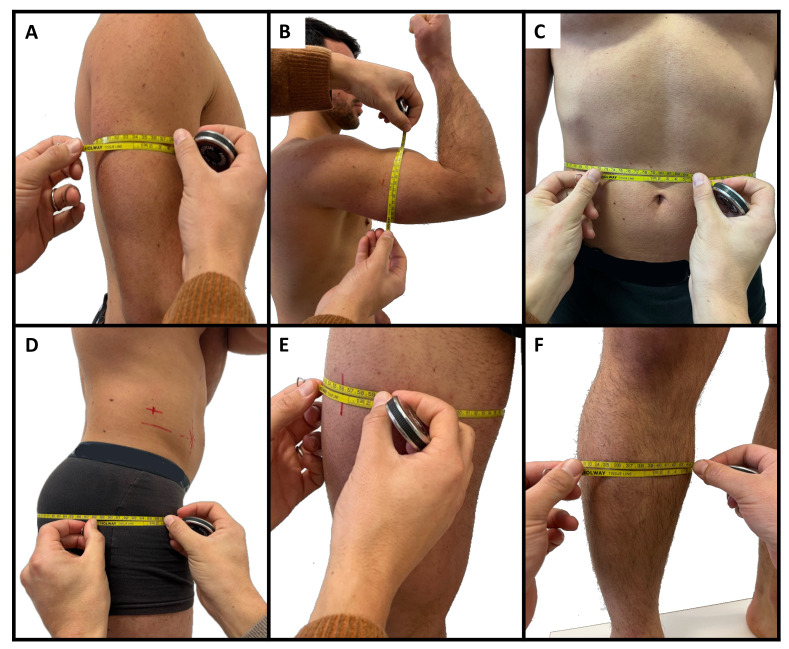
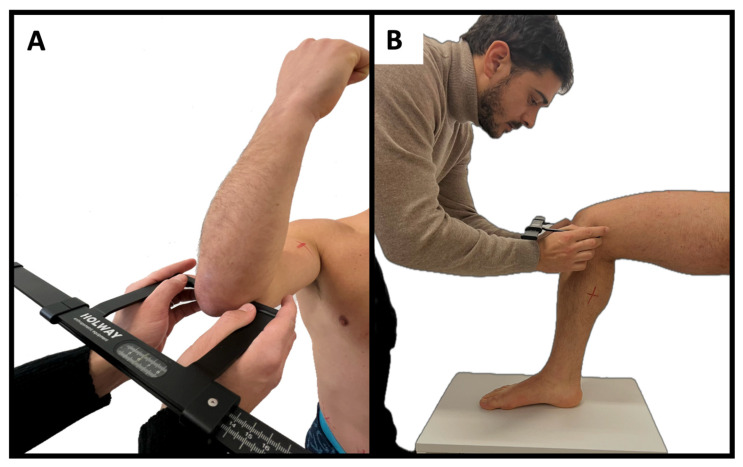
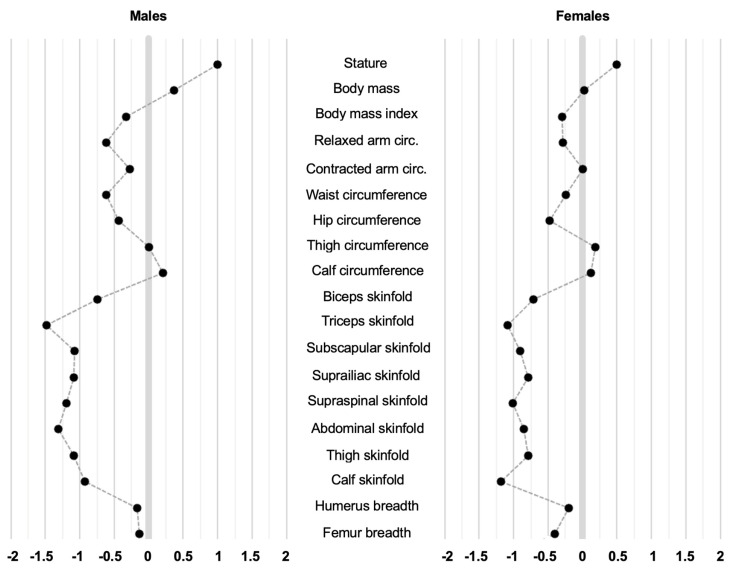
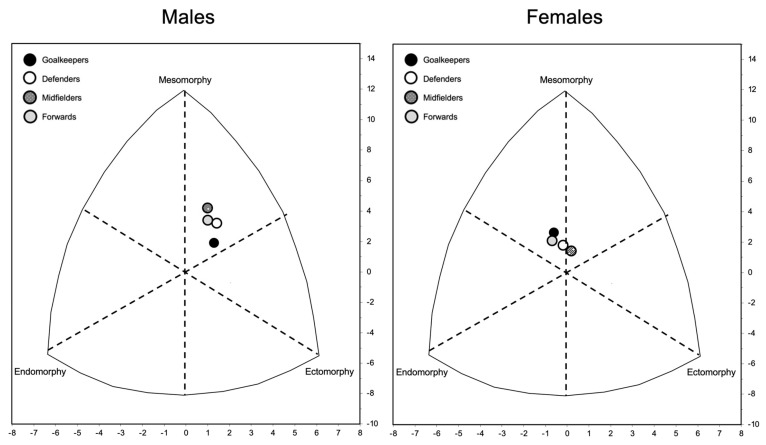
This study aimed to provide reference values for anthropometric characteristics of elite male and female soccer players, considering a group of individuals from the general population as controls. The anthropometric profiles of 357 elite soccer players [184 males (age 24.3 ± 4.3 y) and 173 females (age 25.2 ± 5.1 y)] participating in the first Italian league (Serie A) and 363 subjects from the general population [188 males (age 24.2 ± 4.8 y) and 175 females (age 25.0 ± 5.1 y)] were measured according to the guidelines of the International Society for the Advancement of Kinanthropometry (ISAK). Reference percentiles for stature, body mass, circumferences, eight skinfolds (biceps, triceps, subscapular, suprailiac, supraspinal, abdominal, front thigh, and calf), breadths, and somatotype were calculated and stratified by player position and sex. No difference ( > 0.05) was found in age between the two groups. Soccer players showed lower values for the sum of the eight ISAK skinfolds than individuals from the general population of the same sex. This suggests lower adipose tissue, as indicated by a lower endomorphic component. The somatotype was endomorphic mesomorph and mesomorphic endomorph for the male and female individuals from the general population, respectively. The male soccer players were ectomorphic mesomorphs, while the females were balanced mesomorphs, defining a sport-specific morphology. This study provides sex- and role-specific anthropometric standards for elite soccer players. Raw anthropometric reference values may be useful for evaluating body composition without using any predictive equations or assumptions.
本研究旨在为精英男女足球运动员的人体测量特征提供参考值,将一组普通人群个体作为对照。按照国际人体测量学促进协会(ISAK)的指导方针,对357名参加意大利甲级联赛的精英足球运动员[184名男性(年龄24.3±4.3岁)和173名女性(年龄25.2±5.1岁)]以及363名普通人群个体[188名男性(年龄24.2±4.8岁)和175名女性(年龄25.0±5.1岁)]进行了人体测量。计算了身高、体重、周长、八个皮褶厚度(肱二头肌、肱三头肌、肩胛下、髂上、脊柱上、腹部、大腿前侧和小腿)、宽度和体型的参考百分位数,并按球员位置和性别进行分层。两组之间的年龄无差异(>0.05)。足球运动员的八个ISAK皮褶厚度总和低于同性别的普通人群个体。这表明脂肪组织较少,如较低的内胚层成分所示。普通人群中的男性和女性个体的体型分别为内胚层-中胚层和中胚层-内胚层。男性足球运动员为外胚层-中胚层体型,而女性为均衡中胚层体型,这定义了一种特定于运动项目的形态。本研究为精英足球运动员提供了性别和角色特定的人体测量标准。原始人体测量参考值可能有助于在不使用任何预测方程或假设的情况下评估身体成分。