Norwich Medical School, Faculty of Medicine and Health Sciences, University of East Anglia, Norwich, UK.
Activ'Inside, Beychac et Caillau, France.
Gut Microbes. 2024 Jan-Dec;16(1):2363011. doi: 10.1080/19490976.2024.2363011. Epub 2024 Jun 4.
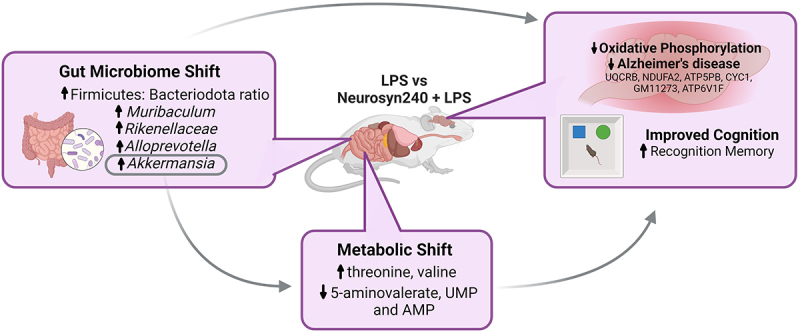
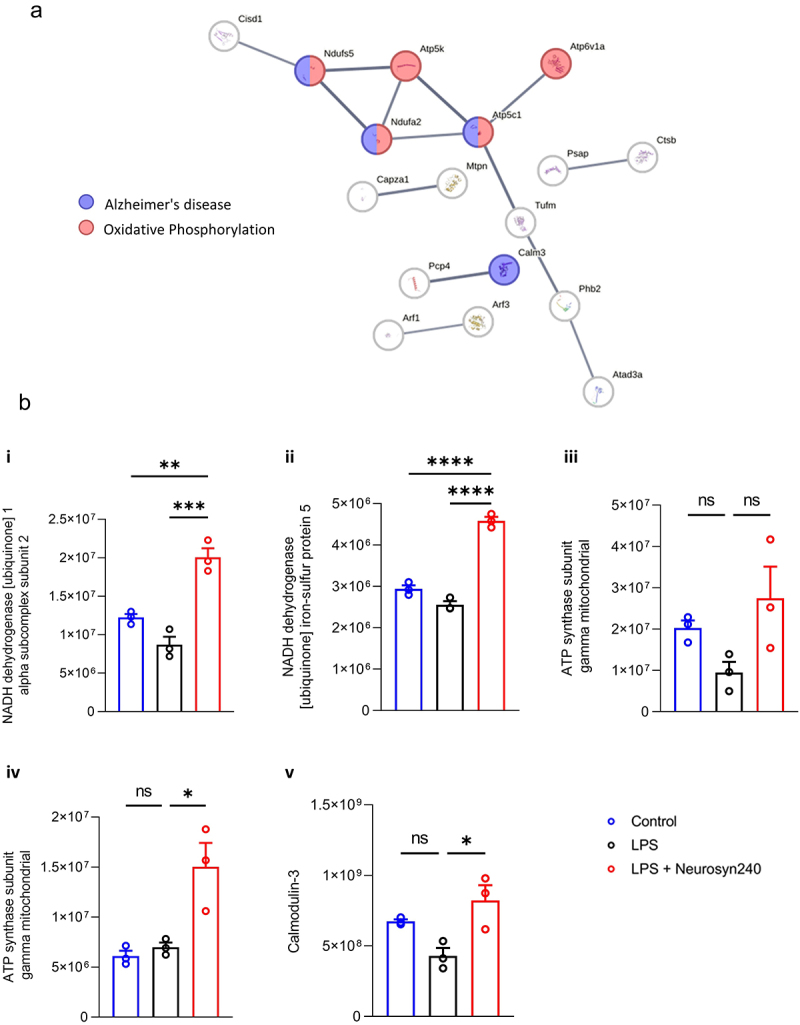
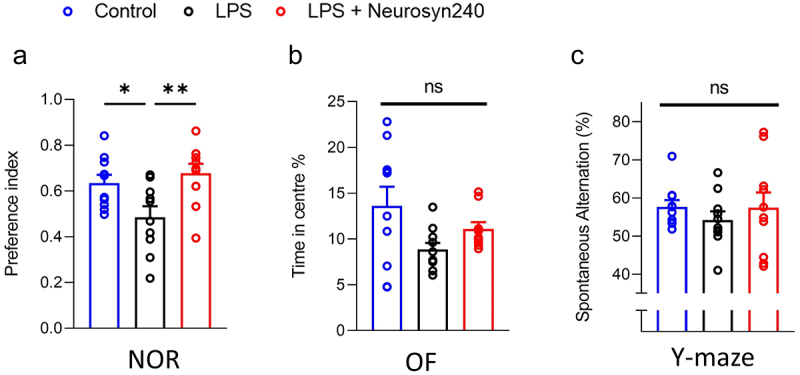
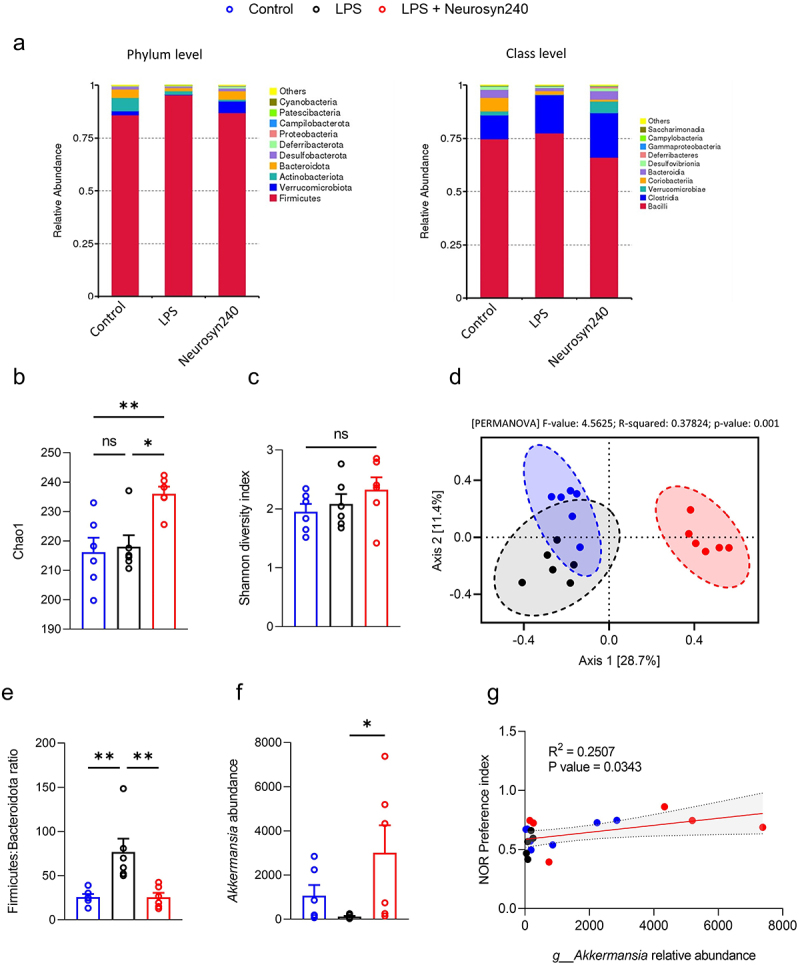
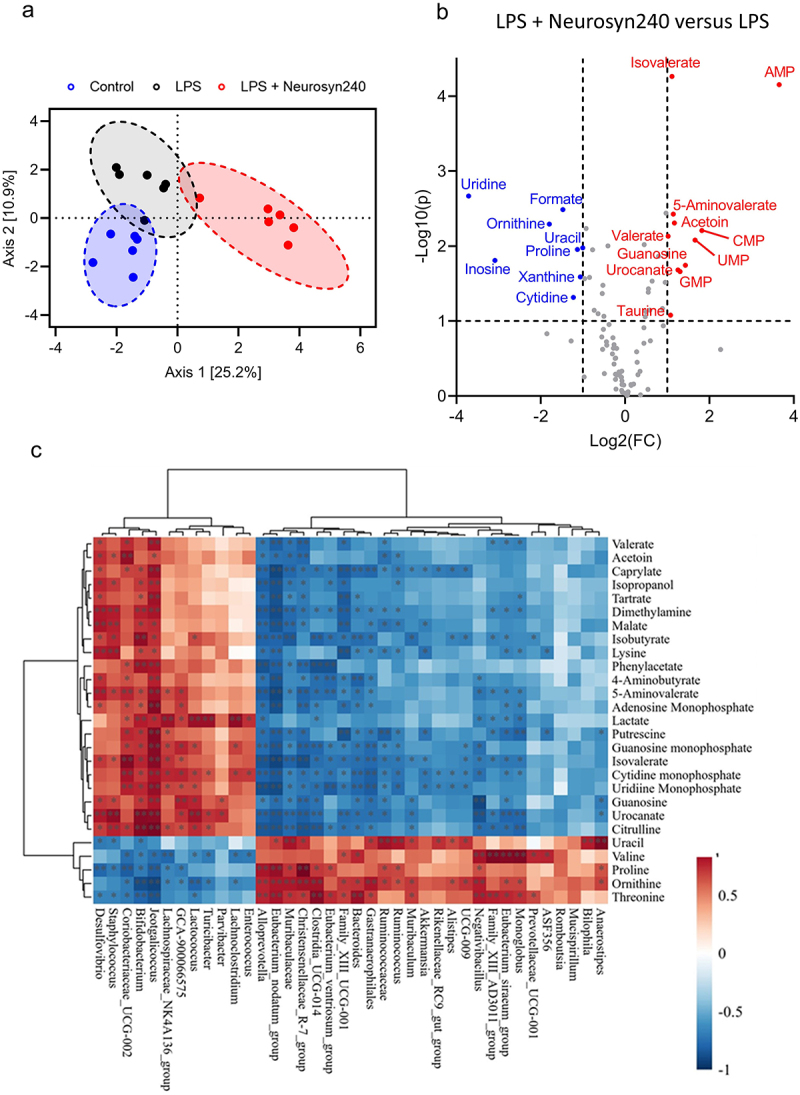
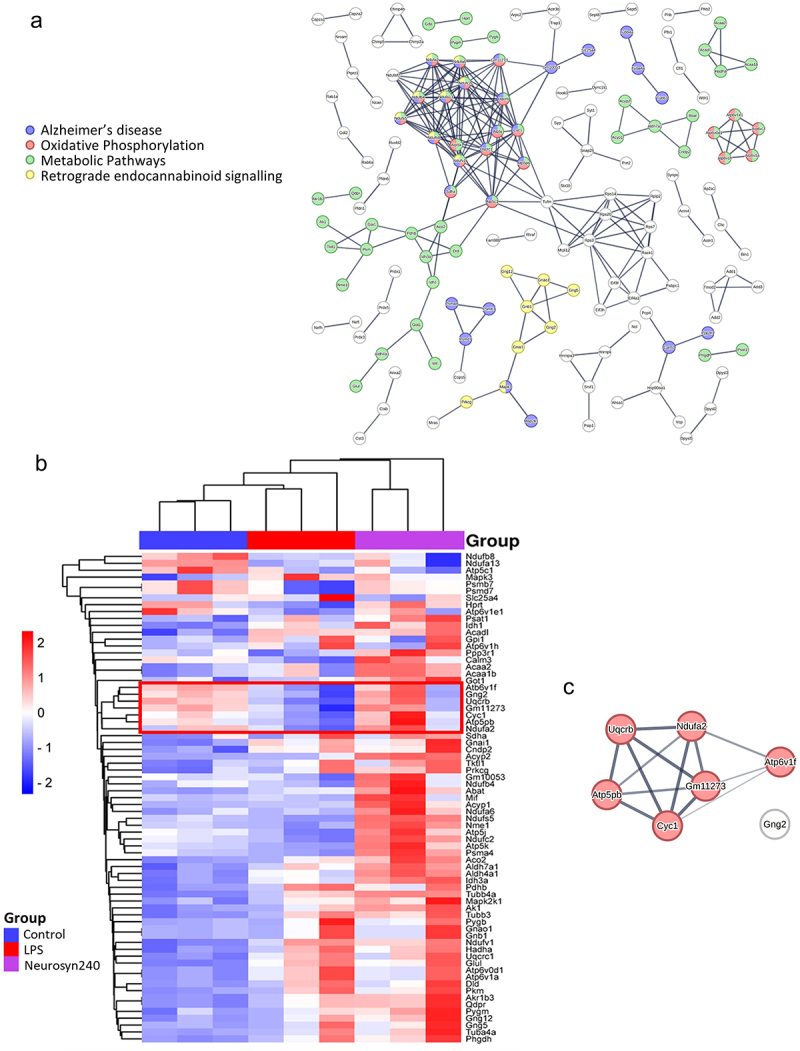
The Mediterranean diet (MD) and its bioactive constituents have been advocated for their neuroprotective properties along with their capacity to affect gut microbiota speciation and metabolism. Mediated through the gut brain axis, this modulation of the microbiota may partly contribute to the neuroprotective properties of the MD. To explore this potential interaction, we evaluated the neuroprotective properties of a novel bioactive blend (Neurosyn240) resembling the Mediterranean diet in a rodent model of chronic low-grade inflammation. Behavioral tests of cognition, brain proteomic analysis, 16S rRNA sequencing, and H NMR metabolomic analyses were employed to develop an understanding of the gut-brain axis interactions involved. Recognition memory, as assessed by the novel object recognition task (NOR), decreased in response to LPS insult and was restored with Neurosyn240 supplementation. Although the open field task performance did not reach significance, it correlated with NOR performance indicating an element of anxiety related to this cognitive change. Behavioral changes associated with Neurosyn240 were accompanied by a shift in the microbiota composition which included the restoration of the ratio and an increase in , and most notably which significantly correlated with NOR performance. also correlated with the metabolites 5-aminovalerate, threonine, valine, uridine monophosphate, and adenosine monophosphate, which in turn significantly correlated with NOR performance. The proteomic profile within the brain was dramatically influenced by both interventions, with KEGG analysis highlighting oxidative phosphorylation and neurodegenerative disease-related pathways to be modulated. Intriguingly, a subset of these proteomic changes simultaneously correlated with abundance and predominantly related to oxidative phosphorylation, perhaps alluding to a protective gut-brain axis interaction. Collectively, our results suggest that the bioactive blend Neurosyn240 conferred cognitive and microbiota resilience in response to the deleterious effects of low-grade inflammation.
地中海饮食(MD)及其生物活性成分因其神经保护特性以及影响肠道微生物群落分类和代谢的能力而受到推崇。通过肠道-大脑轴,这种微生物群的调节可能部分有助于 MD 的神经保护特性。为了探索这种潜在的相互作用,我们在慢性低度炎症的啮齿动物模型中评估了一种类似于地中海饮食的新型生物活性混合物(Neurosyn240)的神经保护特性。认知行为测试、大脑蛋白质组分析、16S rRNA 测序和 H NMR 代谢组学分析用于了解涉及的肠道-大脑轴相互作用。新物体识别任务(NOR)评估的识别记忆在 LPS 损伤后下降,并用 Neurosyn240 补充恢复。尽管旷场任务的表现没有达到显著性,但它与 NOR 表现相关,表明与这种认知变化相关的焦虑元素。与 Neurosyn240 相关的行为变化伴随着微生物群落组成的变化,包括 比值的恢复和 的增加,特别是 的增加与 NOR 表现显著相关。 还与代谢物 5-氨基戊酸、苏氨酸、缬氨酸、尿苷一磷酸和腺苷一磷酸显著相关,而这些代谢物又与 NOR 表现显著相关。大脑内的蛋白质组谱受到这两种干预的强烈影响,KEGG 分析突出了氧化磷酸化和神经退行性疾病相关途径的调节。有趣的是,这些蛋白质组变化的一部分同时与 丰度相关,主要与氧化磷酸化相关,这可能暗示着一种保护性的肠道-大脑轴相互作用。总之,我们的结果表明,生物活性混合物 Neurosyn240 赋予认知和微生物群落对低度炎症的有害影响的弹性。