Department of Radiation Oncology, David Geffen School of Medicine at UCLA, Los Angeles, California.
Jonsson Comprehensive Cancer Center at UCLA, Los Angeles, California.
Cancer Res Commun. 2024 Jun 25;4(6):1566-1580. doi: 10.1158/2767-9764.CRC-24-0049.
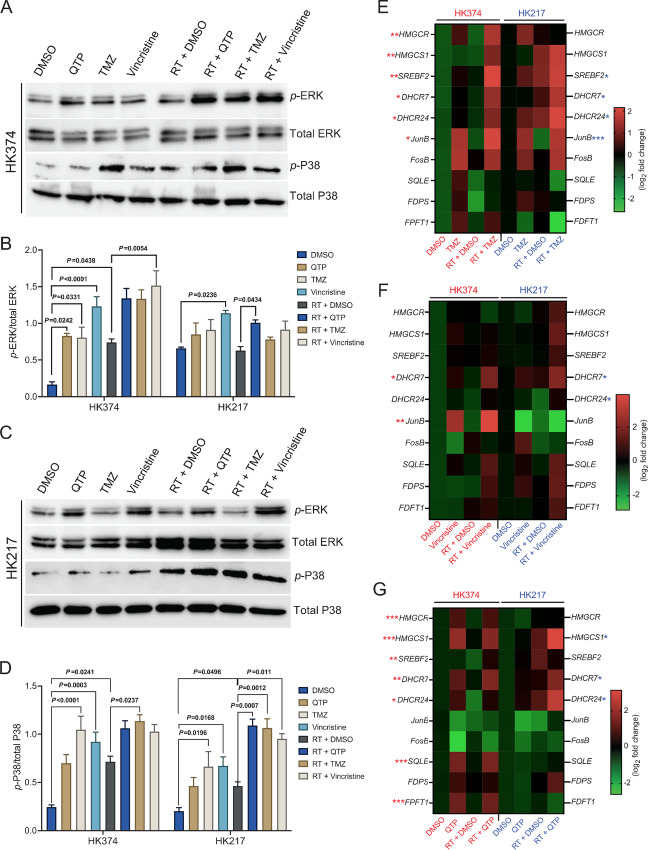
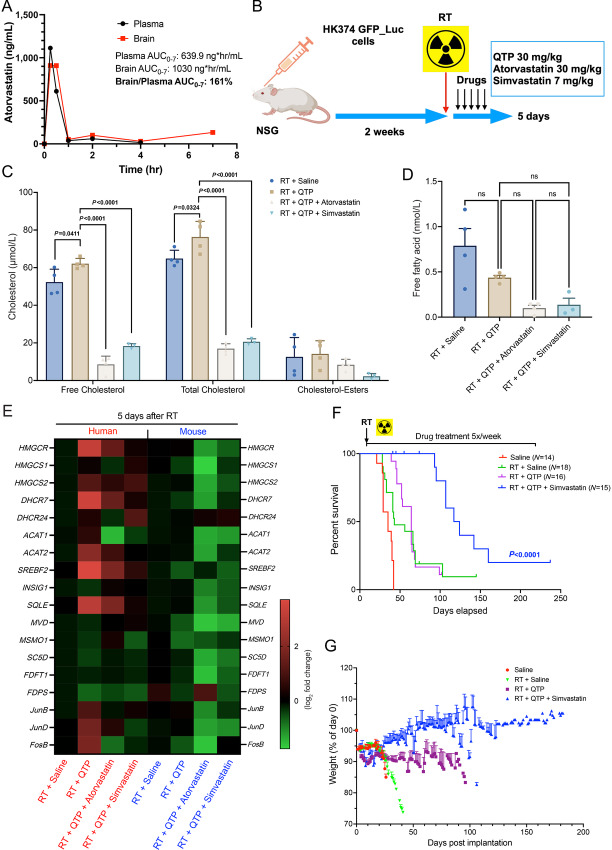
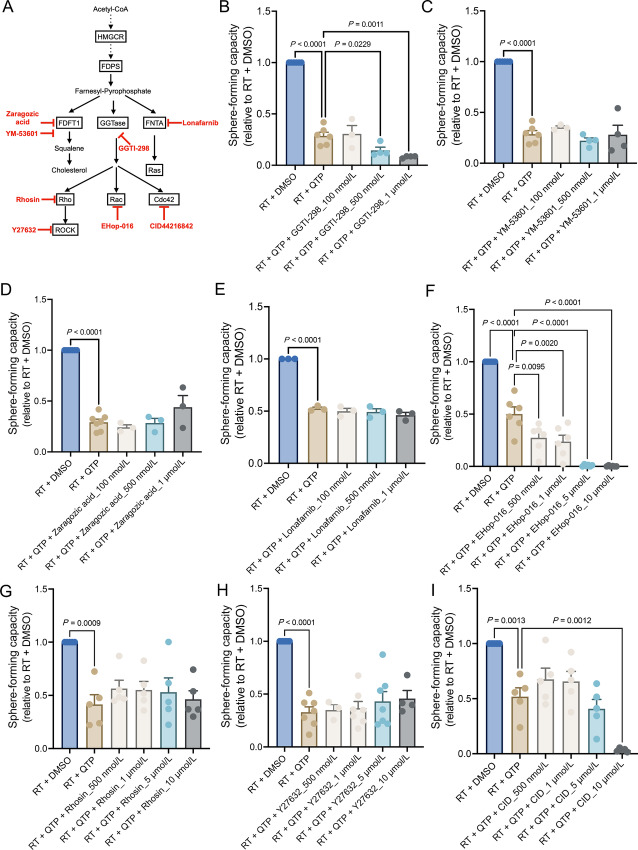
Glioblastoma (GBM) is the deadliest adult brain cancer. Under the current standard of care, almost all patients succumb to the disease and novel treatments are urgently needed. Recognizing that GBMs are addicted to cholesterol, past clinical trials have repurposed statins against GBM but failed. The purpose of this study was to test whether treatments that upregulate the cholesterol biosynthesis pathway in GBM would generate a metabolic vulnerability that can be exploited using statins and to determine the underlying mechanisms.Effects of radiotherapy and temozolomide or dopamine receptor antagonists on the mevalonate pathway in GBM were assessed in vitro and in vivo. The impact of statins on self-renewal of glioma stem cells and median survival was studied. Branches of the mevalonate pathway were probed to identify relevant effector proteins.Cells surviving combination treatments that converge in activating the immediate early response, universally upregulated the mevalonate pathway and increased stemness of GBM cells through activation of the Rho-GTPase Rac-1. Activation of the mevalonate pathway and Rac-1 was inhibited by statins, which led to improved survival in mouse models of glioblastoma when combined with radiation and drugs that target the glioma stem cell pool and plasticity of glioma cells.We conclude that a combination of dopamine receptor antagonists and statins could potentially improve radiotherapy outcome and warrants further investigation.
Combination therapies that activate the mevalonate pathway in GBM cells after sublethal treatment enhance self-renewal and migratory capacity through Rac-1 activation, which creates a metabolic vulnerability that can be further potentially exploited using statins.
胶质母细胞瘤(GBM)是最致命的成人脑癌。在目前的标准治疗下,几乎所有患者都无法治愈,因此急需新的治疗方法。鉴于 GBM 依赖胆固醇,过去的临床试验曾将他汀类药物重新用于治疗 GBM,但均以失败告终。本研究旨在测试上调 GBM 胆固醇生物合成途径的治疗方法是否会产生可通过他汀类药物利用的代谢脆弱性,并确定其潜在机制。在体外和体内评估了放疗和替莫唑胺或多巴胺受体拮抗剂对 GBM 甲羟戊酸途径的影响。研究了他汀类药物对神经胶质瘤干细胞自我更新和中位生存时间的影响。探查了甲羟戊酸途径的分支,以确定相关效应蛋白。普遍上调甲羟戊酸途径并通过激活 Rho-GTPase Rac-1 增加 GBM 细胞的干性,从而使存活下来的联合治疗方法共同作用于激活即刻早期反应。他汀类药物可抑制甲羟戊酸途径和 Rac-1 的激活,当与针对神经胶质瘤干细胞池和神经胶质瘤细胞可塑性的药物联合用于放射治疗时,可提高胶质母细胞瘤小鼠模型的存活率。我们得出结论,多巴胺受体拮抗剂和他汀类药物的联合治疗可能会改善放疗效果,值得进一步研究。
亚致死性治疗后激活 GBM 细胞甲羟戊酸途径的联合治疗方法通过 Rac-1 激活增强了自我更新和迁移能力,从而产生了可进一步利用他汀类药物利用的代谢脆弱性。