Solomon H. Snyder Department of Neuroscience, Kavli Neuroscience Discovery Institute, Brain Science Institute, Johns Hopkins University School of Medicine, Baltimore, United States.
Zanvyl Krieger Mind/Brain Institute, Johns Hopkins University, Baltimore, United States.
Elife. 2024 Jun 6;12:RP92620. doi: 10.7554/eLife.92620.
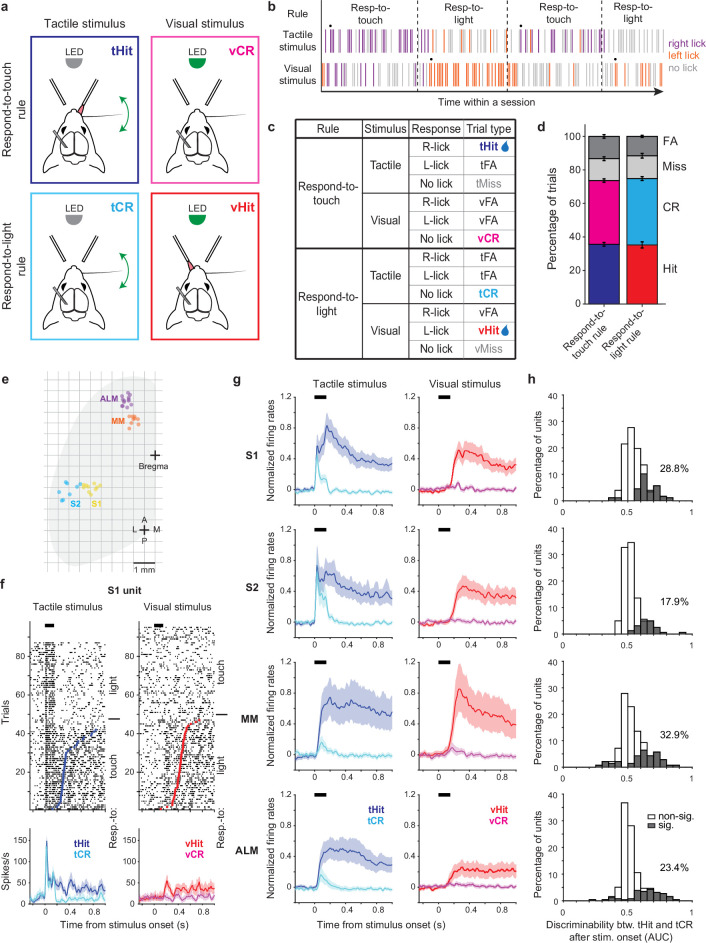
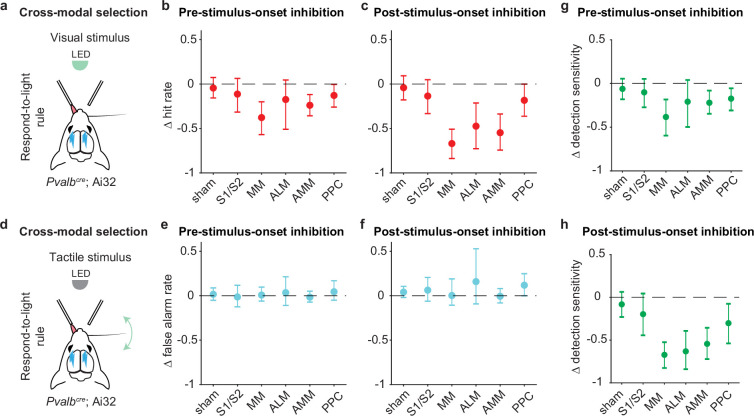
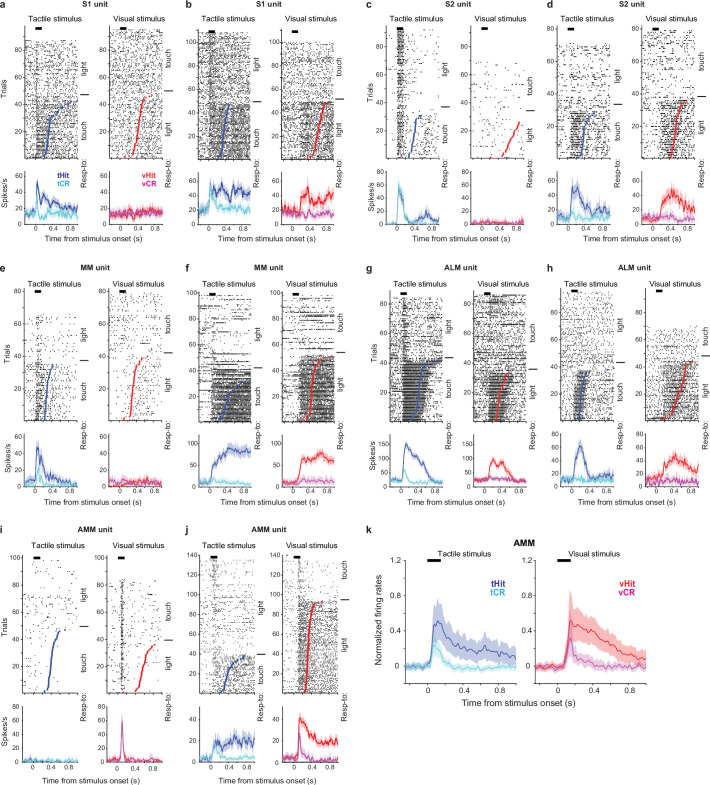
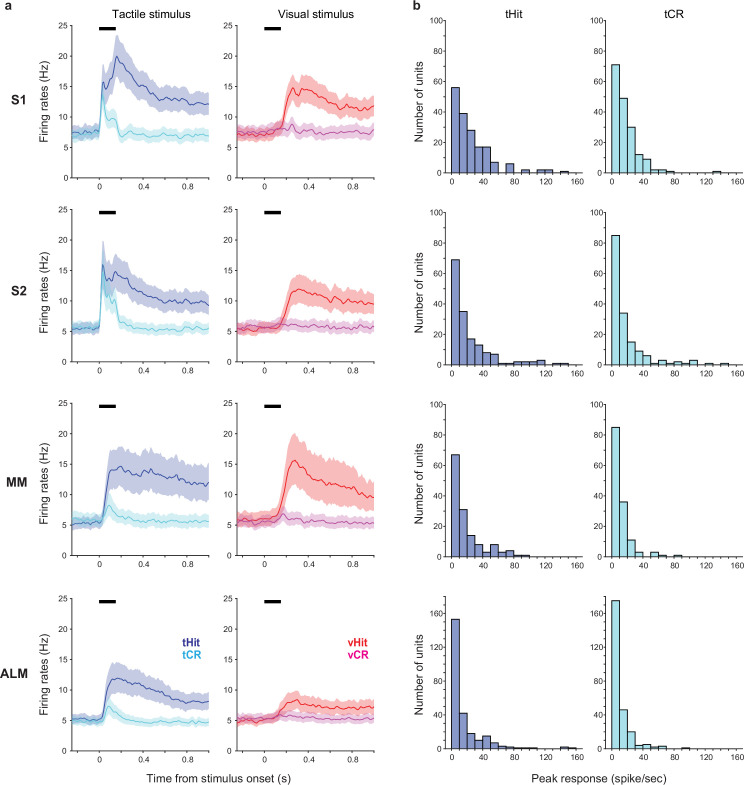
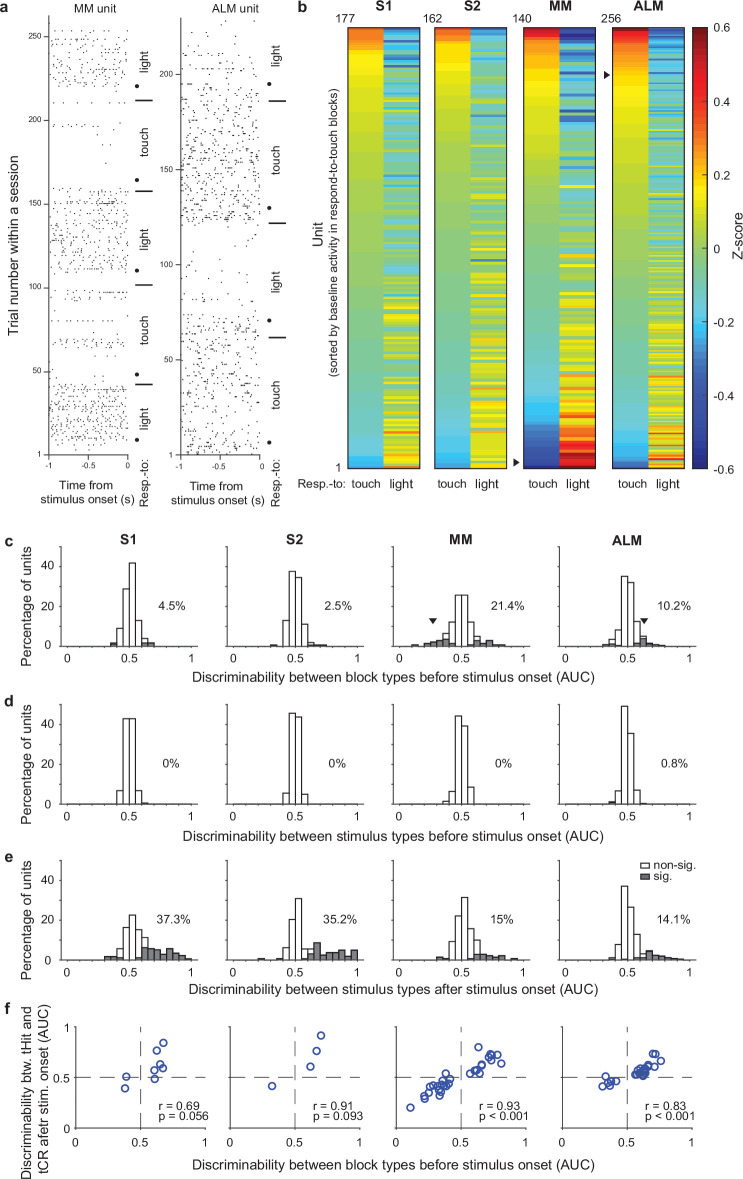
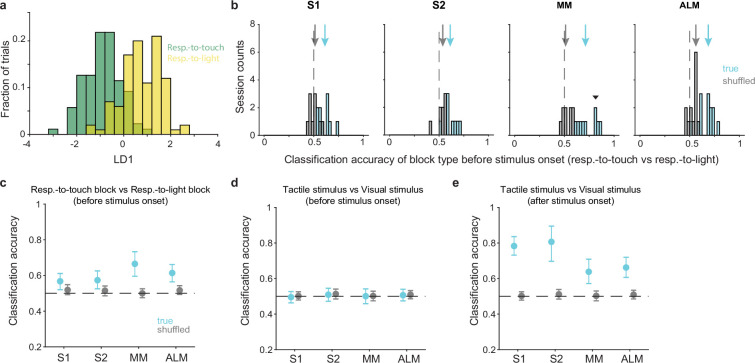
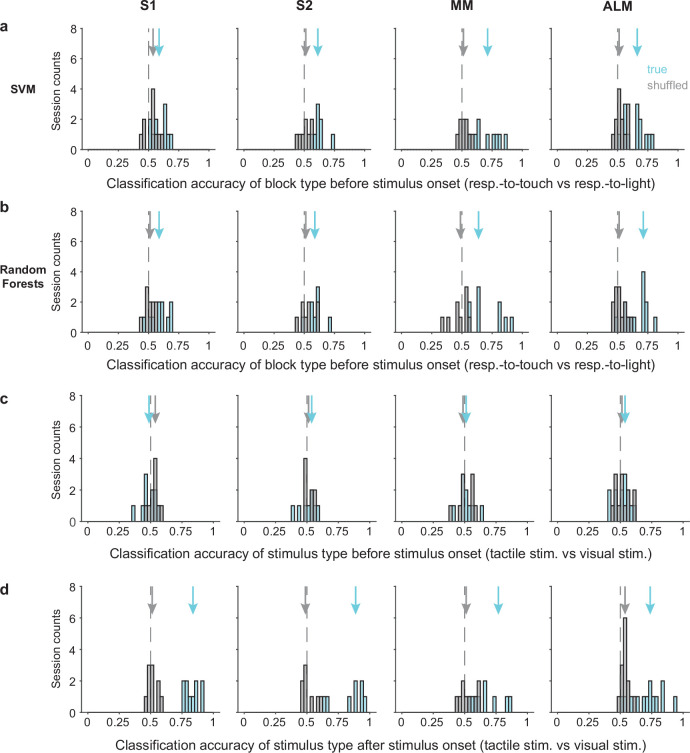
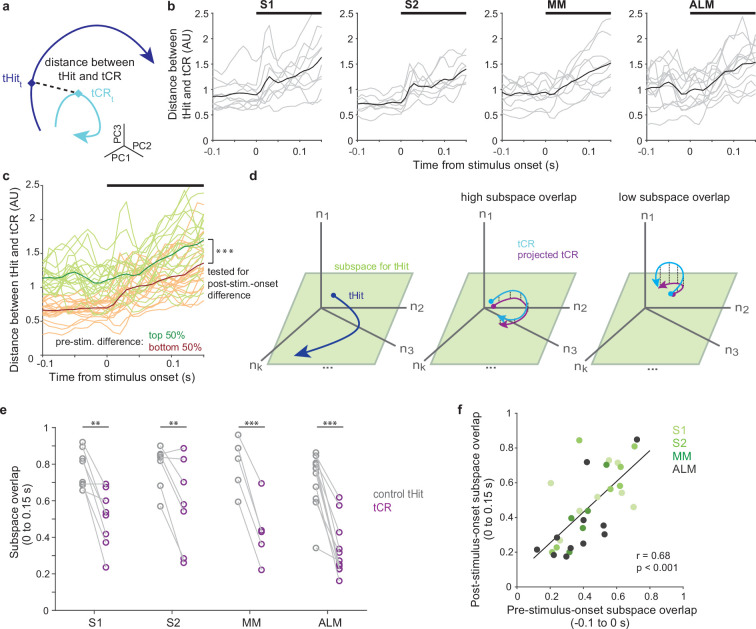
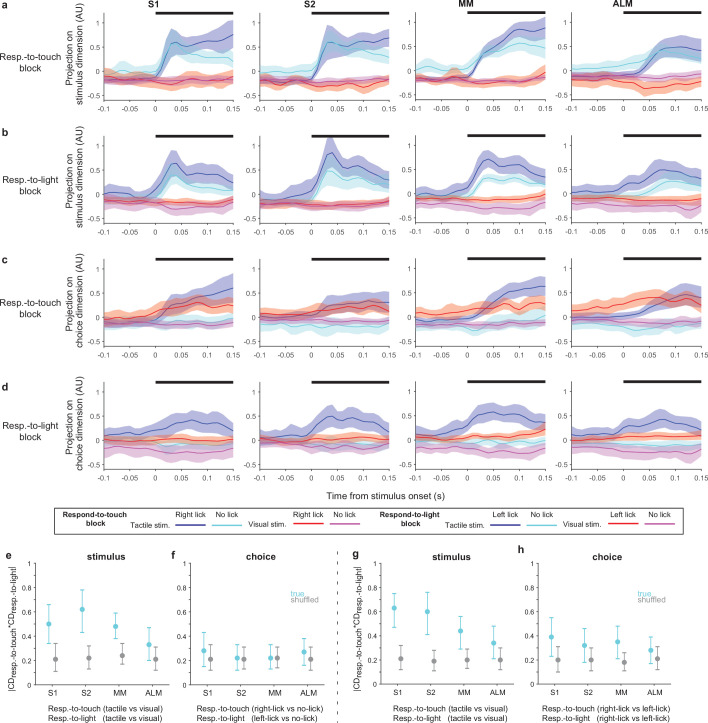
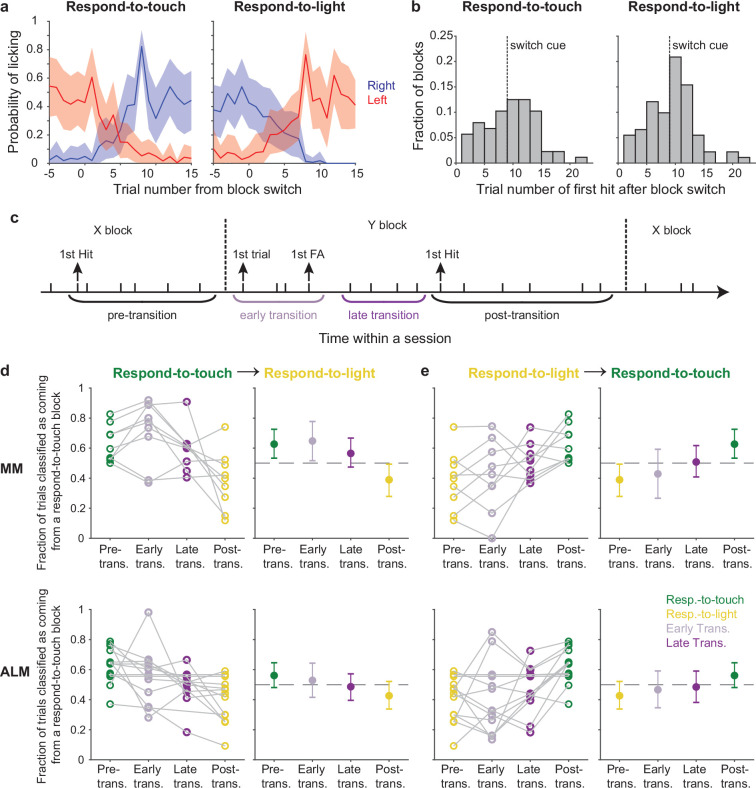
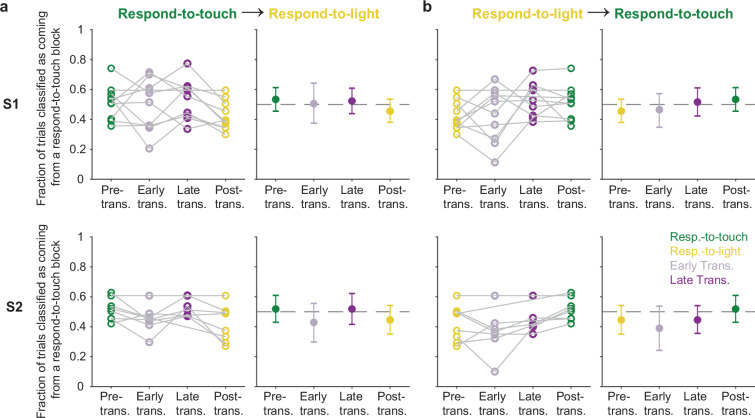
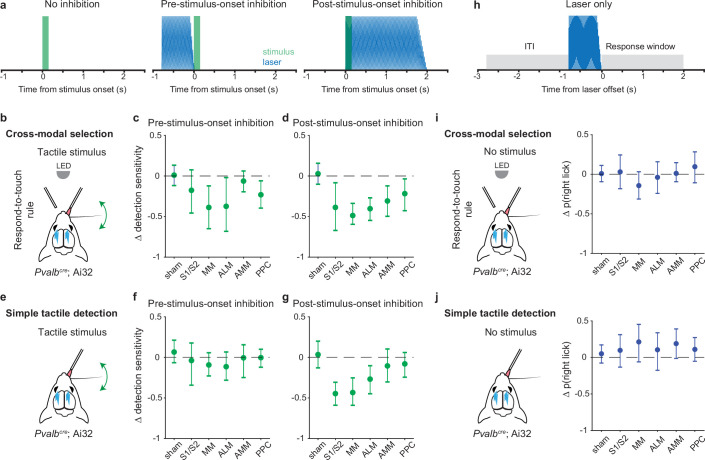
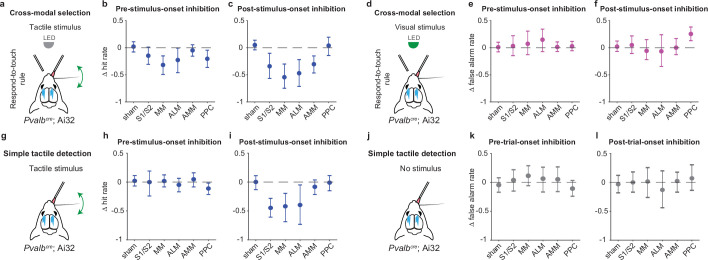
Flexible responses to sensory stimuli based on changing rules are critical for adapting to a dynamic environment. However, it remains unclear how the brain encodes and uses rule information to guide behavior. Here, we made single-unit recordings while head-fixed mice performed a cross-modal sensory selection task where they switched between two rules: licking in response to tactile stimuli while rejecting visual stimuli, or vice versa. Along a cortical sensorimotor processing stream including the primary (S1) and secondary (S2) somatosensory areas, and the medial (MM) and anterolateral (ALM) motor areas, single-neuron activity distinguished between the two rules both prior to and in response to the tactile stimulus. We hypothesized that neural populations in these areas would show rule-dependent preparatory states, which would shape the subsequent sensory processing and behavior. This hypothesis was supported for the motor cortical areas (MM and ALM) by findings that (1) the current task rule could be decoded from pre-stimulus population activity; (2) neural subspaces containing the population activity differed between the two rules; and (3) optogenetic disruption of pre-stimulus states impaired task performance. Our findings indicate that flexible action selection in response to sensory input can occur via configuration of preparatory states in the motor cortex.
基于变化规则的对感觉刺激的灵活反应对于适应动态环境至关重要。然而,大脑如何编码和使用规则信息来指导行为仍不清楚。在这里,我们在头部固定的小鼠执行跨模态感觉选择任务时进行了单细胞记录,在该任务中,它们在两种规则之间切换:对触觉刺激进行舔舐反应,同时拒绝视觉刺激,反之亦然。沿着包括初级(S1)和次级(S2)体感区以及内侧(MM)和前外侧(ALM)运动区的皮质感觉运动处理流,单个神经元活动在触觉刺激之前和之后都区分了这两种规则。我们假设这些区域中的神经元群体将表现出依赖于规则的预备状态,这将塑造随后的感觉处理和行为。这一假设得到了运动皮质区域(MM 和 ALM)的支持,研究结果表明:(1)当前任务规则可以从刺激前的群体活动中解码;(2)两个规则之间的神经子空间不同;(3)光遗传学破坏刺激前状态会损害任务表现。我们的发现表明,对感觉输入的灵活动作选择可以通过运动皮层中预备状态的配置来实现。