Department of Genetics, Washington University School of Medicine, St. Louis, 63110, USA.
The Edison Family Center for Genome Sciences & Systems Biology, Washington University School of Medicine, St. Louis, 63110, USA.
Nat Commun. 2024 Jun 6;15(1):4839. doi: 10.1038/s41467-024-48990-y.
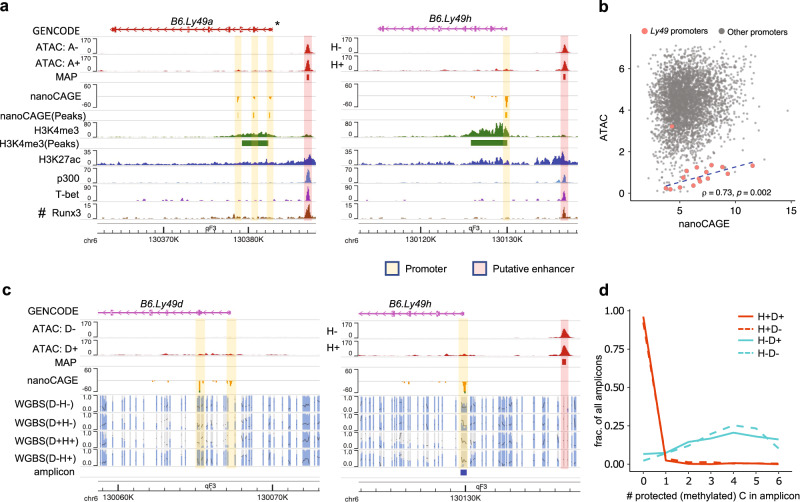
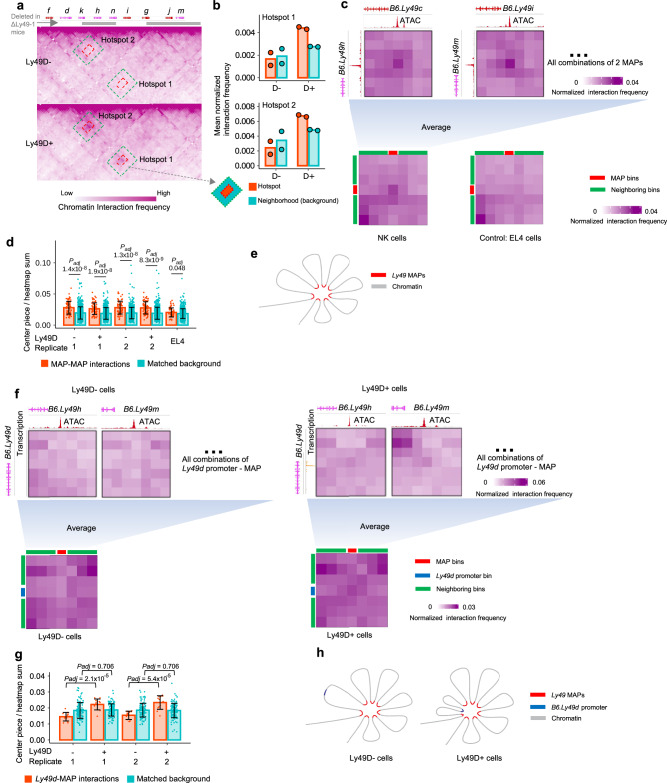
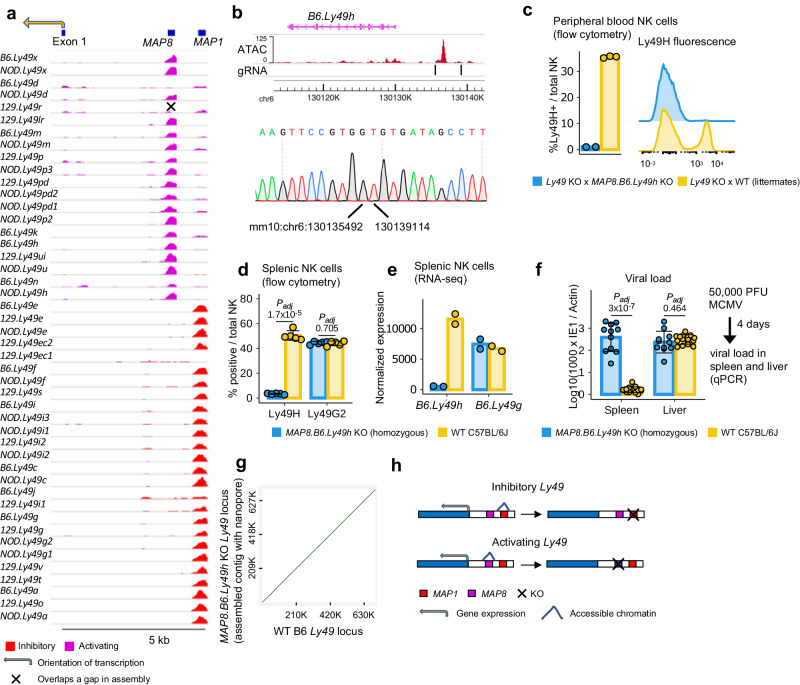
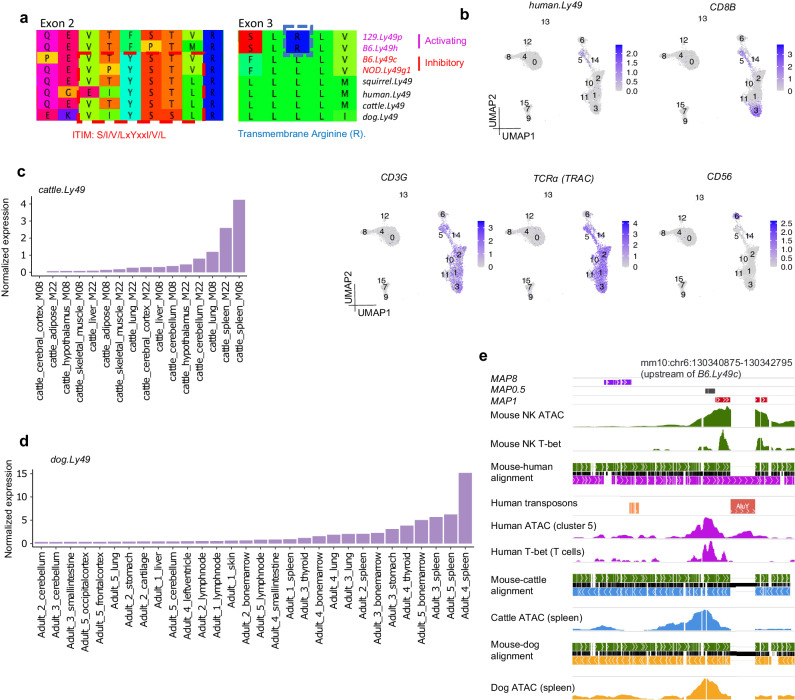
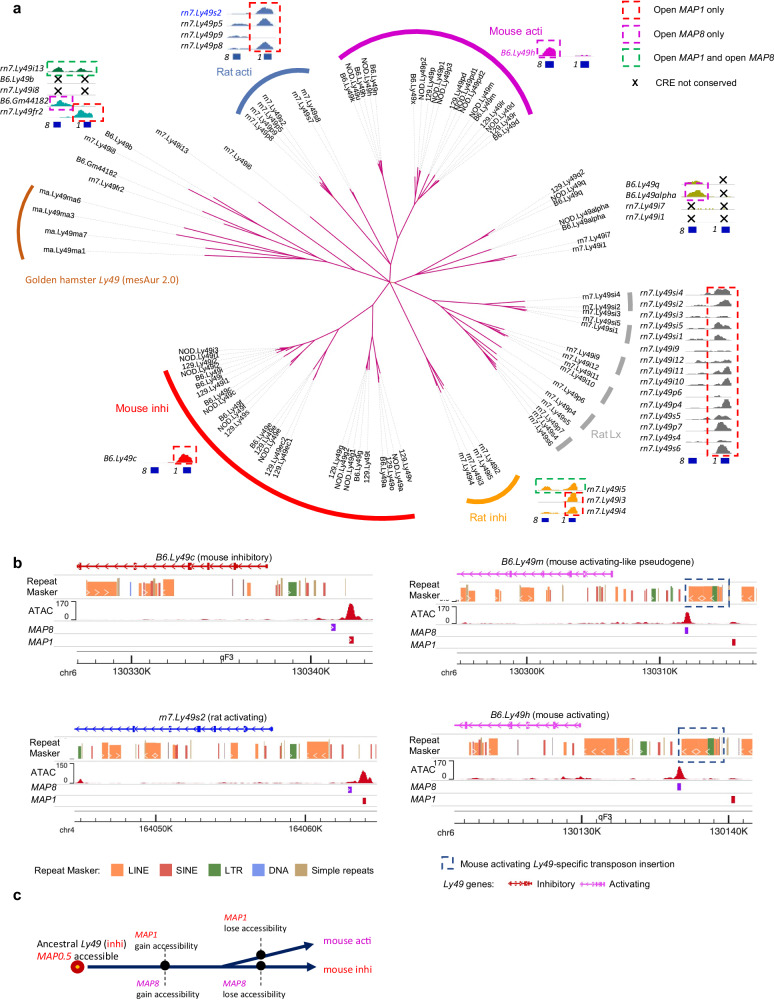
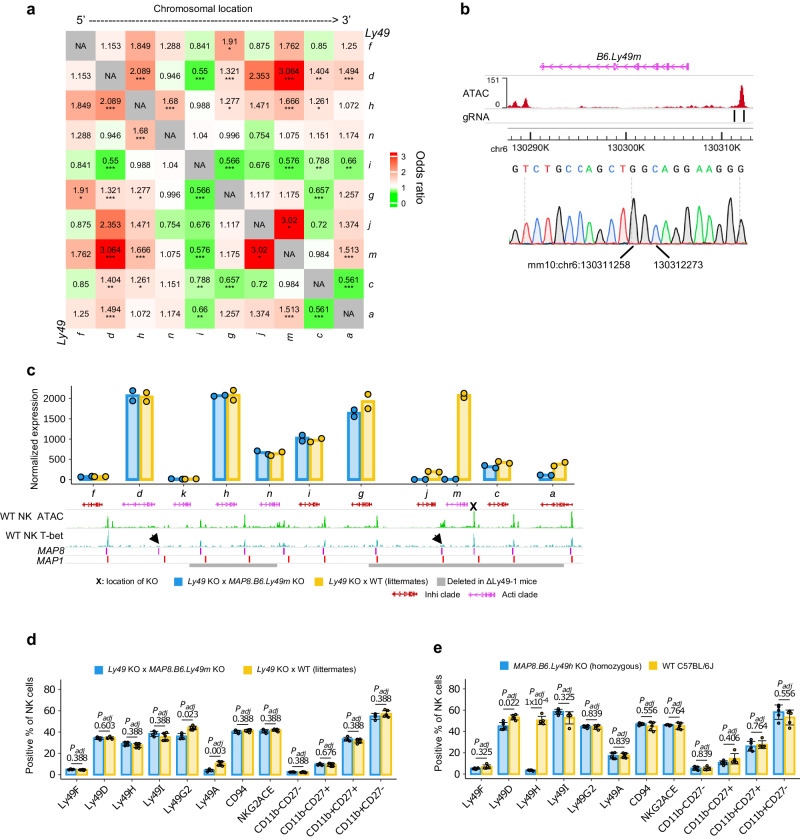
Comparative genomics has revealed the rapid expansion of multiple gene families involved in immunity. Members within each gene family often evolved distinct roles in immunity. However, less is known about the evolution of their epigenome and cis-regulation. Here we systematically profile the epigenome of the recently expanded murine Ly49 gene family that mainly encode either inhibitory or activating surface receptors on natural killer cells. We identify a set of cis-regulatory elements (CREs) for activating Ly49 genes. In addition, we show that in mice, inhibitory and activating Ly49 genes are regulated by two separate sets of proximal CREs, likely resulting from lineage-specific losses of CRE activity. Furthermore, we find that some Ly49 genes are cross-regulated by the CREs of other Ly49 genes, suggesting that the Ly49 family has begun to evolve a concerted cis-regulatory mechanism. Collectively, we demonstrate the different modes of cis-regulatory evolution for a rapidly expanding gene family.
比较基因组学揭示了参与免疫的多个基因家族的快速扩张。每个基因家族中的成员在免疫中通常进化出不同的作用。然而,关于它们的表观基因组和顺式调控的进化知之甚少。在这里,我们系统地描绘了最近扩张的鼠类 Ly49 基因家族的表观基因组,该家族主要编码自然杀伤细胞上的抑制性或激活表面受体。我们确定了一组用于激活 Ly49 基因的顺式调控元件 (CRE)。此外,我们表明,在小鼠中,抑制性和激活性 Ly49 基因受两套不同的近端 CRE 调控,可能是由于 CRE 活性的谱系特异性丧失所致。此外,我们发现一些 Ly49 基因受到其他 Ly49 基因的 CRE 交叉调控,表明 Ly49 家族已经开始进化出协调的顺式调控机制。总之,我们展示了一个快速扩张的基因家族的顺式调控进化的不同模式。