Lu Yishun, Duman Ramona, Beilsten-Edmands James, Winter Graeme, Basham Mark, Evans Gwyndaf, Kamps Jos J A G, Orville Allen M, Kwong Hok-Sau, Beis Konstantinos, Armour Wesley, Wagner Armin
Oxford e-Research Centre, Department of Engineering Science, University of Oxford, 7 Keble Road, Oxford OX1 3QG, United Kingdom.
Diamond Light Source, Harwell Science & Innovation Campus, Didcot OX11 0DE, United Kingdom.
J Appl Crystallogr. 2024 Apr 15;57(Pt 3):649-658. doi: 10.1107/S1600576724002243. eCollection 2024 Jun 1.
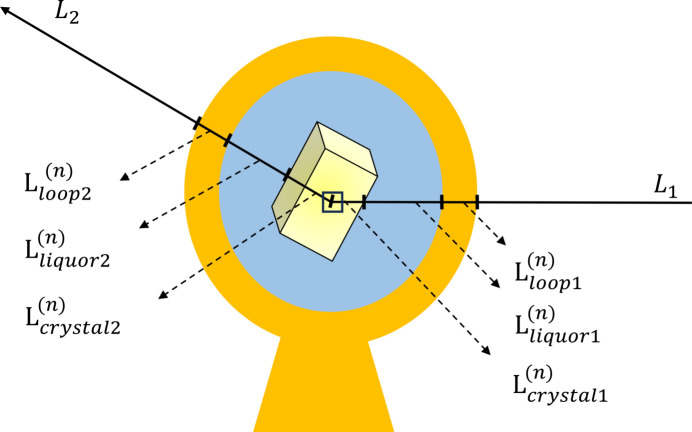
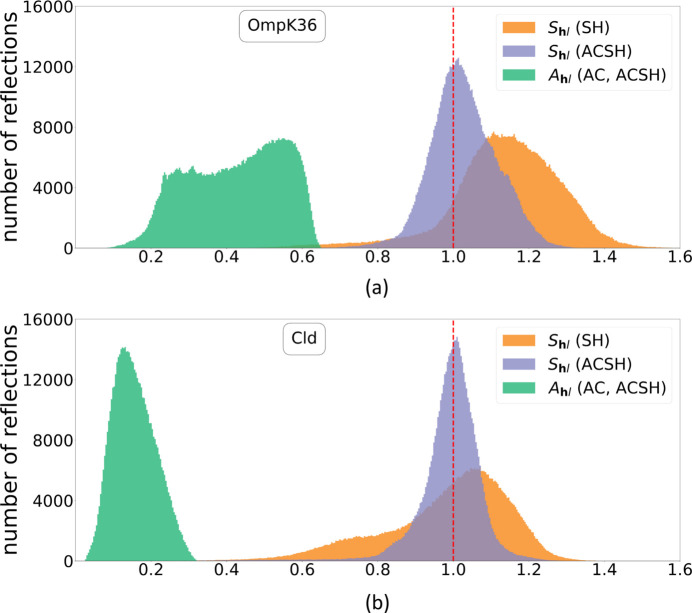
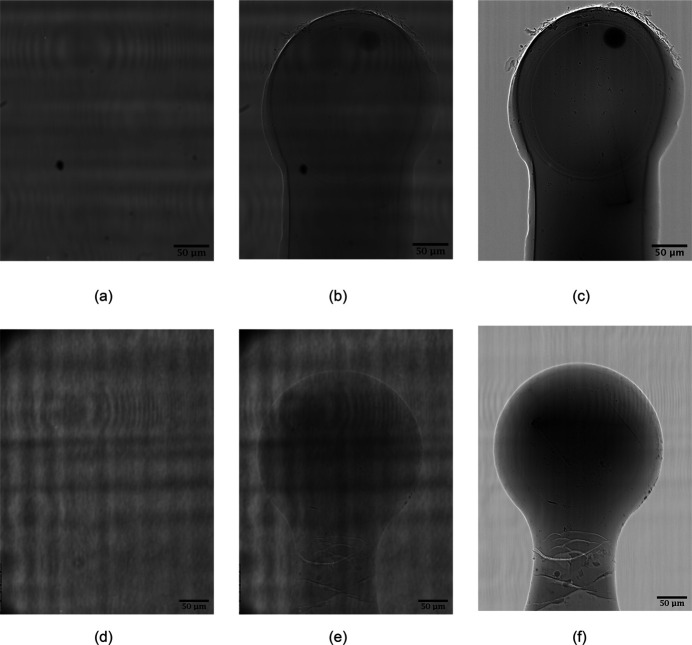
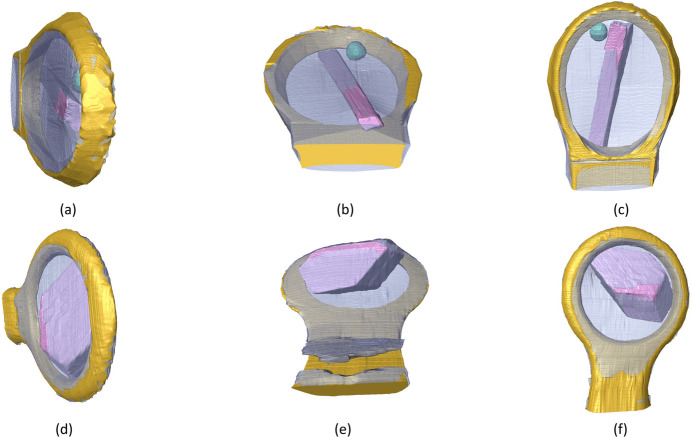
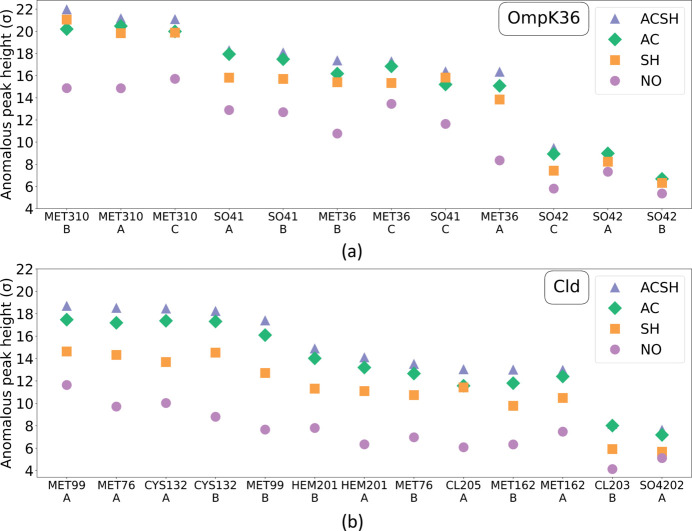
Processing of single-crystal X-ray diffraction data from area detectors can be separated into two steps. First, raw intensities are obtained by integration of the diffraction images, and then data correction and reduction are performed to determine structure-factor amplitudes and their uncertainties. The second step considers the diffraction geometry, sample illumination, decay, absorption and other effects. While absorption is only a minor effect in standard macromolecular crystallography (MX), it can become the largest source of uncertainty for experiments performed at long wavelengths. Current software packages for MX typically employ empirical models to correct for the effects of absorption, with the corrections determined through the procedure of minimizing the differences in intensities between symmetry-equivalent reflections; these models are well suited to capturing smoothly varying experimental effects. However, for very long wavelengths, empirical methods become an unreliable approach to model strong absorption effects with high fidelity. This problem is particularly acute when data multiplicity is low. This paper presents an analytical absorption correction strategy (implemented in new software ) based on a volumetric model of the sample derived from X-ray tomography. Individual path lengths through the different sample materials for all reflections are determined by a ray-tracing method. Several approaches for absorption corrections (spherical harmonics correction, analytical absorption correction and a combination of the two) are compared for two samples, the membrane protein OmpK36 GD, measured at a wavelength of λ = 3.54 Å, and chlorite dismutase, measured at λ = 4.13 Å. Data set statistics, the peak heights in the anomalous difference Fourier maps and the success of experimental phasing are used to compare the results from the different absorption correction approaches. The strategies using the new analytical absorption correction are shown to be superior to the standard spherical harmonics corrections. While the improvements are modest in the 3.54 Å data, the analytical absorption correction outperforms spherical harmonics in the longer-wavelength data (λ = 4.13 Å), which is also reflected in the reduced amount of data being required for successful experimental phasing.
处理来自面探测器的单晶X射线衍射数据可分为两个步骤。首先,通过对衍射图像进行积分获得原始强度,然后进行数据校正和精简以确定结构因子振幅及其不确定性。第二步考虑衍射几何、样品照明、衰减、吸收及其他效应。虽然吸收在标准大分子晶体学(MX)中只是一个较小的效应,但对于在长波长下进行的实验,它可能成为最大的不确定性来源。当前用于MX的软件包通常采用经验模型来校正吸收效应,校正通过最小化对称等效反射之间强度差异的过程来确定;这些模型非常适合捕捉平滑变化的实验效应。然而,对于非常长的波长,经验方法成为以高保真度模拟强吸收效应的不可靠方法。当数据多重性较低时,这个问题尤为严重。本文提出了一种基于从X射线断层扫描得出的样品体积模型的解析吸收校正策略(在新软件中实现)。通过光线追踪方法确定所有反射穿过不同样品材料的各个路径长度。针对两个样品比较了几种吸收校正方法(球谐校正、解析吸收校正以及两者的组合),这两个样品分别是在波长λ = 3.54 Å下测量的膜蛋白OmpK36 GD和在λ = 4.13 Å下测量的亚氯酸盐歧化酶。使用数据集统计、反常差分傅里叶图中的峰高以及实验相位确定的成功率来比较不同吸收校正方法的结果。结果表明,使用新的解析吸收校正的策略优于标准的球谐校正。虽然在3.54 Å数据中改进不大,但解析吸收校正在较长波长数据(λ = 4.13 Å)中优于球谐校正,这也体现在成功进行实验相位确定所需的数据量减少上。