Reproductive Medical Center, Renmin Hospital of Wuhan University and Hubei Clinic Research Center for Assisted Reproductive Technology and Embryonic Development, Wuhan, 430060, China.
Department of Rheumatology, The University of Hong Kong- Shenzhen Hospital, Shenzhen, 518053, China.
Reprod Biol Endocrinol. 2024 Jun 7;22(1):66. doi: 10.1186/s12958-024-01235-5.
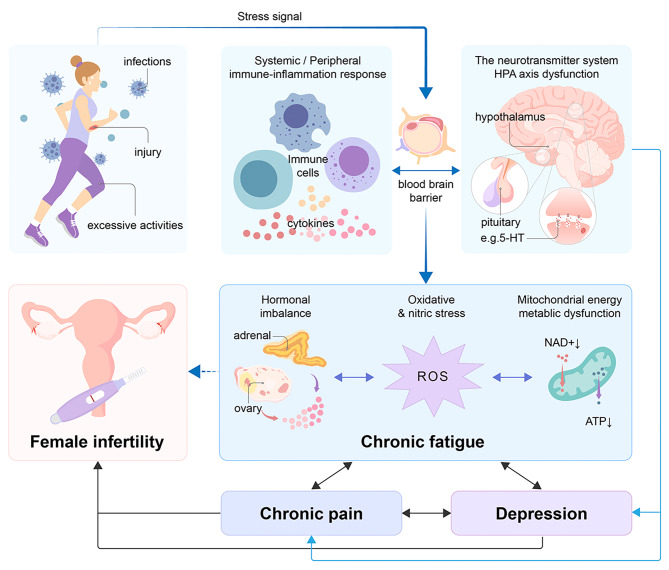
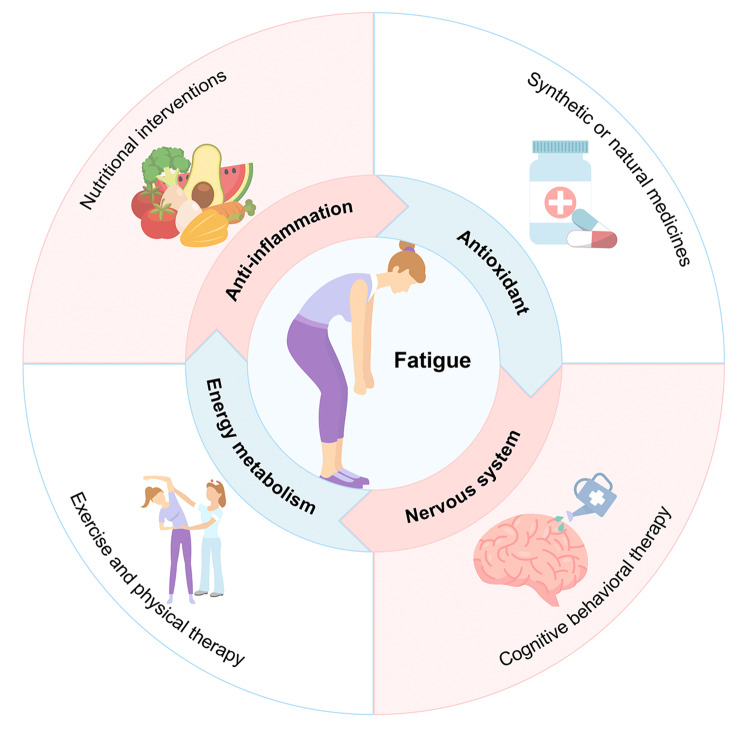
Fatigue, an increasingly acknowledged symptom in various chronic diseases, has garnered heightened attention, during the medical era of bio-psycho-social model. Its persistence not only significantly compromises an individual's quality of life but also correlates with chronic organ damage. Surprisingly, the intricate relationship between fatigue and female reproductive health, specifically infertility, remains largely unexplored. Our exploration into the existing body of evidence establishes a compelling link between fatigue with uterine and ovarian diseases, as well as conditions associated with infertility, such as rheumatism. This observation suggests a potentially pivotal role of fatigue in influencing overall female fertility. Furthermore, we propose a hypothetical mechanism elucidating the impact of fatigue on infertility from multiple perspectives, postulating that neuroendocrine, neurotransmitter, inflammatory immune, and mitochondrial dysfunction resulting from fatigue and its co-factors may further contribute to endocrine disorders, menstrual irregularities, and sexual dysfunction, ultimately leading to infertility. In addition to providing this comprehensive theoretical framework, we summarize anti-fatigue strategies and accentuate current knowledge gaps. By doing so, our aim is to offer novel insights, stimulate further research, and advance our understanding of the crucial interplay between fatigue and female reproductive health.
疲劳是各种慢性疾病中日益被认可的症状,在生物-心理-社会医学模式时代受到了高度关注。它的持续存在不仅严重影响个体的生活质量,还与慢性器官损伤相关。令人惊讶的是,疲劳与女性生殖健康(特别是不孕)之间的复杂关系在很大程度上仍未得到探索。我们对现有证据的研究确立了疲劳与子宫和卵巢疾病之间以及与不孕相关的疾病(如风湿)之间存在紧密联系的观点。这一观察结果表明,疲劳在影响女性整体生育能力方面可能起着至关重要的作用。此外,我们提出了一个假设性机制,从多个角度阐述了疲劳对不孕的影响,假设疲劳及其共同因素引起的神经内分泌、神经递质、炎症免疫和线粒体功能障碍可能进一步导致内分泌紊乱、月经不规律和性功能障碍,最终导致不孕。除了提供这个全面的理论框架外,我们还总结了抗疲劳策略并强调了当前的知识空白。通过这样做,我们的目标是提供新的见解,激发更多的研究,并深入了解疲劳与女性生殖健康之间的关键相互作用。