Fang Xuan-Wei, Chang Hao, Wu Tsunghsueh, Yeh Chen-Hao, Hsiao Fu-Li, Ko Tsung-Shine, Hsieh Chiu-Lan, Wu Mei-Yao, Lin Yang-Wei
Department of Chemistry, National Changhua University of Education, 1 Jin-De Road Changhua City 50007, Taiwan.
Department of Chemistry, University of Wisconsin-Platteville, 1 University Plaza Platteville Wisconsin 53818-3099, United States.
ACS Omega. 2024 Apr 24;9(22):23573-23583. doi: 10.1021/acsomega.4c00833. eCollection 2024 Jun 4.
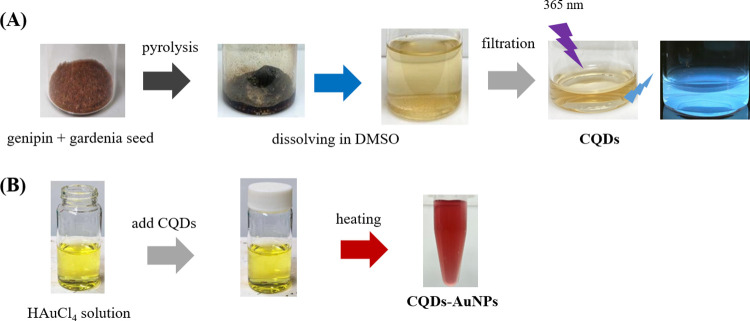
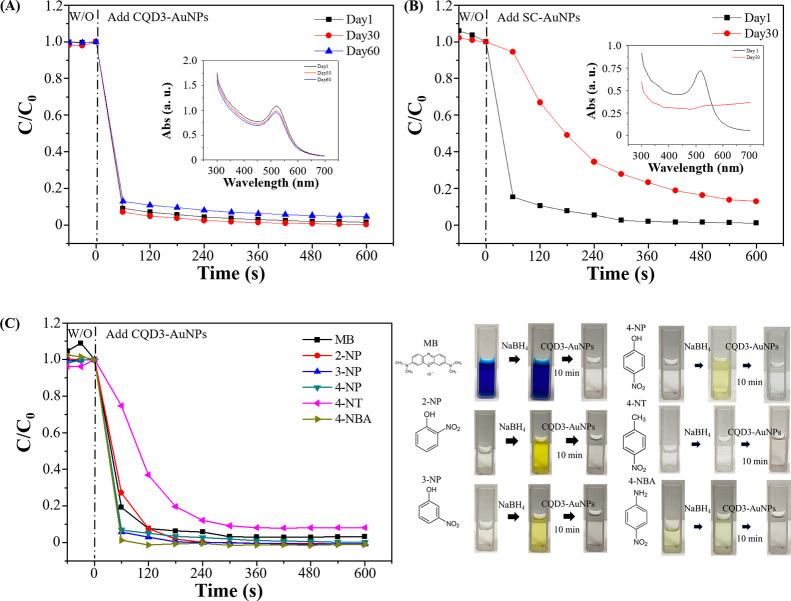
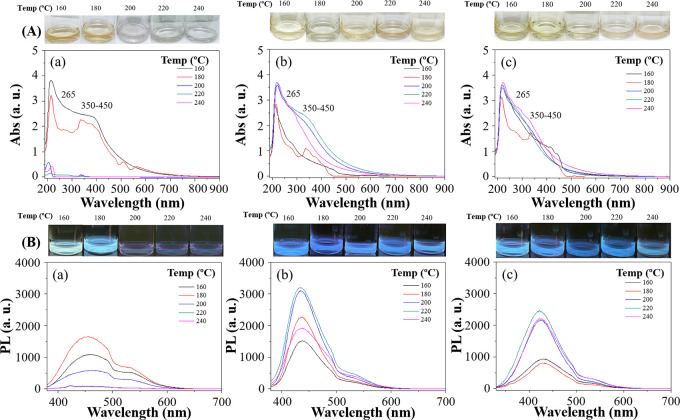
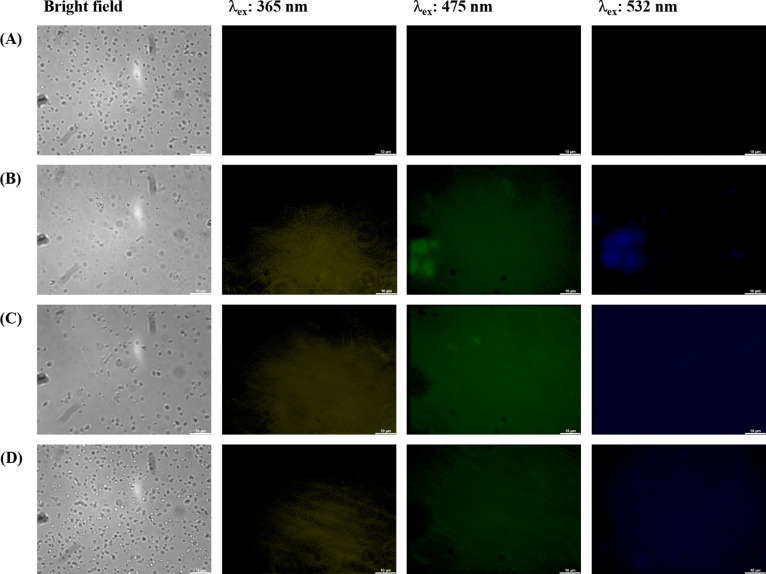
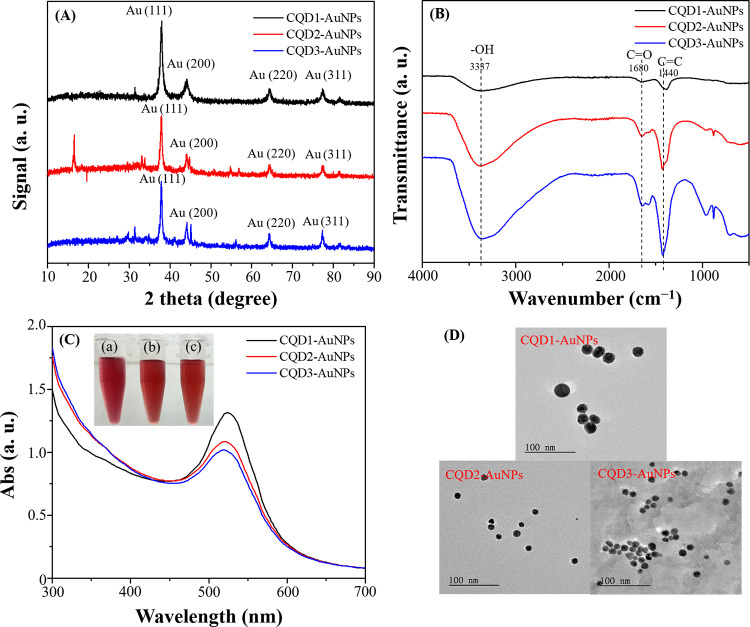
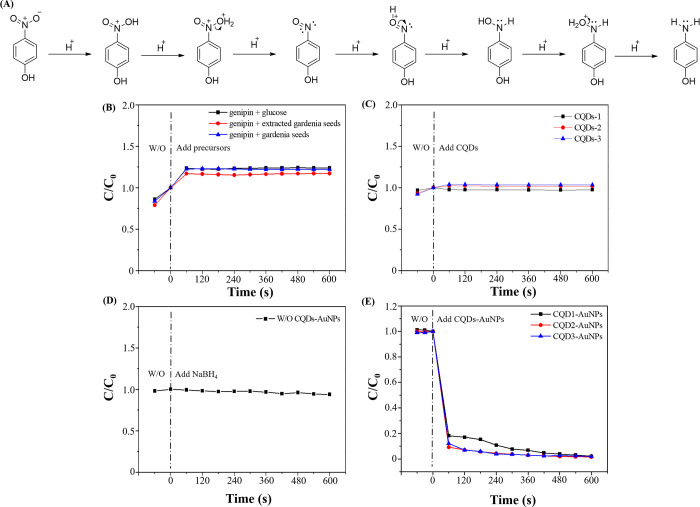
This study delves into the green synthesis and multifaceted applications of three types of carbon quantum dots (CQDs), namely, CQDs-1, CQDs-2, and CQDs-3. These CQDs were innovatively produced through a gentle pyrolysis process from distinct plant-based precursors: genipin with glucose for CQDs-1, genipin with extracted gardenia seeds for CQDs-2, and genipin with whole gardenia seeds for CQDs-3. Advanced analytical techniques, including X-ray photoelectron spectroscopy (XPS) and Fourier-transform infrared spectroscopy (FT-IR), were employed to detail the CQDs' structural and surface characteristics, revealing their unique functional groups and surface chemistries. The study further explores the CQDs' bioimaging potential, where confocal fluorescence microscopy evidenced their swift uptake by bacteria, indicating their suitability for bacterial imaging. These CQDs were also applied in the synthesis of gold nanoparticles (AuNPs), acting as reducing agents and stabilizers. Among these, CQD3-AuNPs were distinguished by their remarkable stability and catalytic efficiency, achieving a 99.7% reduction of 4-nitrophenol to 4-aminophenol in just 10 min and maintaining near-complete reduction efficiency (99.6%) after 60 days. This performance notably surpasses that of AuNPs synthesized using sodium citrate, underscoring the exceptional capabilities of CQD3-AuNPs. These insights pave the way for leveraging CQDs and CQD-stabilized AuNPs in bacterial imaging and catalysis, presenting valuable directions for future scientific inquiry and practical applications.
本研究深入探讨了三种类型的碳量子点(CQDs),即CQDs-1、CQDs-2和CQDs-3的绿色合成及其多方面应用。这些碳量子点是通过温和的热解过程,由不同的植物基前驱体制备而成:CQDs-1是由京尼平与葡萄糖反应制得,CQDs-2是由京尼平与提取的栀子种子反应制得,CQDs-3是由京尼平与完整的栀子种子反应制得。采用了先进的分析技术,包括X射线光电子能谱(XPS)和傅里叶变换红外光谱(FT-IR),来详细描述碳量子点的结构和表面特性,揭示其独特的官能团和表面化学性质。该研究进一步探索了碳量子点的生物成像潜力,共聚焦荧光显微镜证明它们能被细菌快速摄取,表明它们适用于细菌成像。这些碳量子点还被应用于金纳米颗粒(AuNPs)的合成,充当还原剂和稳定剂。其中,CQD3-AuNPs以其卓越的稳定性和催化效率脱颖而出,在短短10分钟内就能将4-硝基苯酚99.7%还原为4-氨基苯酚,并且在60天后仍保持近乎完全的还原效率(99.6%)。这一性能显著超过了用柠檬酸钠合成的金纳米颗粒,凸显了CQD3-AuNPs的非凡能力。这些见解为在细菌成像和催化中利用碳量子点及碳量子点稳定的金纳米颗粒铺平了道路,为未来的科学研究和实际应用提供了有价值的方向。