Department of Women and Children's Health, St Thomas' Hospital, King's College London, London, UK.
Department of Perinatal Imaging, St Thomas' Hospital, King's College London, London, UK.
Fetal Diagn Ther. 2024;51(5):419-431. doi: 10.1159/000539607. Epub 2024 Jun 10.
Spontaneous preterm birth complicates ∼7% of pregnancies and causes morbidity and mortality. Although infection is a common etiology, our understanding of the fetal immune system in vivo is limited. This study aimed to utilize T2-weighted imaging and T2* relaxometry (which is a proxy of tissue oxygenation) of the fetal spleen in uncomplicated pregnancies and in fetuses that were subsequently delivered spontaneously prior to 32 weeks.
Women underwent imaging including T2-weighted fetal body images and multi-eco gradient echo single-shot echo planar sequences on a Phillips Achieva 3T system. Previously described postprocessing techniques were applied to obtain T2- and T2*-weighted imaging of the fetal spleen and T2-weighted fetal body volumes.
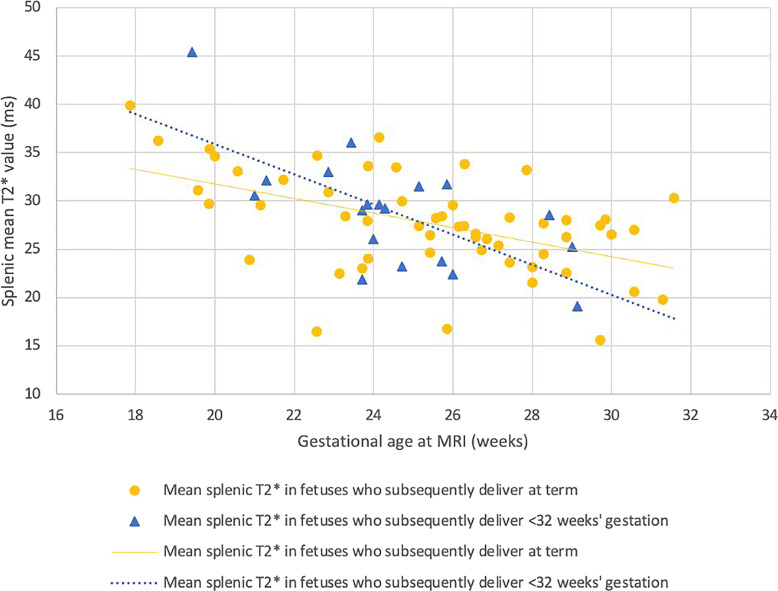
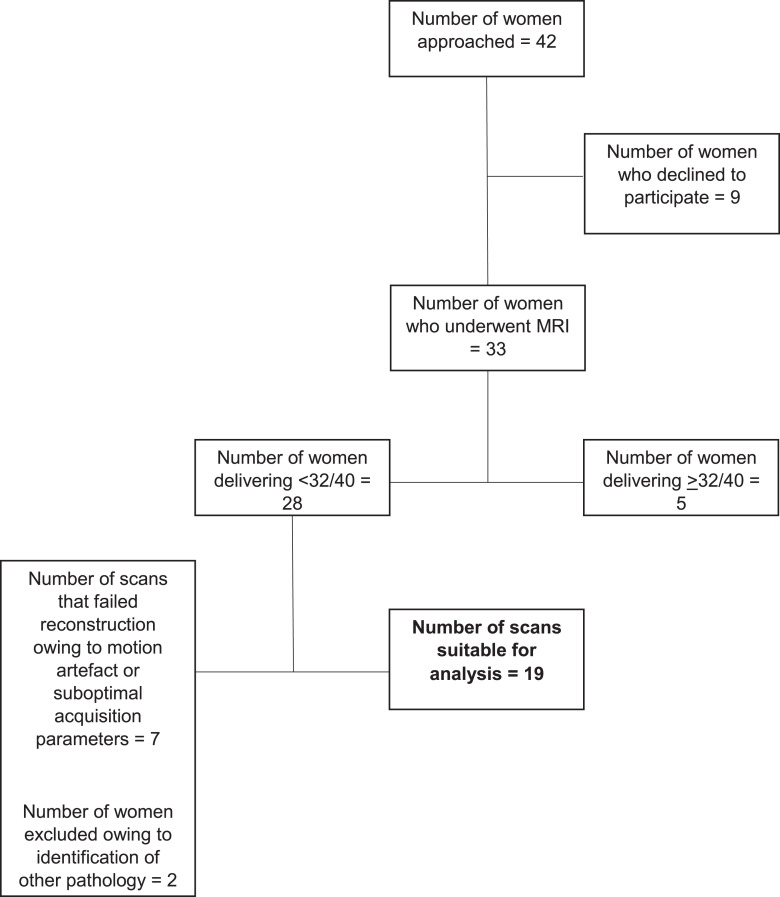
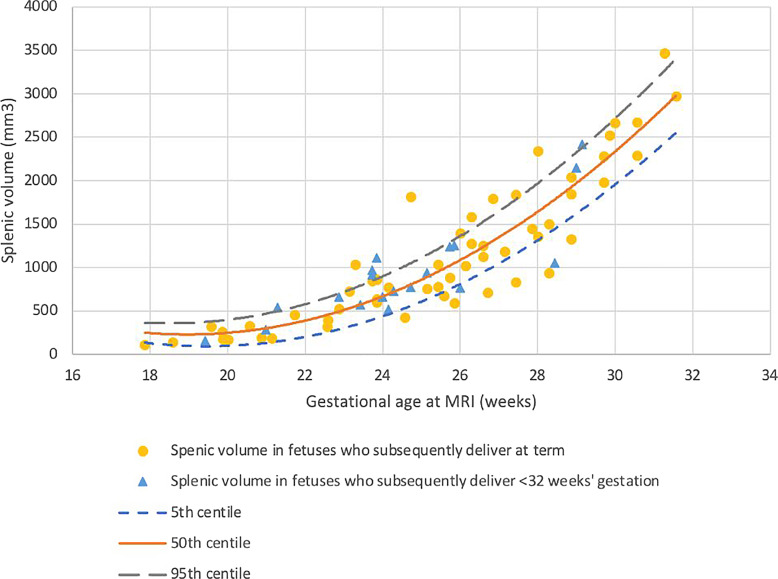
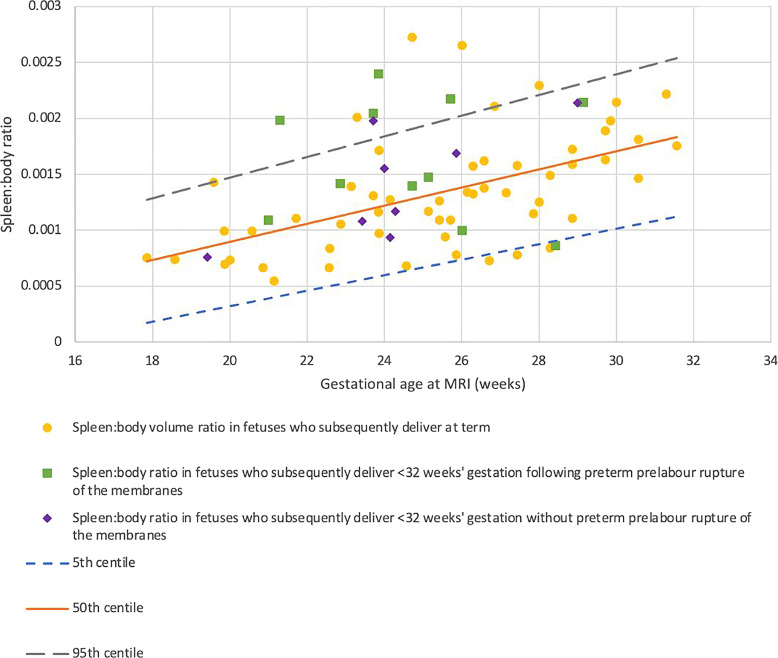
Among 55 women with uncomplicated pregnancies, an increase in fetal splenic volume, splenic:body volume, and a decrease in splenic T2* signal intensity was demonstrated across gestation. Compared to controls, fetuses who were subsequently delivered prior to 32 weeks' gestation (n = 19) had a larger spleen when controlled for the overall size of the fetus (p = 0.027), but T2* was consistent (p = 0.76).
These findings provide evidence of a replicable method of studying the fetal immune system and give novel results on the impact of impending preterm birth on the spleen. While T2* decreases prior to preterm birth in other organs, preservation demonstrated here suggests preferential sparing of the spleen.
自发性早产是一种常见的并发症,约占所有妊娠的 7%,可导致母婴发病率和死亡率升高。尽管感染是早产的常见病因,但我们对胎儿体内免疫系统的了解仍十分有限。本研究旨在利用 T2 加权成像和 T2*弛豫时间(组织氧饱和度的替代指标),对无并发症的妊娠和随后在 32 周前自发性早产的胎儿脾脏进行研究。
女性在飞利浦 Achieva 3T 系统上接受了包括 T2 加权胎儿体成像和多回波梯度回波单次激发平面回波序列的成像检查。我们应用了之前描述过的后处理技术,以获得胎儿脾脏的 T2-和 T2*加权成像以及 T2 加权胎儿体容积。
在 55 例无并发症的妊娠中,随着妊娠的进展,胎儿脾脏体积、脾脏/体比值增加,脾脏 T2信号强度降低。与对照组相比,在 32 周前自发性早产的胎儿(n = 19),在控制胎儿整体大小后,脾脏更大(p = 0.027),但 T2无差异(p = 0.76)。
这些发现为研究胎儿免疫系统提供了一种可复制的方法,并为即将发生的早产对脾脏的影响提供了新的结果。虽然在其他器官中,T2*在早产前会降低,但本研究中观察到的保留表明脾脏优先受到保护。