Wu Xixi, Li Wenjian, Herlah Lara, Koch Marcus, Wang Hui, Schirhagl Romana, Włodarczyk-Biegun Małgorzata K
Department of Biomedical Engineering, University Medical Centre, Ant. Deusinglaan 1, 9713, AW, Groningen, the Netherlands.
Polymer Science, Zernike Institute for Advanced Materials, Faculty of Science and Engineering, University of Groningen, Nijenborgh 4, 9747, AG, the Netherlands.
Mater Today Bio. 2024 May 31;26:101112. doi: 10.1016/j.mtbio.2024.101112. eCollection 2024 Jun.
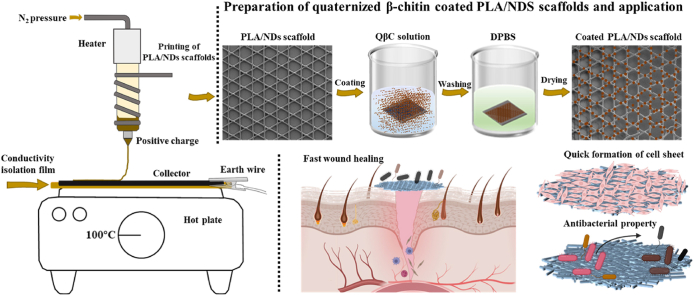
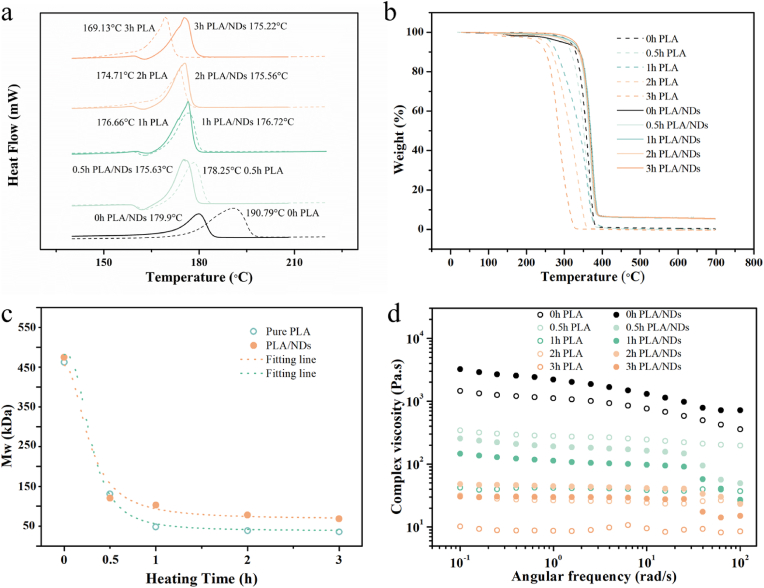
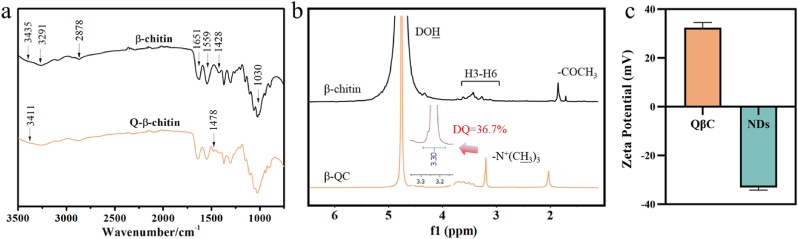
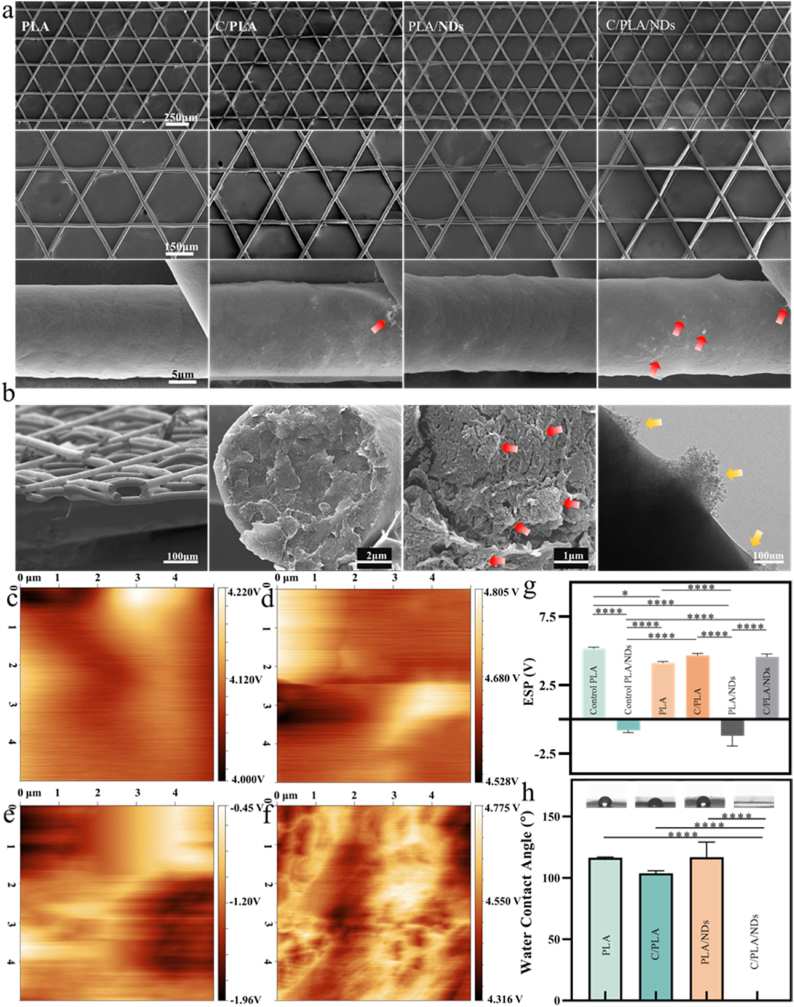
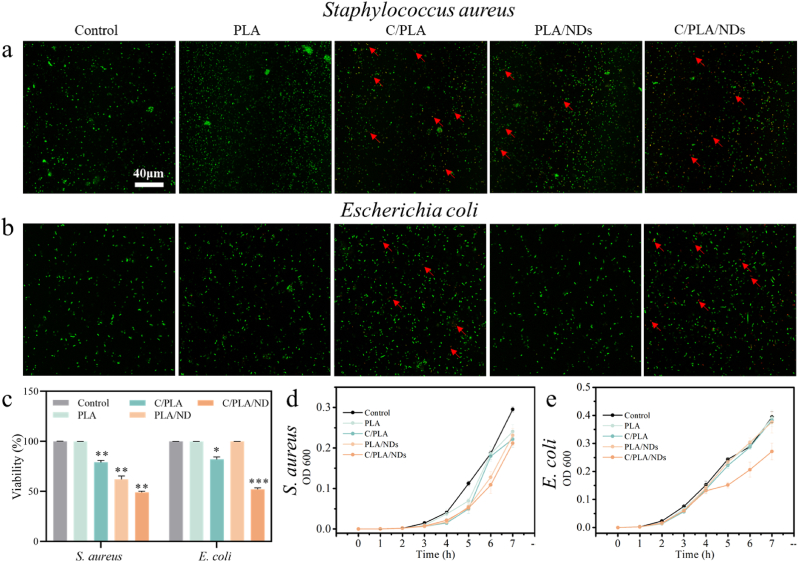
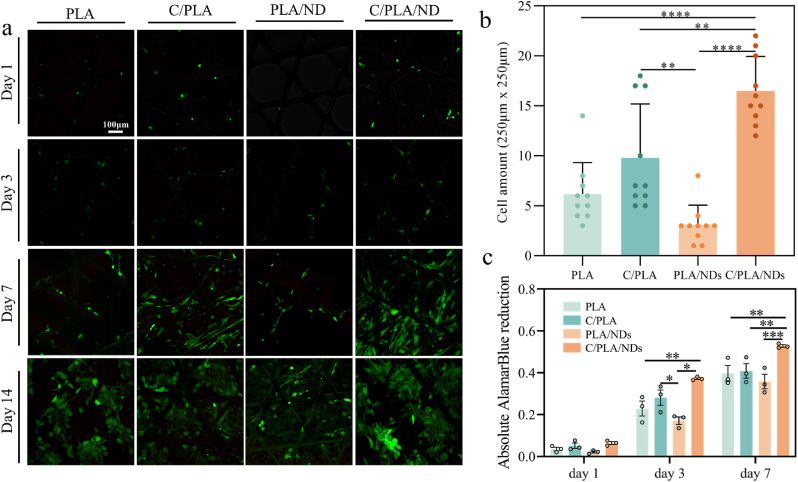
Multifunctional wound dressings, enriched with biologically active agents for preventing or treating infections and promoting wound healing, along with cell delivery capability, are highly needed. To address this issue, composite scaffolds with potential in wound dressing applications were fabricated in this study. The poly-lactic acid/nanodiamonds (PLA/ND) scaffolds were first printed using melt electrowriting (MEW) and then coated with quaternized β-chitin (QβC). The NDs were well-dispersed in the printed filaments and worked as fillers and bioactive additions to PLA material. Additionally, they improved coating effectiveness due to the interaction between their negative charges (from NDs) and positive charges (from QβC). NDs not only increased the thermal stability of PLA but also benefitted cellular behavior and inhibited the growth of bacteria. Scaffolds coated with QβC increased the effect of bacteria growth inhibition and facilitated the proliferation of human dermal fibroblasts. Additionally, we have observed rapid extracellular matrix (ECM) remodeling on QβC-coated PLA/NDs scaffolds. The scaffolds provided support for cell adhesion and could serve as a valuable tool for delivering cells to chronic wound sites. The proposed PLA/ND scaffold coated with QβC holds great potential for achieving fast healing in various types of wounds.
多功能伤口敷料非常必要,它富含生物活性剂,可预防或治疗感染、促进伤口愈合,还具备细胞递送能力。为解决这一问题,本研究制备了具有伤口敷料应用潜力的复合支架。首先使用熔体静电纺丝(MEW)打印聚乳酸/纳米金刚石(PLA/ND)支架,然后用季铵化β-甲壳素(QβC)进行涂层处理。纳米金刚石(NDs)在打印的长丝中分散良好,充当PLA材料的填料和生物活性添加剂。此外,由于其负电荷(来自NDs)和正电荷(来自QβC)之间的相互作用,它们提高了涂层效果。NDs不仅提高了PLA的热稳定性,还对细胞行为有益并抑制细菌生长。涂有QβC的支架增强了细菌生长抑制效果,并促进了人皮肤成纤维细胞的增殖。此外,我们观察到在涂有QβC的PLA/NDs支架上细胞外基质(ECM)快速重塑。这些支架为细胞黏附提供支持,可作为将细胞递送至慢性伤口部位的有价值工具。所提出的涂有QβC的PLA/ND支架在实现各类伤口快速愈合方面具有巨大潜力。