Leontyev Dmitry, Pulliam Alexis N, Ma Xin, Gaul David A, LaPlaca Michelle C, Fernández Facundo M
School of Chemistry and Biochemistry, Georgia Institute of Technology, Atlanta, GA, United States.
Coulter Department of Biomedical Engineering, Georgia Institute of Technology/Emory University, Atlanta, GA, United States.
Front Chem. 2024 May 30;12:1394064. doi: 10.3389/fchem.2024.1394064. eCollection 2024.
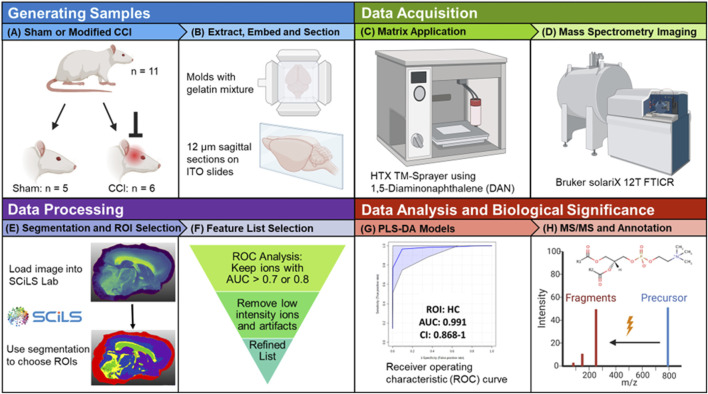
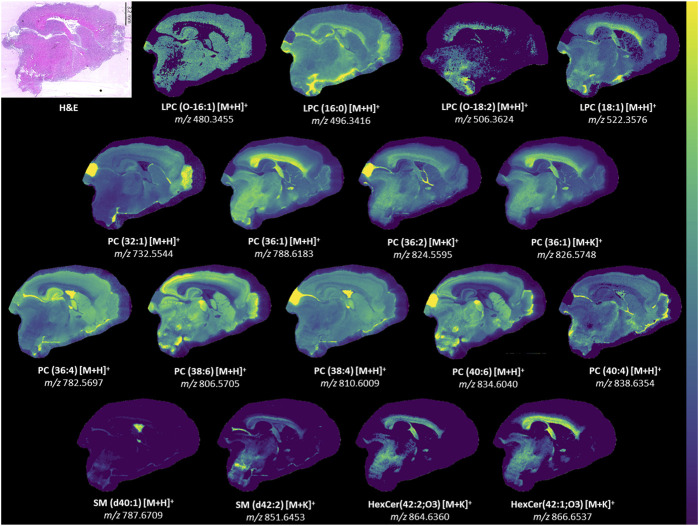
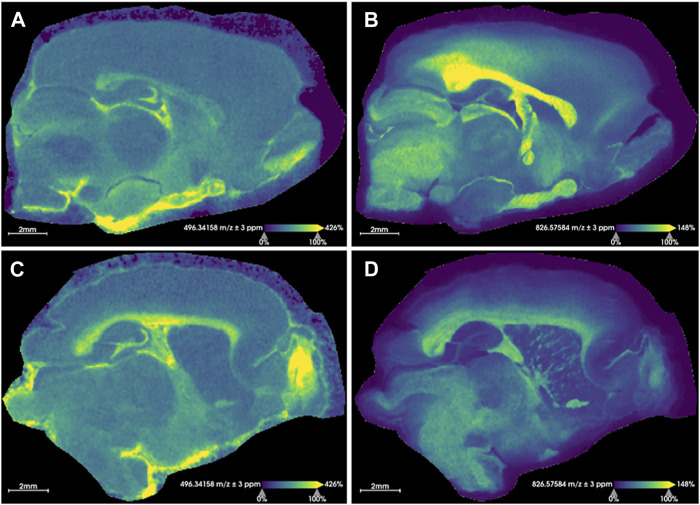
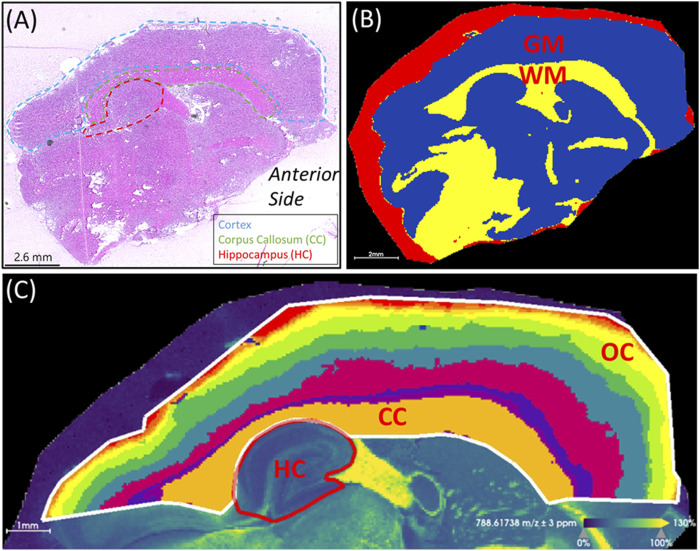
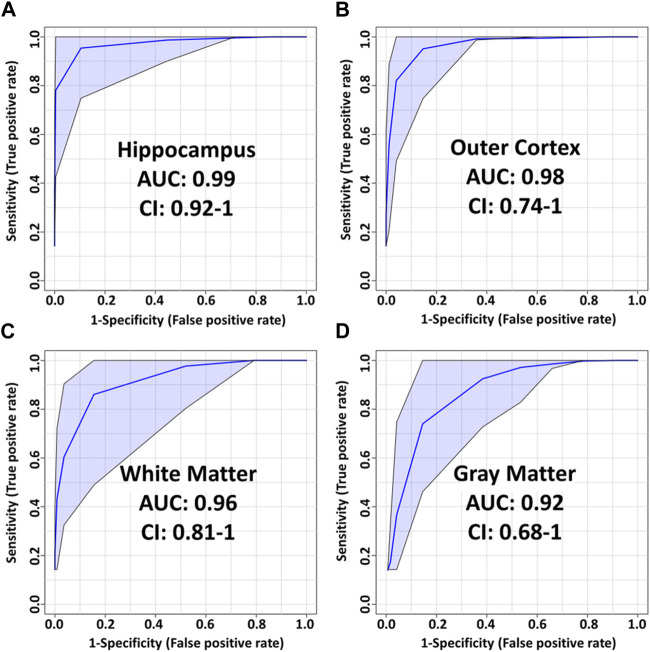
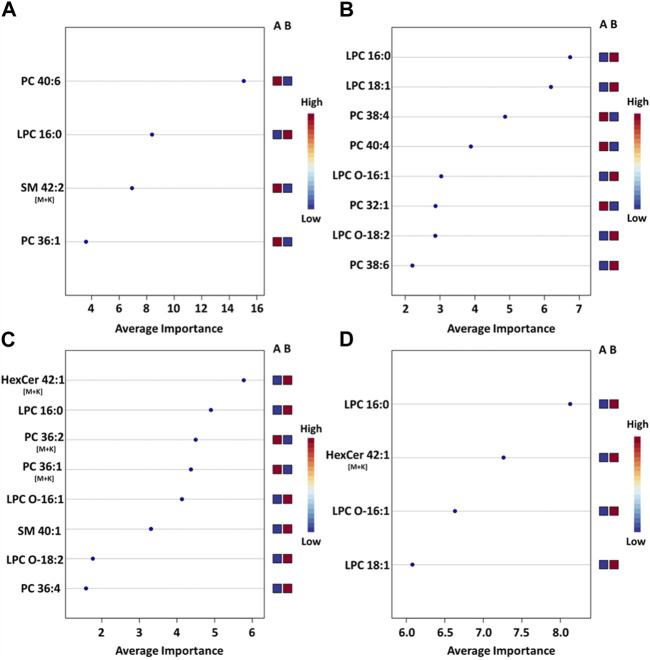
Traumatic brain injury (TBI) is a global public health problem with 50-60 million incidents per year, most of which are considered mild (mTBI) and many of these repetitive (rmTBI). Despite their massive implications, the pathologies of mTBI and rmTBI are not fully understood, with a paucity of information on brain lipid dysregulation following mild injury event(s). To gain more insight on mTBI and rmTBI pathology, a non-targeted spatial lipidomics workflow utilizing high resolution mass spectrometry imaging was developed to map brain region-specific lipid alterations in rats following injury. Discriminant multivariate models were created for regions of interest including the hippocampus, cortex, and corpus callosum to pinpoint lipid species that differentiated between injured and sham animals. A multivariate model focused on the hippocampus region differentiated injured brain tissues with an area under the curve of 0.99 using only four lipid species. Lipid classes that were consistently discriminant included polyunsaturated fatty acid-containing phosphatidylcholines (PC), lysophosphatidylcholines (LPC), LPC-plasmalogens (LPC-P) and PC potassium adducts. Many of the polyunsaturated fatty acid-containing PC and LPC-P selected have never been previously reported as altered in mTBI. The observed lipid alterations indicate that neuroinflammation and oxidative stress are important pathologies that could serve to explain cognitive deficits associated with rmTBI. Therapeutics which target or attenuate these pathologies may be beneficial to limit persistent damage following a mild brain injury event.
创伤性脑损伤(TBI)是一个全球性的公共卫生问题,每年发生5000万至6000万起事件,其中大多数被认为是轻度创伤性脑损伤(mTBI),且许多是重复性轻度创伤性脑损伤(rmTBI)。尽管其影响巨大,但mTBI和rmTBI的病理机制尚未完全了解,关于轻度损伤后脑脂质失调的信息也很少。为了更深入了解mTBI和rmTBI的病理机制,开发了一种利用高分辨率质谱成像的非靶向空间脂质组学工作流程,以绘制损伤后大鼠脑区特异性脂质变化图谱。针对包括海马体、皮质和胼胝体在内的感兴趣区域创建了判别多变量模型,以确定区分受伤动物和假手术动物的脂质种类。一个专注于海马体区域的多变量模型仅使用四种脂质种类,就能以0.99的曲线下面积区分受伤的脑组织。始终具有判别性的脂质类别包括含多不饱和脂肪酸的磷脂酰胆碱(PC)、溶血磷脂酰胆碱(LPC)、LPC-缩醛磷脂(LPC-P)和PC钾加合物。许多被选中的含多不饱和脂肪酸的PC和LPC-P以前从未被报道在mTBI中发生改变。观察到的脂质变化表明,神经炎症和氧化应激是重要的病理机制,可能有助于解释与rmTBI相关的认知缺陷。针对或减轻这些病理机制的治疗方法可能有助于限制轻度脑损伤事件后的持续性损伤。