Dance Science Laboratory, School of Dance, The Hong Kong Academy for Performing Arts, Wan Chai, Hong Kong.
Sport and Physical Activity Research Centre, University of Wolverhampton, Wolverhampton, UK.
Eur J Sport Sci. 2024 Jun;24(6):637-652. doi: 10.1002/ejsc.12111. Epub 2024 Apr 30.
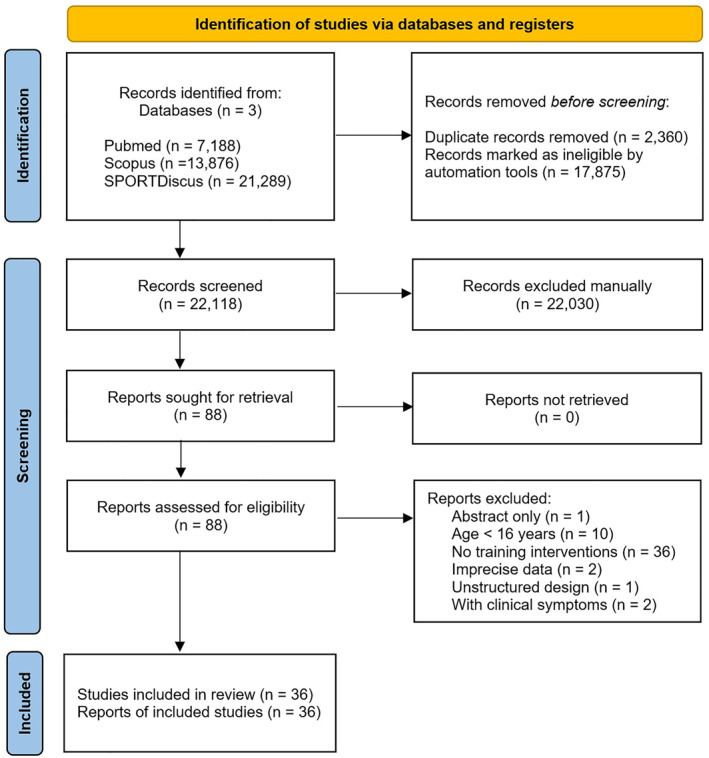
To assess the evidence for the effect of strength and conditioning on physical qualities and aesthetic competence in dance populations, three electronic databases (PubMed, Scopus, SPORTDiscus) were searched (until September 2022) for studies that met the following criteria: (i) dancers aged >16 years; (ii) structured strength and conditioning intervention; and (iii) with physical qualities and aesthetic competence as outcome measures. Methodological quality and risk of bias of the included studies were assessed through the systematic review tool "QualSyst". Meta-analyses of effect sizes (Hedges' g) with forest plots explored the effects of the strength and conditioning interventions. Thirty-six studies met the inclusion criteria and were included in this review. Meta-analysis indicated strength and conditioning significantly (p < 0.05) improved lower body power (g = 0.90, 95% CI: 0.53-1.27), upper body strength (g = 0.98, 95% CI: 0.39-1.57), lower body strength (g = 1.59, 95% CI: 0.97-2.22), and flexibility (g = 0.86, 95% CI: 0.05-1.66). Strength and conditioning interventions were found to be effective at improving physical qualities in dancers, recommending their participation in additional sessions to enhance overall fitness and ultimately dance performance. It is recommended that future strength and conditioning intervention research should include sample size calculations, with participants recruited from a specific dance genre and skill level in order to evaluate how strength and conditioning influences dance performance.
为了评估力量和体能训练对舞蹈人群身体素质和审美能力的影响的证据,我们在三个电子数据库(PubMed、Scopus、SPORTDiscus)中搜索了(截至 2022 年 9 月)符合以下标准的研究:(i)年龄大于 16 岁的舞者;(ii)进行结构化的力量和体能训练干预;(iii)以身体素质和审美能力为结果测量指标。使用系统评价工具“QualSyst”评估纳入研究的方法学质量和偏倚风险。使用森林图进行效应大小(Hedges' g)的荟萃分析,以探讨力量和体能训练干预的效果。有 36 项研究符合纳入标准,并被纳入本综述。荟萃分析表明,力量和体能训练显著(p < 0.05)提高了下半身力量(g = 0.90,95%置信区间:0.53-1.27)、上半身力量(g = 0.98,95%置信区间:0.39-1.57)、下半身力量(g = 1.59,95%置信区间:0.97-2.22)和柔韧性(g = 0.86,95%置信区间:0.05-1.66)。力量和体能训练干预对提高舞者的身体素质是有效的,建议他们参加额外的训练课程,以增强整体健康水平,最终提高舞蹈表现。建议未来的力量和体能训练干预研究应包括样本量计算,并从特定的舞蹈类型和技能水平招募参与者,以评估力量和体能训练如何影响舞蹈表现。