Department of Biostatistics, Virginia Commonwealth University, Richmond, VA, USA.
Occupational and Environmental Epidemiology Branch, Division of Cancer Epidemiology and Genetics, National Cancer Institute, Rockville, MD, USA.
Spat Spatiotemporal Epidemiol. 2024 Jun;49:100659. doi: 10.1016/j.sste.2024.100659. Epub 2024 May 12.
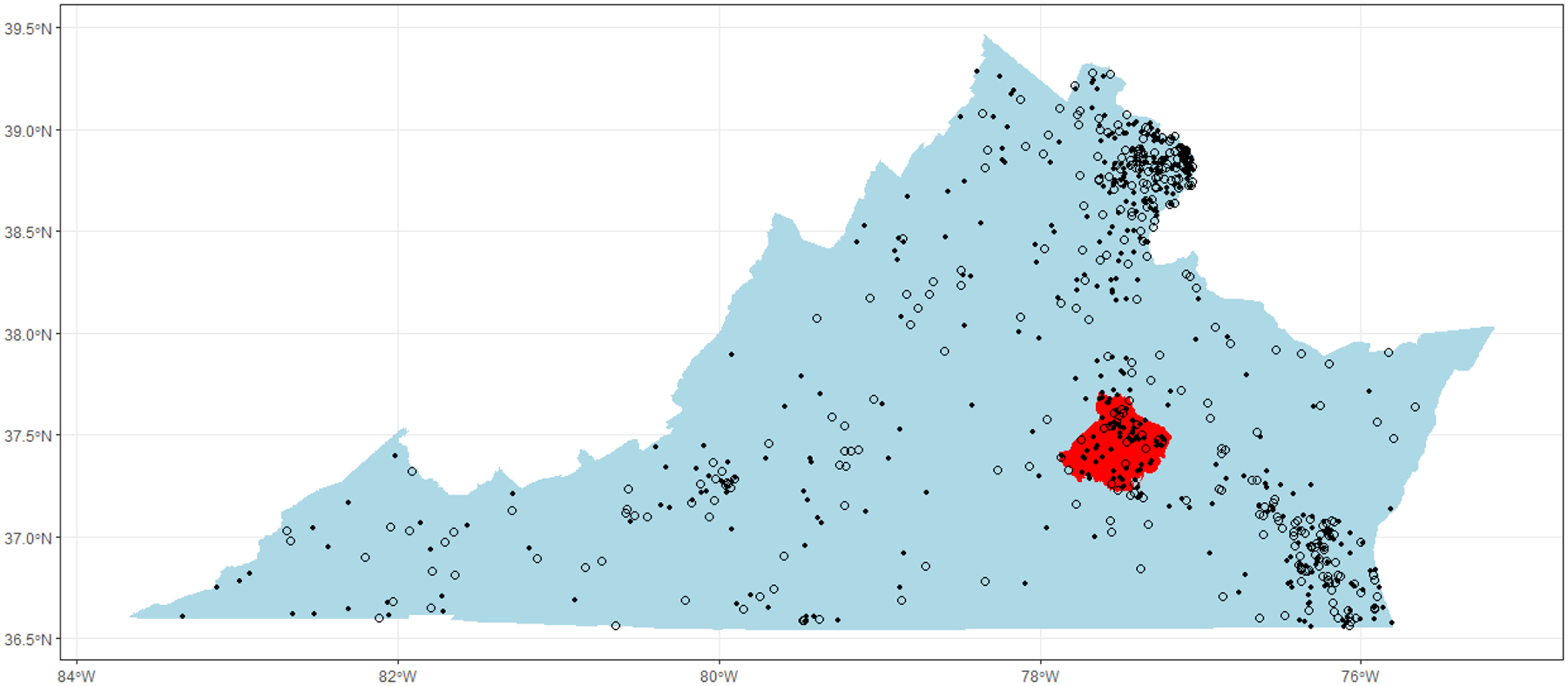
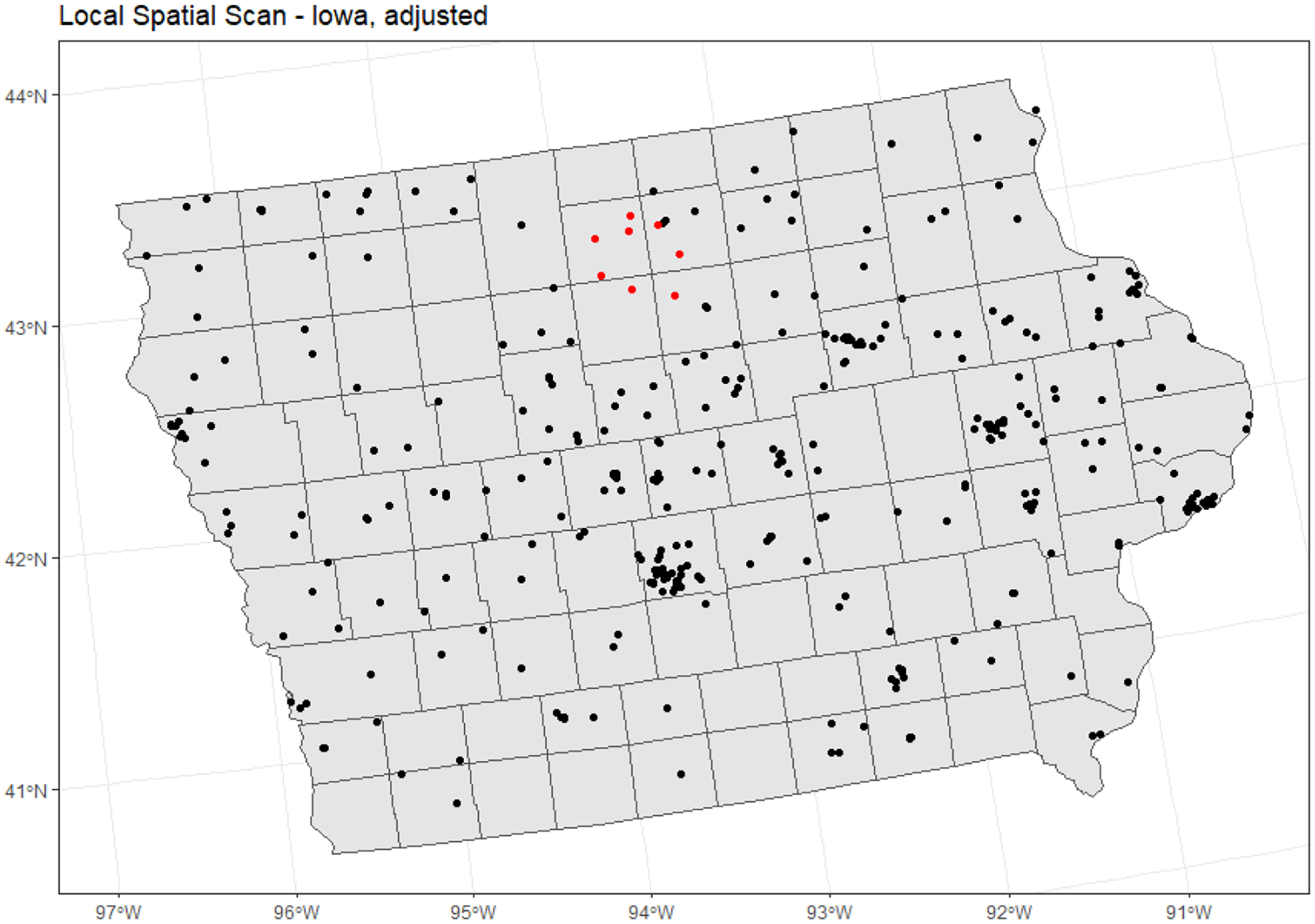
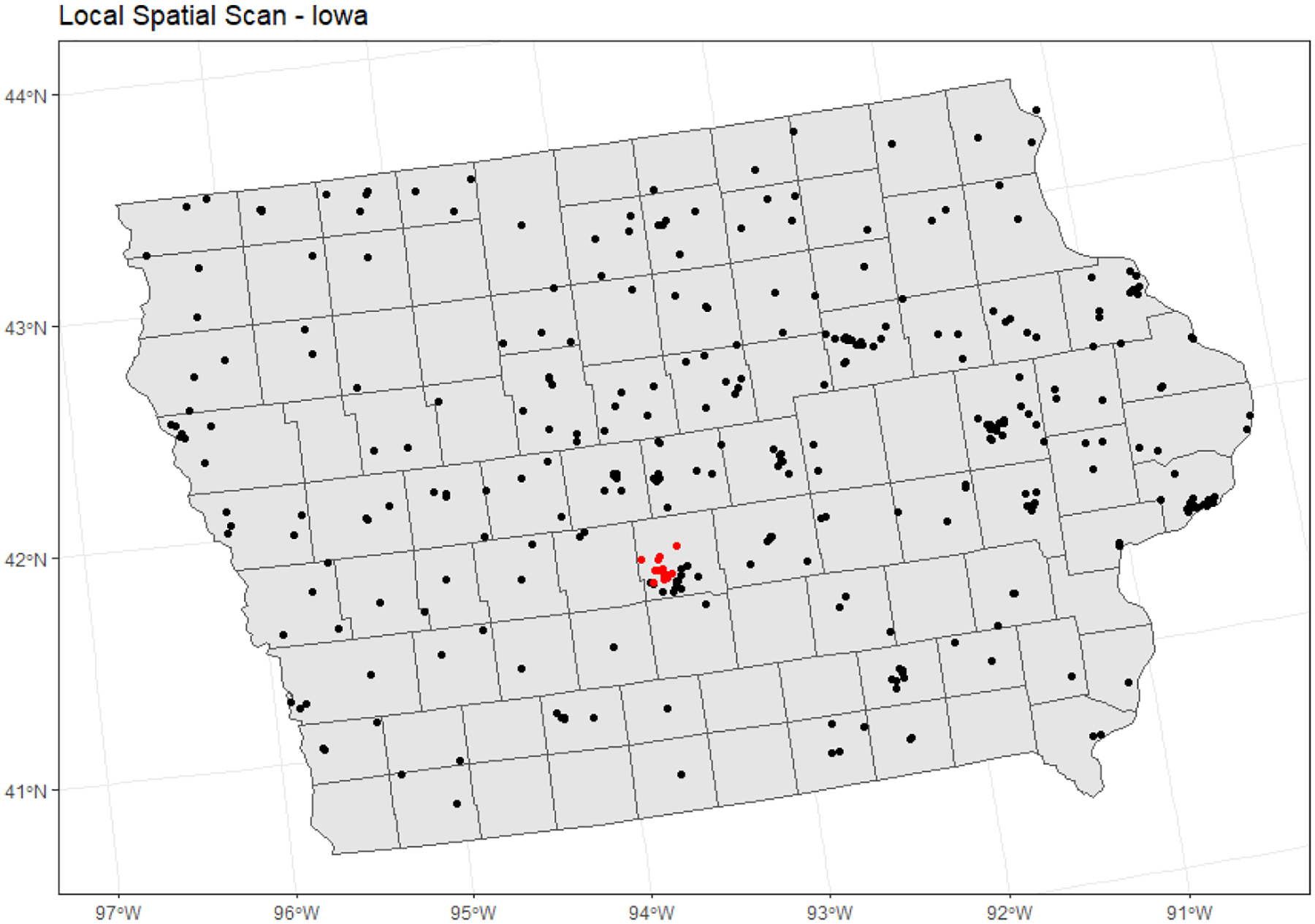
Spatial cluster analyses are commonly used in epidemiologic studies of case-control data to detect whether certain areas in a study region have an excess of disease risk. Case-control studies are susceptible to potential biases including selection bias, which can result from non-participation of eligible subjects in the study. However, there has been no systematic evaluation of the effects of non-participation on the findings of spatial cluster analyses. In this paper, we perform a simulation study assessing the effect of non-participation on spatial cluster analysis using the local spatial scan statistic under a variety of scenarios that vary the location and rates of study non-participation and the presence and intensity of a zone of elevated risk for disease for simulated case-control studies. We find that geographic areas of lower participation among controls than cases can greatly inflate false-positive rates for identification of artificial spatial clusters. Additionally, we find that even modest non-participation outside of a true zone of elevated risk can decrease spatial power to identify the true zone. We propose a spatial algorithm to correct for potentially spatially structured non-participation that compares the spatial distributions of the observed sample and underlying population. We demonstrate its ability to markedly decrease false positive rates in the absence of elevated risk and resist decreasing spatial sensitivity to detect true zones of elevated risk. We apply our method to a case-control study of non-Hodgkin lymphoma. Our findings suggest that greater attention should be paid to the potential effects of non-participation in spatial cluster studies.
空间聚类分析常用于病例对照数据的流行病学研究中,以检测研究区域内某些地区是否存在疾病风险过高的情况。病例对照研究容易受到潜在偏倚的影响,包括选择偏倚,这可能是由于合格的研究对象未参与研究造成的。然而,目前还没有系统地评估不参与对空间聚类分析结果的影响。在本文中,我们进行了一项模拟研究,使用局部空间扫描统计量评估了不参与对模拟病例对照研究中空间聚类分析的影响,模拟情况包括研究不参与的位置和速率以及疾病高风险区域的存在和强度的变化。我们发现,与病例相比,对照中参与度较低的地理区域会极大地增加识别人为空间聚类的假阳性率。此外,我们发现即使在真正的高风险区域之外存在适度的不参与,也会降低识别真实高风险区域的空间能力。我们提出了一种空间算法来纠正可能存在的空间结构不参与,该算法比较了观察样本和基础人群的空间分布。我们证明了它在没有高风险的情况下显著降低假阳性率的能力,并抵抗降低检测真实高风险区域的空间敏感性。我们将我们的方法应用于非霍奇金淋巴瘤的病例对照研究。我们的研究结果表明,在空间聚类研究中应更加关注不参与的潜在影响。