Department of Cell and Systems Biology, University of Toronto, Toronto, ON, Canada.
Centre for the Analysis of Genome Evolution & Function, University of Toronto, Toronto, ON, Canada.
Nat Commun. 2024 Jun 14;15(1):5102. doi: 10.1038/s41467-024-49425-4.
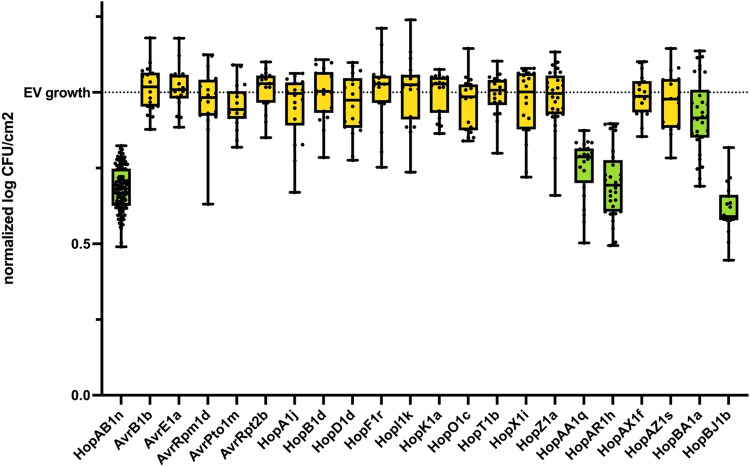
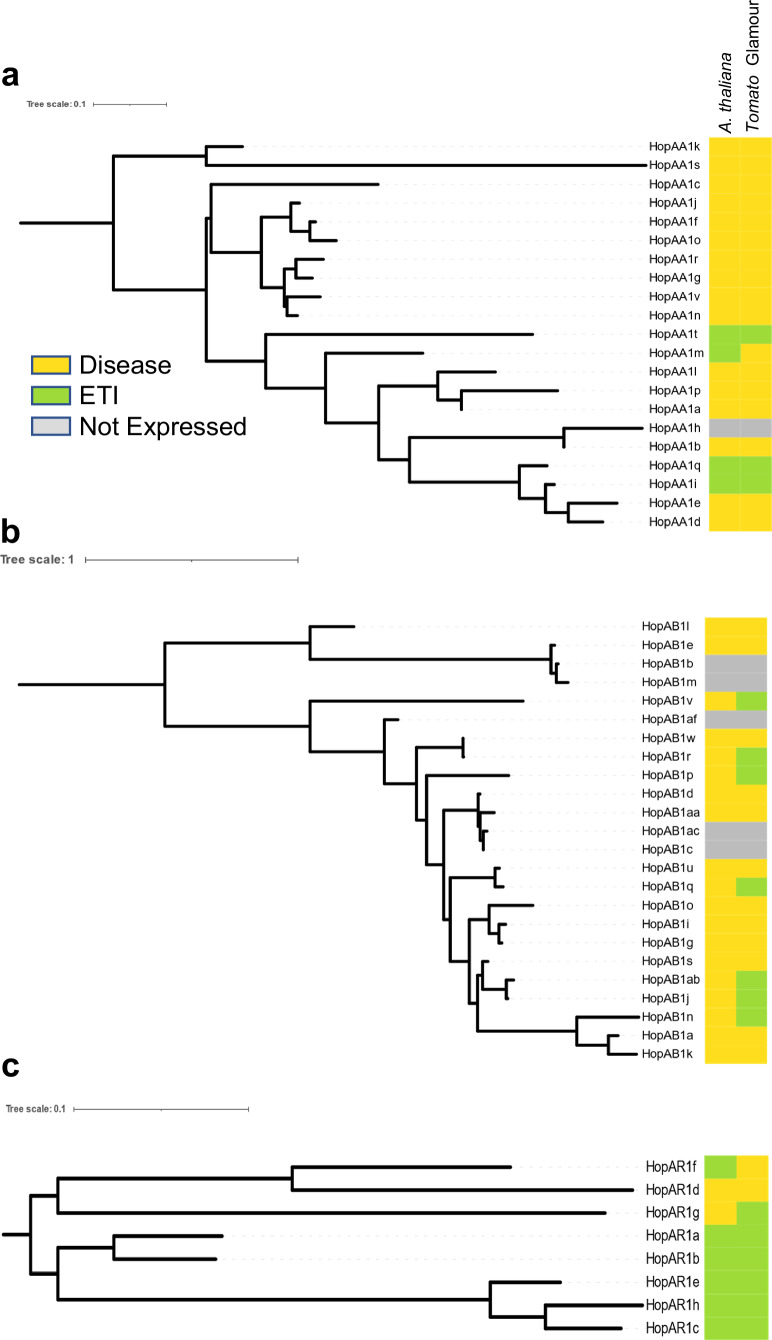
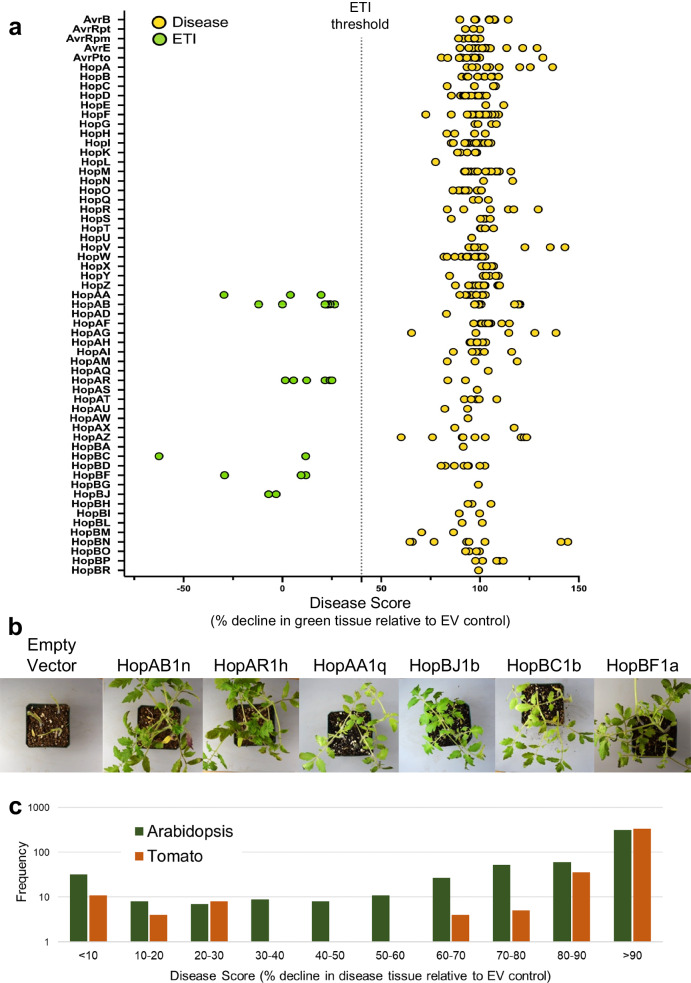
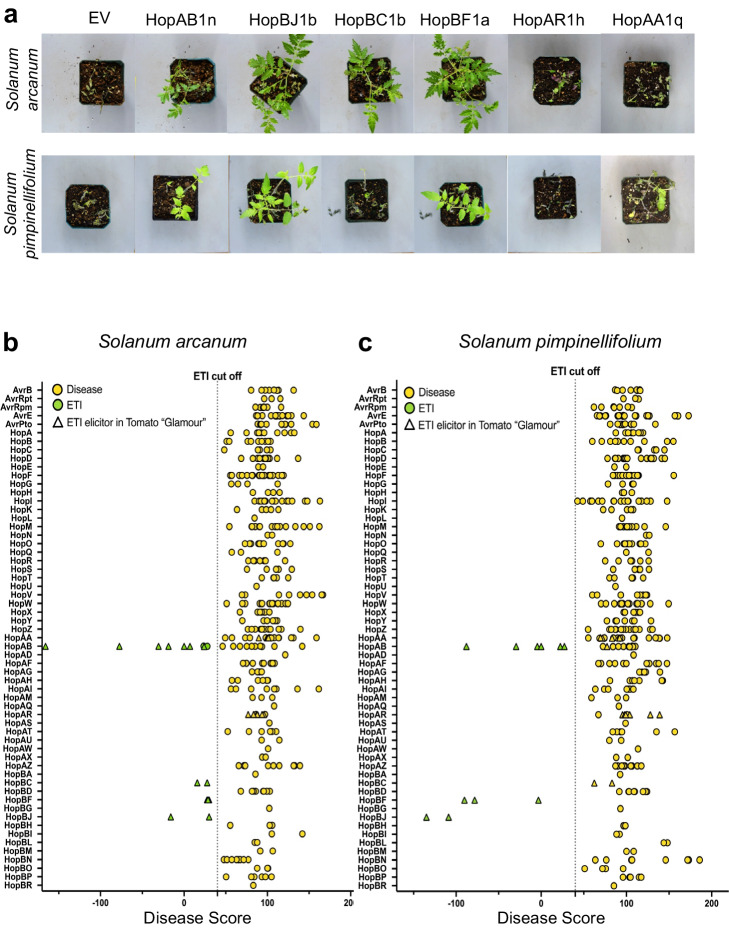
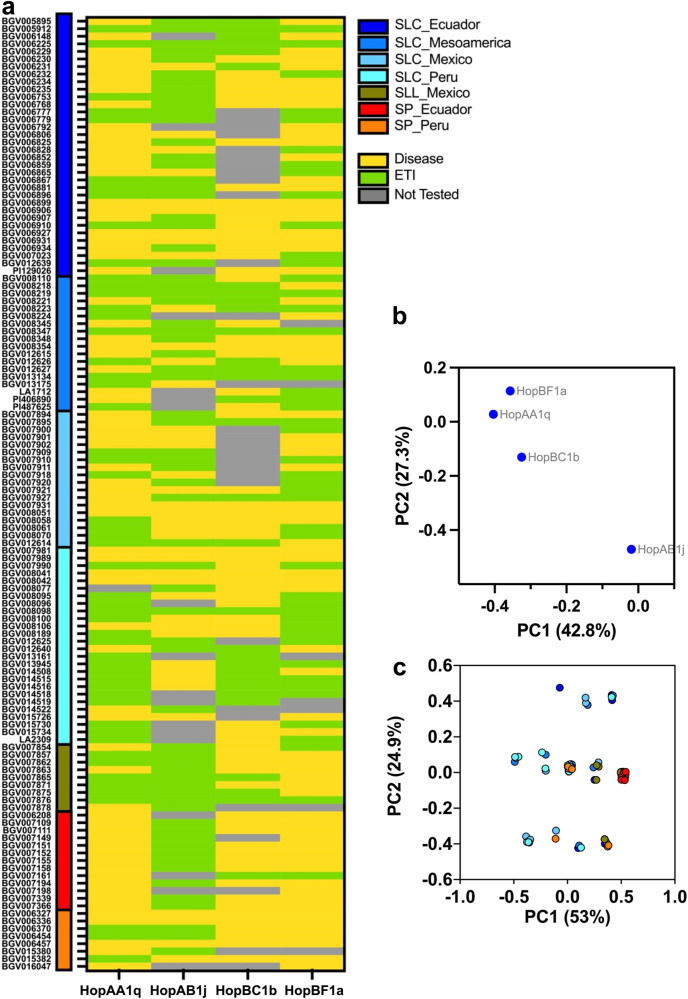
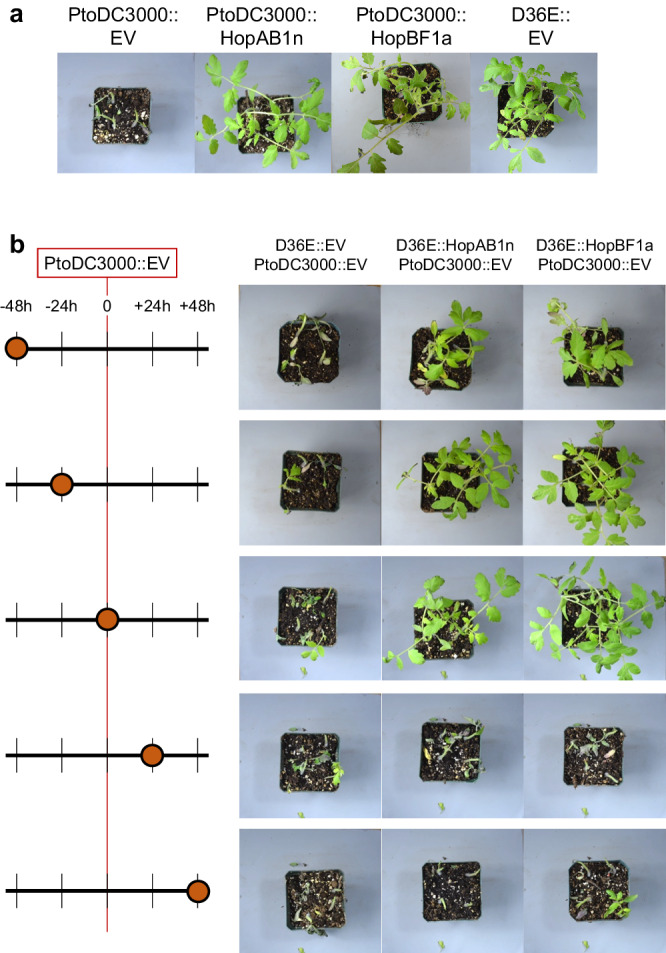
Tomato (Solanum lycopersicum) is one of the world's most important food crops, and as such, its production needs to be protected from infectious diseases that can significantly reduce yield and quality. Here, we survey the effector-triggered immunity (ETI) landscape of tomato against the bacterial pathogen Pseudomonas syringae. We perform comprehensive ETI screens in five cultivated tomato varieties and two wild relatives, as well as an immunodiversity screen on a collection of 149 tomato varieties that includes both wild and cultivated varieties. The screens reveal a tomato ETI landscape that is more limited than what was previously found in the model plant Arabidopsis thaliana. We also demonstrate that ETI eliciting effectors can protect tomato against P. syringae infection when the effector is delivered by a non-virulent strain either prior to or simultaneously with a virulent strain. Overall, our findings provide a snapshot of the ETI landscape of tomatoes and demonstrate that ETI can be used as a biocontrol treatment to protect crop plants.
番茄(Solanum lycopersicum)是世界上最重要的粮食作物之一,因此需要保护其免受可能显著降低产量和品质的传染病的侵害。在这里,我们调查了番茄对细菌病原体丁香假单胞菌的效应子触发免疫(ETI)景观。我们在五个栽培番茄品种和两个野生近缘种中进行了全面的 ETI 筛选,以及对包括野生和栽培品种在内的 149 个番茄品种的免疫多样性筛选。这些筛选揭示了番茄 ETI 景观比以前在模式植物拟南芥中发现的更为有限。我们还证明,当效应子时通过无毒菌株在有毒菌株之前或同时传递时,引发 ETI 的效应子可以保护番茄免受丁香假单胞菌的感染。总的来说,我们的研究结果提供了番茄 ETI 景观的一个快照,并证明 ETI 可以用作生物防治处理来保护作物植物。