Department of Anesthesiology and Intensive Therapy, Semmelweis University, Budapest, Hungary.
Department of Vascular and Endovascular Surgery, Semmelweis University, Budapest, Hungary.
Geroscience. 2024 Dec;46(6):6301-6315. doi: 10.1007/s11357-024-01237-6. Epub 2024 Jun 15.
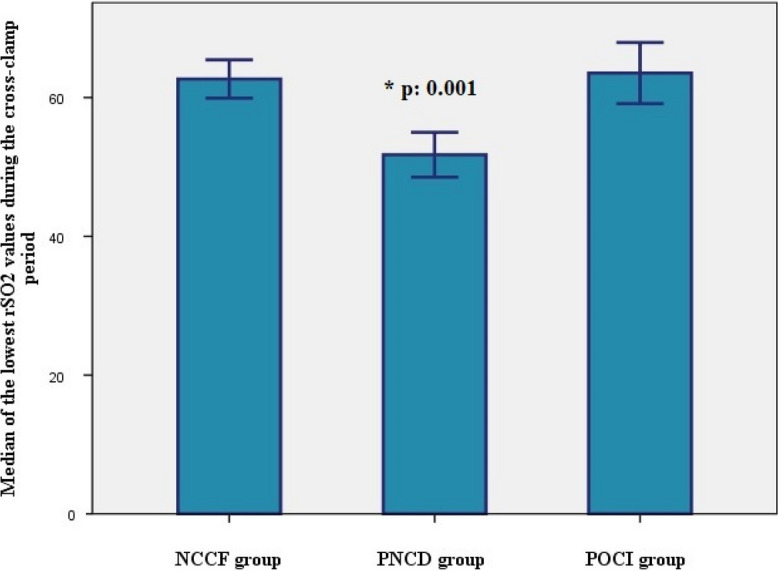
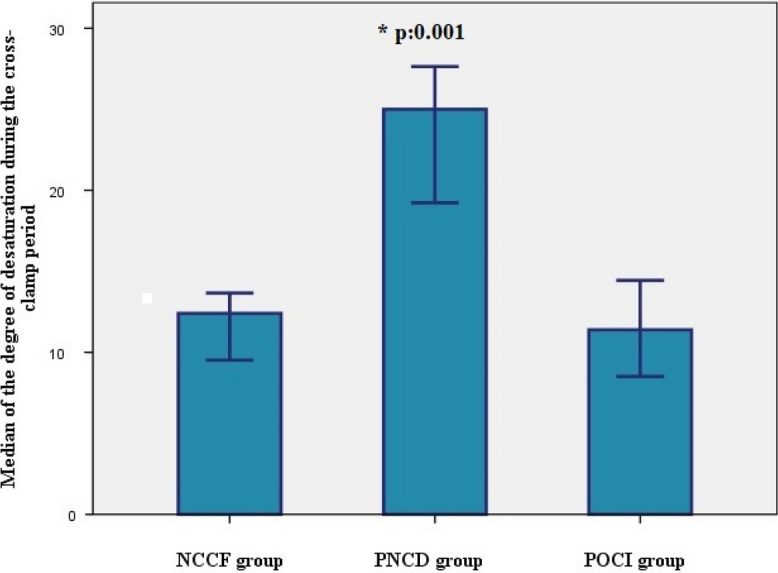
There are controversial data about the effect of carotid endarterectomy regarding postoperative cognitive function. Our aim was to analyze the effect of cerebral tissue saturation monitored by near-infrared spectroscopy (NIRS) on cognitive function. Perioperative data of 103 asymptomatic patients undergoing elective carotid surgery under general anesthesia were analyzed. Preoperatively and 3 months after the operation, MMSE (Mini Mental State Examination) and MoCA (Montreal Cognitive Assessment) tests were conducted. For cerebral monitoring, NIRS was used, and the lowest rSO value and the degree of desaturation were calculated. Cognitive changes were defined as one standard deviation change from the preoperative test scores, defined as postoperative neurocognitive decline (PNCD) and cognitive improvement (POCI). PNCD was found in 37 patients (35.92%), and POCI was found in 18 patients (17.47%). Female gender, patients with diabetes, and the degree of desaturation were independently associated with PNCD. The degree of desaturation during the cross-clamp period negatively correlated with the change in the MoCA scores (R = - 0.707, p = 0.001). The 15.5% desaturation ratio had 86.5% sensitivity and 78.8% specificity for discrimination. For POCI, a desaturation of less than 12.65% had 72.2% sensitivity and 67.1% specificity. POCI was associated with lower preoperative MOCA scores and a lower degree of desaturation. We found a significant relation between the change of postoperative cognitive function proven by the MoCA test and cerebral tissue saturation during the clamping period in patients undergoing carotid endarterectomy.
关于颈动脉内膜切除术对术后认知功能的影响存在争议数据。我们的目的是分析近红外光谱 (NIRS) 监测的脑组织饱和度对认知功能的影响。分析了 103 例在全身麻醉下接受择期颈动脉手术的无症状患者的围手术期数据。在手术前和手术后 3 个月进行 MMSE(简易精神状态检查)和 MoCA(蒙特利尔认知评估)测试。进行脑监测时使用了 NIRS,并计算了最低 rSO 值和饱和度降低程度。认知变化定义为术前测试分数的一个标准差变化,定义为术后认知功能下降 (PNCD) 和认知改善 (POCI)。37 例患者 (35.92%) 发现 PNCD,18 例患者 (17.47%) 发现 POCI。女性性别、糖尿病患者和饱和度降低程度与 PNCD 独立相关。夹闭期间的饱和度降低与 MoCA 评分的变化呈负相关 (R = -0.707,p = 0.001)。饱和度降低 15.5%的情况下,其对区分的敏感性为 86.5%,特异性为 78.8%。对于 POCI,饱和度降低小于 12.65%的情况下,其敏感性为 72.2%,特异性为 67.1%。POCI 与术前 MoCA 评分较低和饱和度降低程度较低有关。我们发现,在接受颈动脉内膜切除术的患者中,MoCA 测试证实的术后认知功能变化与夹闭期间的脑组织饱和度之间存在显著关系。