Institute of Pediatrics, Children's Hospital of Fudan University, and Institutes of Biomedical Sciences, Fudan University, Shanghai, 200032, People's Republic of China.
J Microbiol. 2024 May;62(5):367-379. doi: 10.1007/s12275-024-00141-0. Epub 2024 Jun 17.
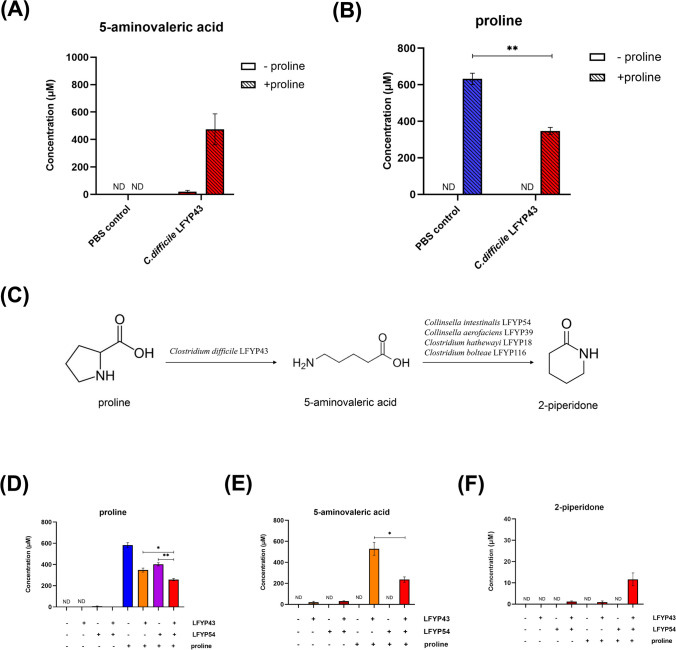
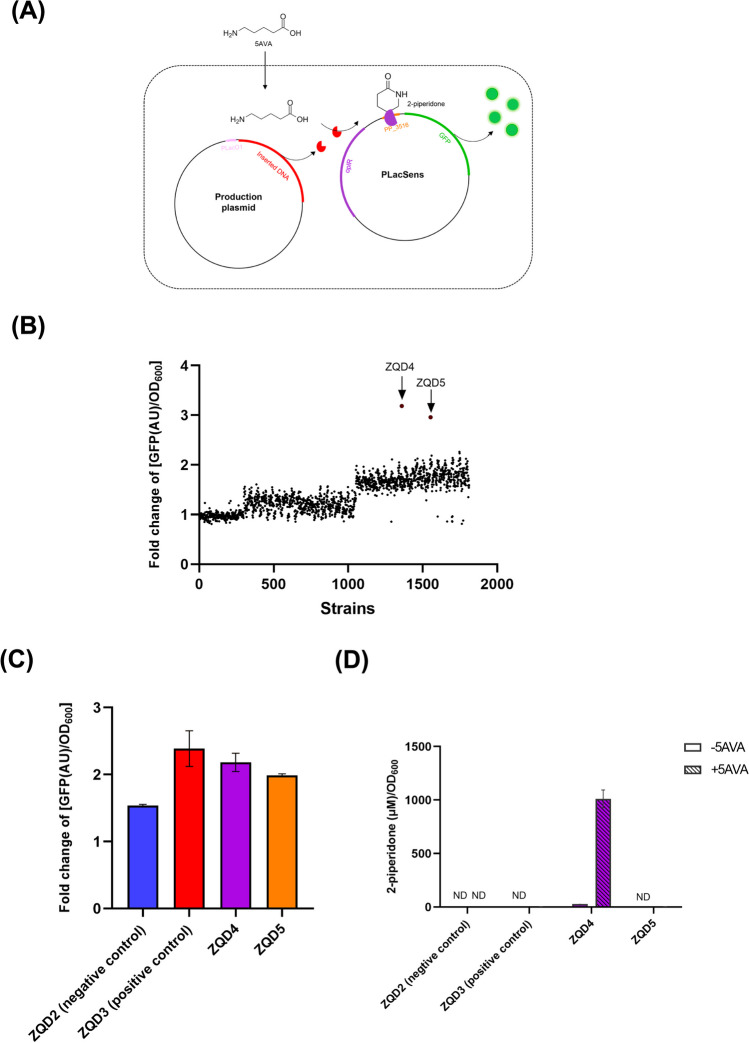
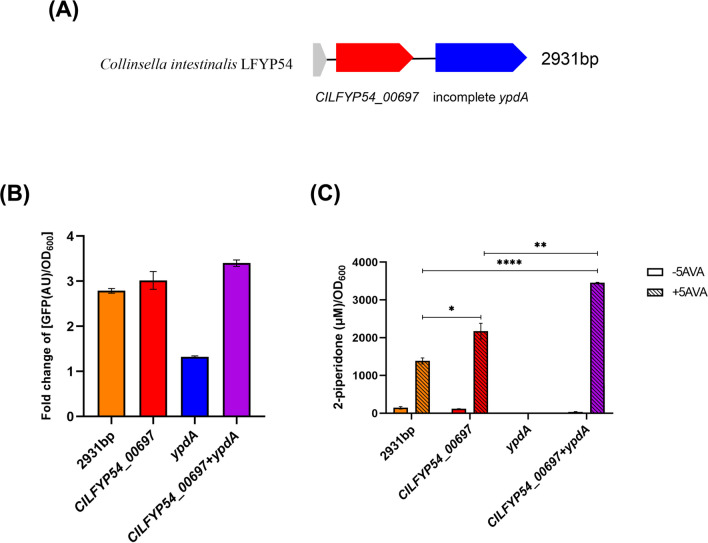
2-piperidone is a crucial industrial raw material of high-value nylon-5 and nylon-6,5. Currently, a major bottleneck in the biosynthesis of 2-piperidone is the identification of highly efficient 2-piperidone synthases. In this study, we aimed to identify specific strains among 51 human gut bacterial strains capable of producing 2-piperidone and to elucidate its synthetic mechanism. Our findings revealed that four gut bacterial strains, namely Collinsella aerofaciens LFYP39, Collinsella intestinalis LFYP54, Clostridium bolteae LFYP116, and Clostridium hathewayi LFYP18, could produce 2-piperidone from 5-aminovaleric acid (5AVA). Additionally, we observed that 2-piperidone could be synthesized from proline through cross-feeding between Clostridium difficile LFYP43 and one of the four 2-piperidone producing strains, respectively. To identify the enzyme responsible for catalyzing the conversion of 5AVA to 2-piperidone, we utilized a gain-of-function library and identified avaC (5-aminovaleric acid cyclase) in C. intestinalis LFYP54. Moreover, homologous genes of avaC were validated in the other three bacterial strains. Notably, avaC were found to be widely distributed among environmental bacteria. Overall, our research delineated the gut bacterial strains and genes involved in 2-piperidone production, holding promise for enhancing the efficiency of industrial biosynthesis of this compound.
2-哌啶酮是高价值尼龙-5 和尼龙-6,5 的重要工业原料。目前,2-哌啶酮生物合成的主要瓶颈是鉴定高效的 2-哌啶酮合酶。在这项研究中,我们旨在从 51 种人类肠道细菌中鉴定出能够产生 2-哌啶酮的特定菌株,并阐明其合成机制。我们的研究结果表明,4 种肠道细菌菌株,即 Aerofaciens Collinsella LFYP39、Intestinalis Collinsella LFYP54、Bolteae Clostridium LFYP116 和 Hathewayi Clostridium LFYP18,可以将 5-氨基戊酸(5AVA)转化为 2-哌啶酮。此外,我们观察到艰难梭菌 LFYP43 和 4 种 2-哌啶酮产生菌株中的一种菌株之间可以通过交叉喂养将脯氨酸转化为 2-哌啶酮。为了鉴定催化 5AVA 转化为 2-哌啶酮的酶,我们利用功能获得文库,在 LFYP54 中鉴定出了 C. intestinalis 的 avaC(5-氨基戊酸环化酶)。此外,还验证了其他三种细菌菌株中 avaC 的同源基因。值得注意的是,avaC 在环境细菌中广泛分布。总的来说,我们的研究描绘了参与 2-哌啶酮生产的肠道细菌菌株和基因,为提高该化合物的工业生物合成效率提供了希望。