Department of Ecology and Genetics, Evolutionary Biology Centre, Uppsala University, Norbyvägen 18 D, 752 36, Uppsala, Sweden.
School of Molecular and Life Sciences, Curtin University, Perth, Australia.
Sci Rep. 2024 Jun 18;14(1):14076. doi: 10.1038/s41598-024-64218-x.
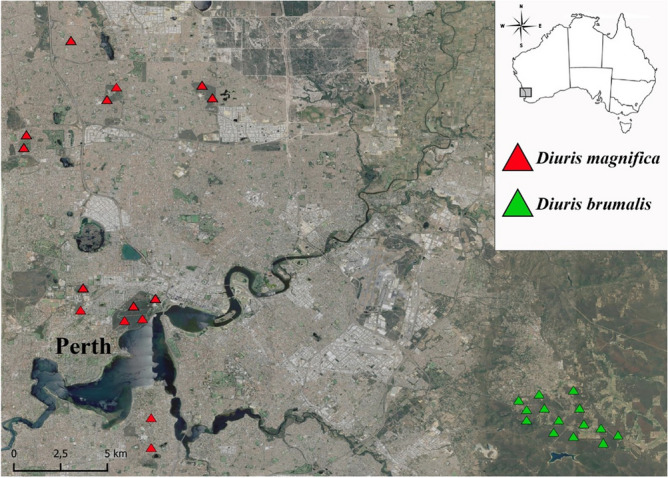
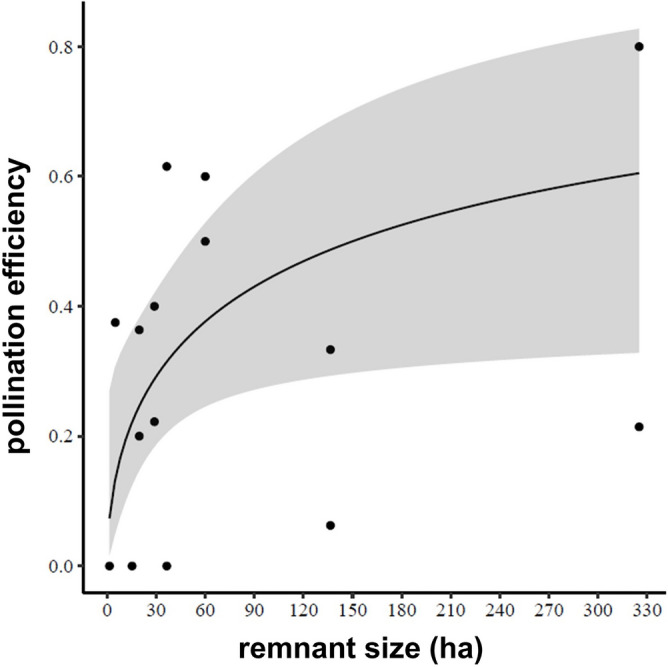
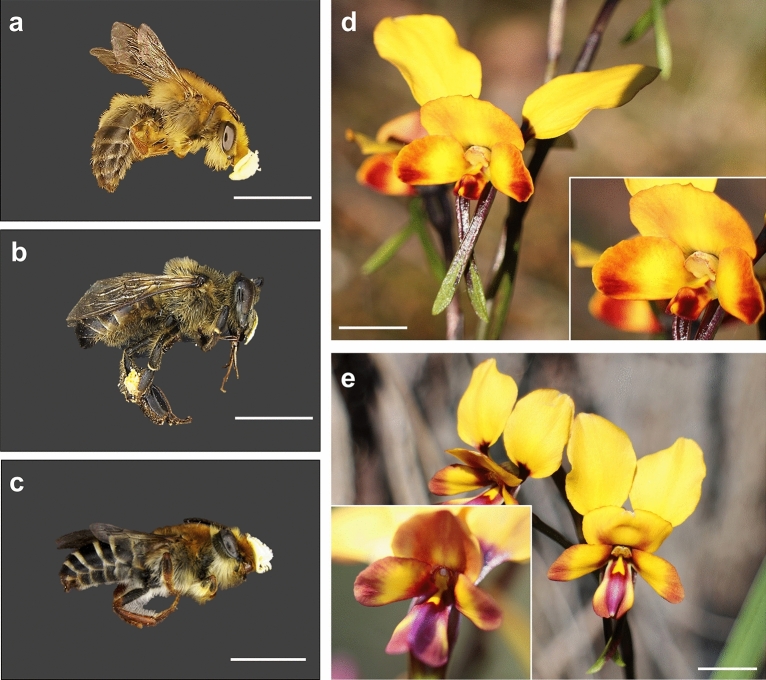
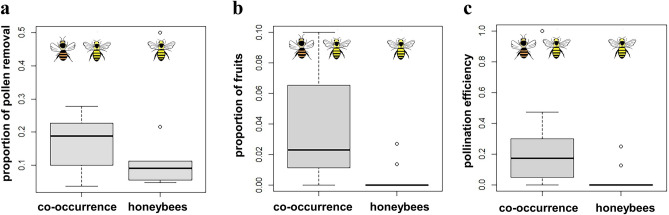
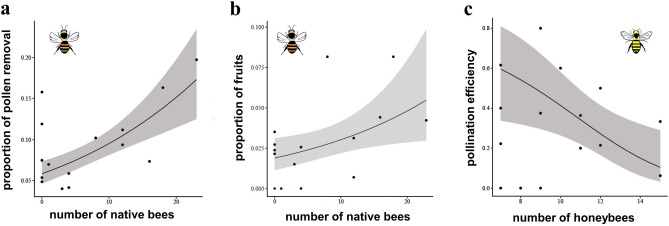
Biological invasions threaten global biodiversity, altering landscapes, ecosystems, and mutualistic relationships like pollination. Orchids are one of the most threatened plant families, yet the impact of invasive bees on their reproduction remains poorly understood. We conduct a global literature survey on the incidence of invasive honeybees (Apis mellifera) on orchid pollination, followed by a study case on Australian orchids. Our literature survey shows that Apis mellifera is the primary alien bee visiting orchids worldwide. However, in most cases, introduced honeybees do not deposit orchid pollen. We also test the extent to which introduced honeybees affect orchid pollination using Diuris brumalis and D. magnifica. Diuris brumalis shows higher fruit set and pollination in habitats with both native and invasive bees compared to habitats with only introduced bees. Male and female reproductive success in D. magnifica increases with native bee abundance, while conversely pollinator efficiency decreases with honeybee abundance and rises with habitat size. Our results suggest that introduced honeybees are likely involved in pollen removal but do not effectively deposit orchid pollen, acting as pollen wasters. However, Apis mellifera may still contribute to pollination of Diuris where native bees no longer exist. Given the global occurrence of introduced honeybees, we warn that certain orchids may suffer from pollen depletion by these invaders, especially in altered habitats with compromised pollination communities.
生物入侵威胁着全球生物多样性,改变了景观、生态系统和共生关系,如授粉。兰花是受威胁最严重的植物科之一,但入侵蜜蜂对其繁殖的影响仍知之甚少。我们对入侵蜜蜂(Apis mellifera)对兰花授粉的发生率进行了全球文献调查,随后对澳大利亚兰花进行了案例研究。我们的文献调查表明,Apis mellifera 是世界范围内访问兰花的主要外来蜜蜂。然而,在大多数情况下,引入的蜜蜂不会传播兰花花粉。我们还使用 Diuris brumalis 和 D. magnifica 测试了引入的蜜蜂对兰花授粉的影响程度。与仅引入蜜蜂的栖息地相比,Diuris brumalis 在有本地和入侵蜜蜂的栖息地中表现出更高的果实设置和授粉。D. magnifica 的雄性和雌性生殖成功率随着本地蜜蜂数量的增加而增加,而相反,随着蜜蜂数量的增加和栖息地面积的增加,传粉者效率降低。我们的研究结果表明,引入的蜜蜂可能参与花粉去除,但不能有效地传播兰花花粉,充当花粉浪费者。然而,在本地蜜蜂不再存在的情况下,Apis mellifera 可能仍然有助于 Diuris 的授粉。鉴于引入蜜蜂在全球范围内的存在,我们警告说,某些兰花可能会因这些入侵者而遭受花粉枯竭的影响,尤其是在授粉群落受损的改变生境中。