UNH-Unité de Nutrition Humaine, CRNH-Auvergne, Université Clermont-Auvergne, INRAe, F-63000 Clermont-Ferrand, France.
Resolution Therapeutics, University of Edinburgh, Edinburgh EH16 4UU, UK.
Int J Mol Sci. 2024 Jun 5;25(11):6221. doi: 10.3390/ijms25116221.
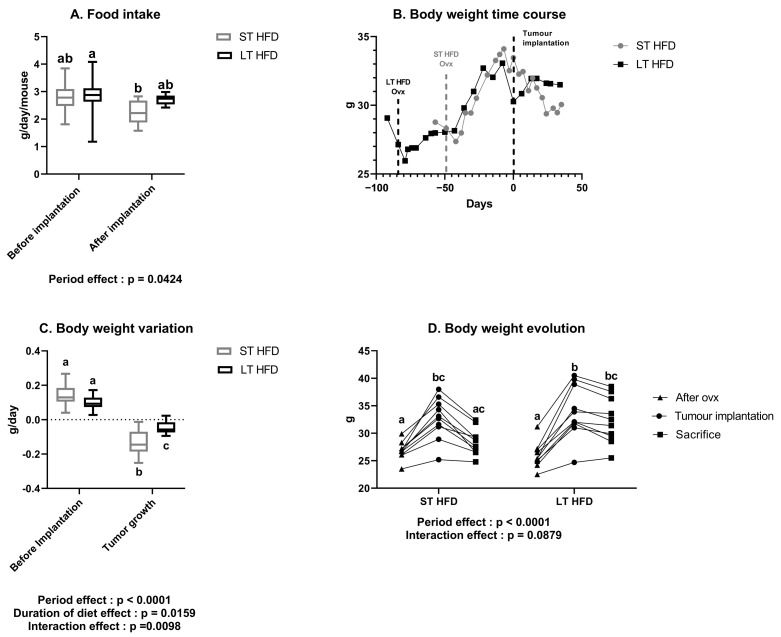
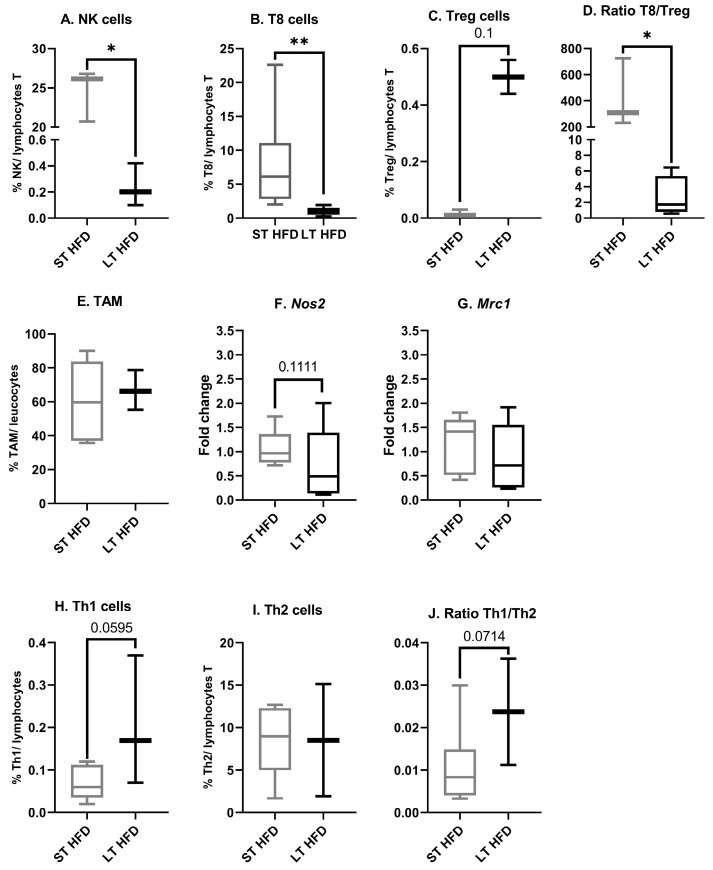
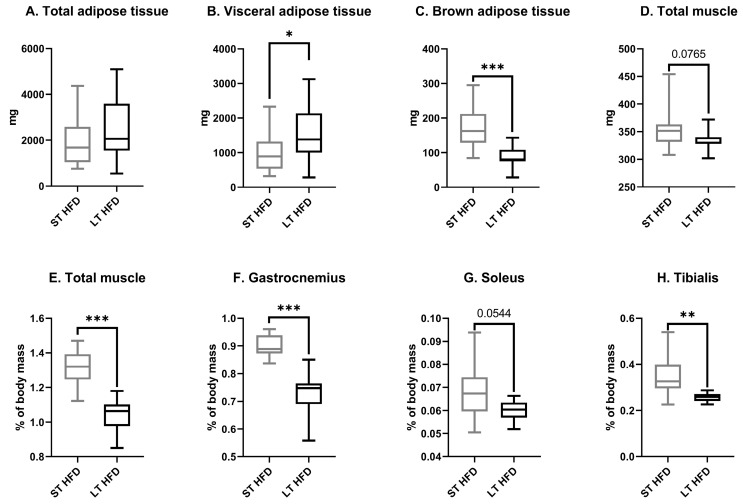
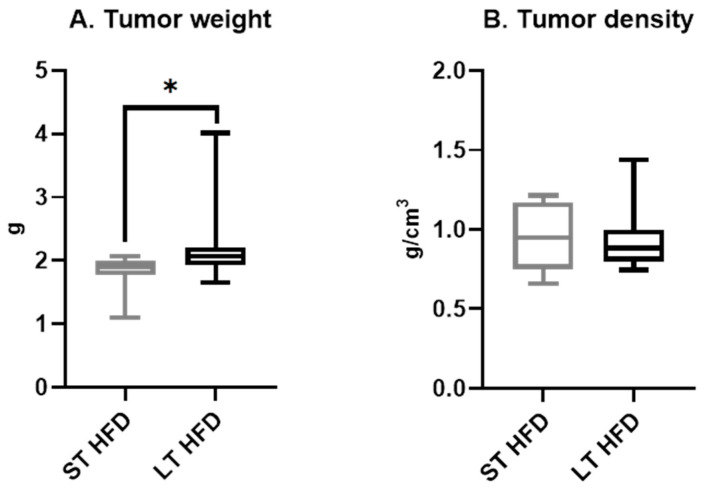
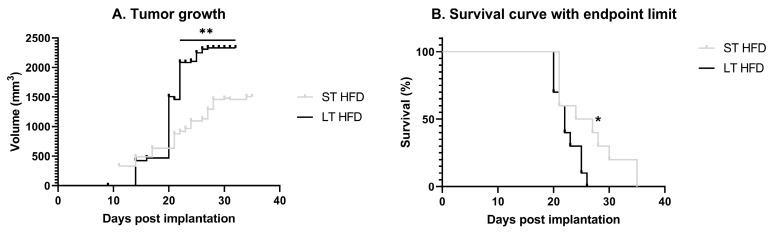
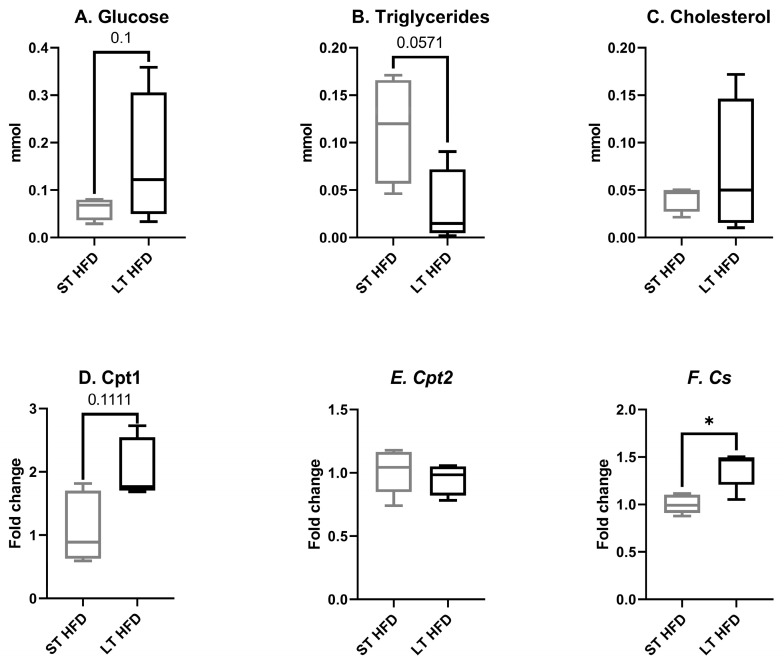
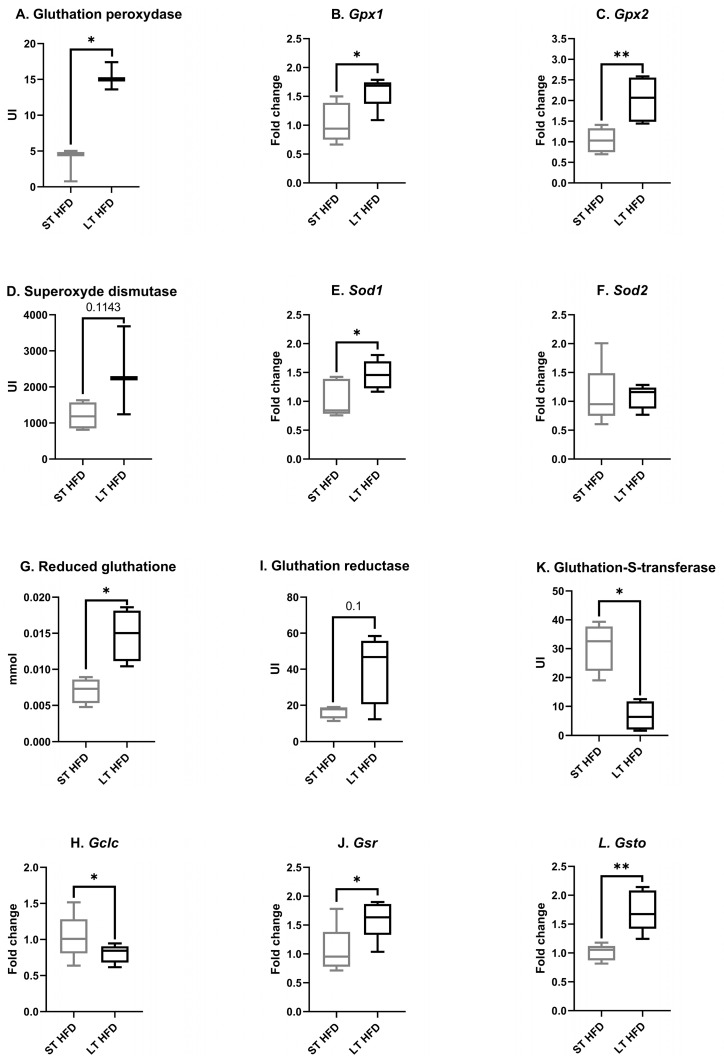
Breast cancer is influenced by factors such as diet, a sedentary lifestyle, obesity, and postmenopausal status, which are all linked to prolonged hormonal and inflammatory exposure. Physical activity offers protection against breast cancer by modulating hormones, immune responses, and oxidative defenses. This study aimed to assess how a prolonged high-fat diet (HFD) affects the effectiveness of physical activity in preventing and managing mammary tumorigenesis. Ovariectomised C57BL/6 mice were provided with an enriched environment to induce spontaneous physical activity while being fed HFD. After 44 days (short-term, ST HFD) or 88 days (long-term, LT HFD), syngenic EO771 cells were implanted into mammary glands, and tumour growth was monitored until sacrifice. Despite similar physical activity and food intake, the LT HFD group exhibited higher visceral adipose tissue mass and reduced skeletal muscle mass. In the tumour microenvironment, the LT HFD group showed decreased NK cells and TCD8+ cells, with a trend toward increased T regulatory cells, leading to a collapse of the T8/Treg ratio. Additionally, the LT HFD group displayed decreased tumour triglyceride content and altered enzyme activities indicative of oxidative stress. Prolonged exposure to HFD was associated with tumour growth despite elevated physical activity, promoting a tolerogenic tumour microenvironment. Future studies should explore inter-organ exchanges between tumour and tissues.
乳腺癌受饮食、久坐不动的生活方式、肥胖和绝经后状态等因素的影响,这些因素都与长期的激素和炎症暴露有关。身体活动通过调节激素、免疫反应和氧化防御来提供对乳腺癌的保护。本研究旨在评估长期高脂肪饮食(HFD)如何影响身体活动在预防和管理乳腺肿瘤发生中的有效性。对去卵巢 C57BL/6 小鼠进行富化环境饲养以诱导自发的身体活动,同时给予 HFD。44 天后(短期,ST HFD)或 88 天后(长期,LT HFD),将同源 EO771 细胞植入乳腺,监测肿瘤生长直至处死。尽管身体活动和食物摄入量相似,但 LT HFD 组表现出更高的内脏脂肪组织质量和更低的骨骼肌质量。在肿瘤微环境中,LT HFD 组显示 NK 细胞和 TCD8+细胞减少,调节性 T 细胞(Treg)增加,导致 T8/Treg 比值下降。此外,LT HFD 组显示肿瘤甘油三酯含量降低,并且氧化应激相关酶活性改变。尽管身体活动增加,但长期暴露于 HFD 与肿瘤生长有关,促进了肿瘤微环境的耐受性。未来的研究应探讨肿瘤与组织之间的器官间交换。