Wong Wei San, Ruscalleda-Alvarez Jaume, Yong Jean W H, Stevens Jason C, Valliere Justin M, Veneklaas Erik J
School of Biological Sciences, The University of Western Australia, 35 Stirling Highway, Crawley, WA 6009, Australia.
ARC Centre for Mine Site Restoration, School of Molecular and Life Sciences, Curtin University, Kent Street, Bentley, WA 6102, Australia.
Conserv Physiol. 2024 Jun 18;12(1):coae037. doi: 10.1093/conphys/coae037. eCollection 2024.
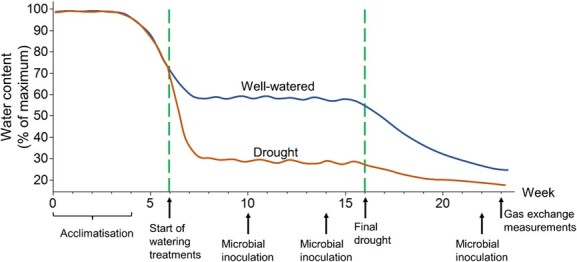
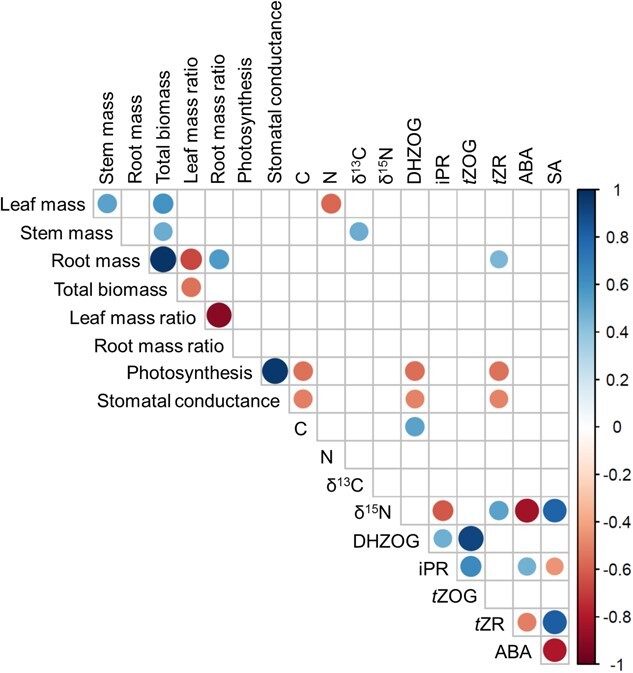
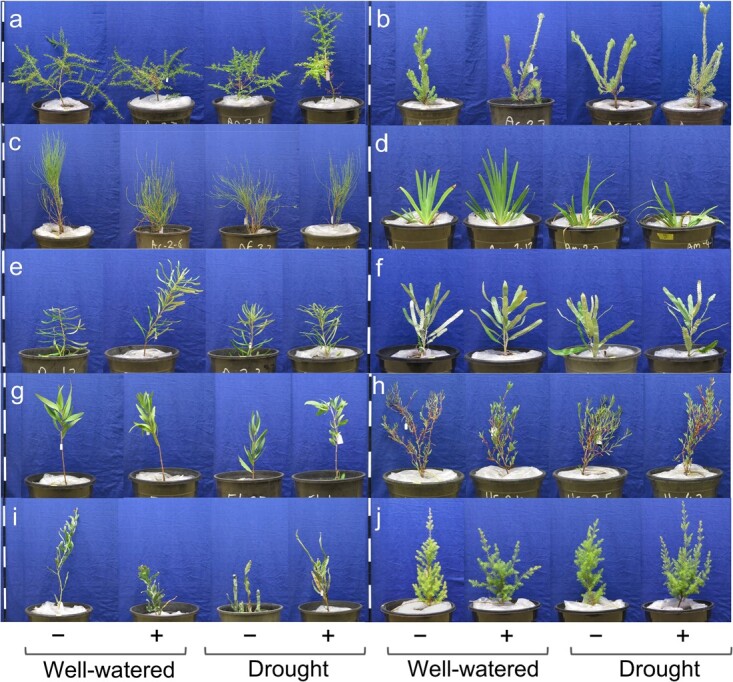
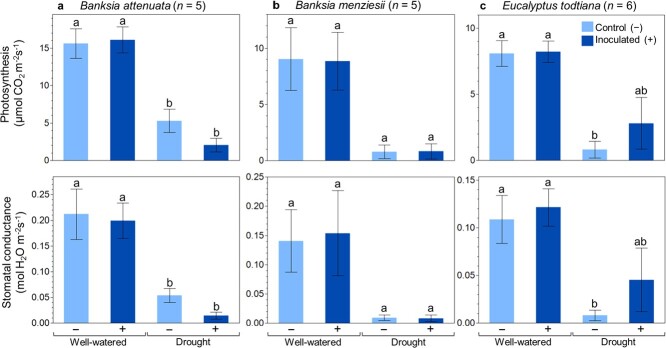
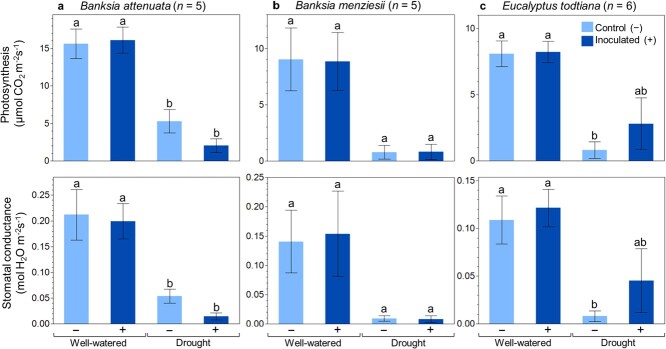
Soil microbial inoculants are increasingly being explored as means to improve soil conditions to facilitate ecological restoration. In southwestern Western Australia, highly biodiverse woodland plant communities are increasingly threatened by various factors including climate change, land development and mining. woodland restoration is necessary to conserve this plant community. The use of microbial inoculation in woodland restoration has not yet been investigated. Here, we evaluated the efficacy of a commercial microbial inoculant (GOGO Juice, Neutrog Australia Pty Ltd) for improving the performance of 10 ecologically diverse woodland plant species in a pot experiment. Plants were subjected to one of two watering regimes (well-watered and drought) in combination with microbial inoculation treatments (non-inoculated and inoculated). Plants were maintained under these two watering treatments for 10 weeks, at which point plants in all treatments were subjected to a final drought period lasting 8 weeks. Plant performance was evaluated by plant biomass and allocation, gas exchange parameters, foliar carbon and nitrogen and stable isotope (δN and δC) compositions. Plant xylem sap phytohormones were analysed to investigate the effect of microbial inoculation on plant phytohormone profiles and potential relationships with other observed physiological parameters. Across all investigated plant species, inoculation treatments had small effects on plant growth. Further analysis within each species revealed that inoculation treatments did not result in significant biomass gain under well-watered or drought-stressed conditions, and effects on nitrogen nutrition and photosynthesis were variable and minimal. This suggests that the selected commercial microbial inoculant had limited benefits for the tested plant species. Further investigations on the compatibility between the microorganisms (present in the inoculant) and plants, timing of inoculation, viability of the microorganisms and concentration(s) required to achieve effectiveness, under controlled conditions, and field trials are required to test the feasibility and efficacy in actual restoration environments.
土壤微生物接种剂作为改善土壤条件以促进生态恢复的手段正越来越多地被探索。在澳大利亚西部的西南部,高度生物多样的林地植物群落正日益受到包括气候变化、土地开发和采矿在内的各种因素的威胁。林地恢复对于保护这个植物群落是必要的。微生物接种在林地恢复中的应用尚未得到研究。在这里,我们在盆栽试验中评估了一种商业微生物接种剂(GOGO Juice,澳大利亚Neutrog私人有限公司)对10种生态多样的林地植物物种生长表现的影响。植物接受两种浇水处理方式(充分浇水和干旱)之一,并结合微生物接种处理(未接种和接种)。植物在这两种浇水处理下维持10周,此时所有处理的植物都经历了持续8周的最终干旱期。通过植物生物量和分配、气体交换参数、叶片碳和氮以及稳定同位素(δN和δC)组成来评估植物表现。分析植物木质部汁液植物激素,以研究微生物接种对植物激素谱的影响以及与其他观察到的生理参数的潜在关系。在所有研究的植物物种中,接种处理对植物生长的影响较小。对每个物种的进一步分析表明,在充分浇水或干旱胁迫条件下,接种处理并未导致显著的生物量增加,对氮营养和光合作用的影响各不相同且很小。这表明所选的商业微生物接种剂对受试植物物种的益处有限。需要在可控条件下进一步研究接种剂中微生物与植物之间的相容性、接种时间、微生物的活力以及达到有效性所需的浓度,并进行田间试验,以测试在实际恢复环境中的可行性和有效性。