Tatchell K, Robinson L C, Breitenbach M
Proc Natl Acad Sci U S A. 1985 Jun;82(11):3785-9. doi: 10.1073/pnas.82.11.3785.
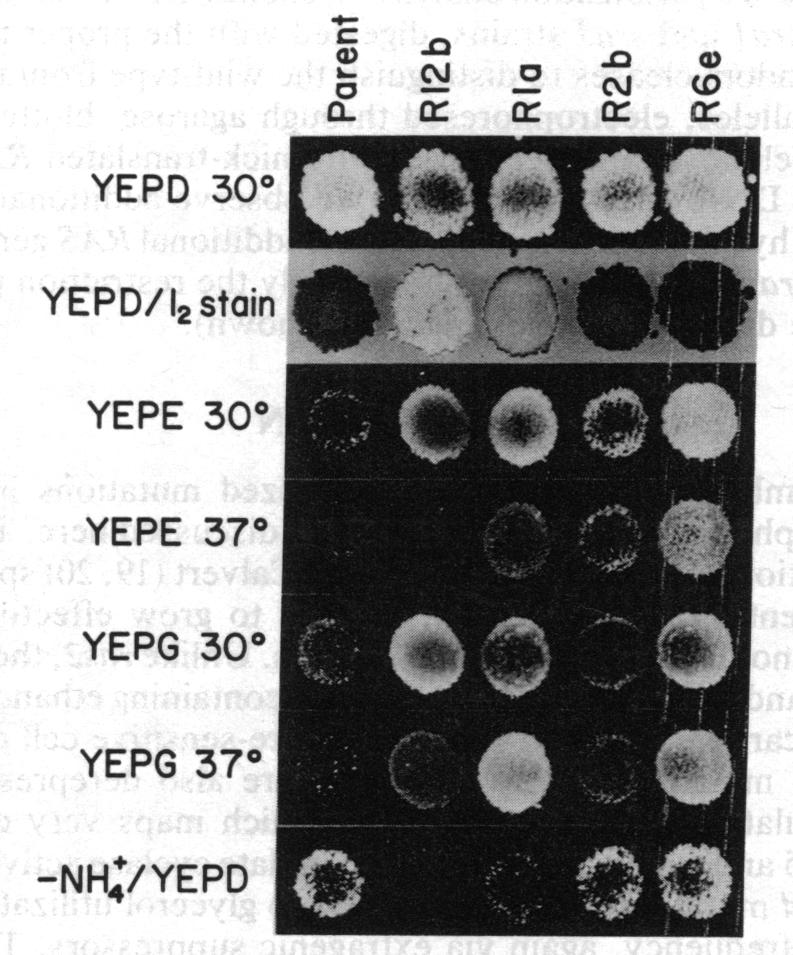
Saccharomyces cerevisiae contains two genes with remarkable homology to members of the ras oncogene family. These two genes, RAS1 and RAS2, constitute an essential gene family since spores with disruptions of both genes fail to grow. We report here that strains containing RAS2 disruptions have three distinct phenotypes. First, they fail to grow efficiently on nonfermentable carbon sources. Second, they hyperaccumulate the storage carbohydrates glycogen and trehalose. Third, diploid cells homozygous for the RAS2 disruptions sporulate on rich media. Extragenic suppressors have been isolated that suppress the gluconeogenic defect. These suppressors fall into at least three complementation groups, mutations in two of which bypass the normal requirement of RAS for cell viability, allowing cells containing neither RAS gene to grow. The phenotype of the RAS2 mutant and extragenic suppressors implicate RAS with some function in the normal response to nutrient limitation.
酿酒酵母含有两个与ras癌基因家族成员具有显著同源性的基因。这两个基因,RAS1和RAS2,构成了一个必需基因家族,因为两个基因都被破坏的孢子无法生长。我们在此报告,含有RAS2破坏的菌株有三种不同的表型。首先,它们在不可发酵碳源上不能有效生长。其次,它们会过度积累储存碳水化合物糖原和海藻糖。第三,RAS2破坏纯合的二倍体细胞在丰富培养基上形成孢子。已经分离出了抑制糖异生缺陷的基因外抑制子。这些抑制子至少分为三个互补群,其中两个群中的突变绕过了RAS对细胞活力的正常需求,使不含RAS基因的细胞能够生长。RAS2突变体和基因外抑制子的表型表明RAS在对营养限制的正常反应中具有某种功能。