Puthusseryppady Vaisakh, Cossio Daniela, Yu Shuying, Rezwana Farnaz, Hegarty Mary, Jacobs Emily G, Chrastil Elizabeth R
Department of Neurobiology and Behavior, University of California, Irvine, Irvine, CA, United States.
Department of Psychological and Brain Sciences, University of California, Santa Barbara, Santa Barbara, CA, United States.
Front Aging Neurosci. 2024 Jun 11;16:1382801. doi: 10.3389/fnagi.2024.1382801. eCollection 2024.
Despite its importance for navigation, very little is known about how the normal aging process affects spatial exploration behavior. We aimed to investigate: (1) how spatial exploration behavior may be altered early in the aging process, (2) the relationship between exploration behavior and subsequent spatial memory, and (3) whether exploration behavior can classify participants according to age.
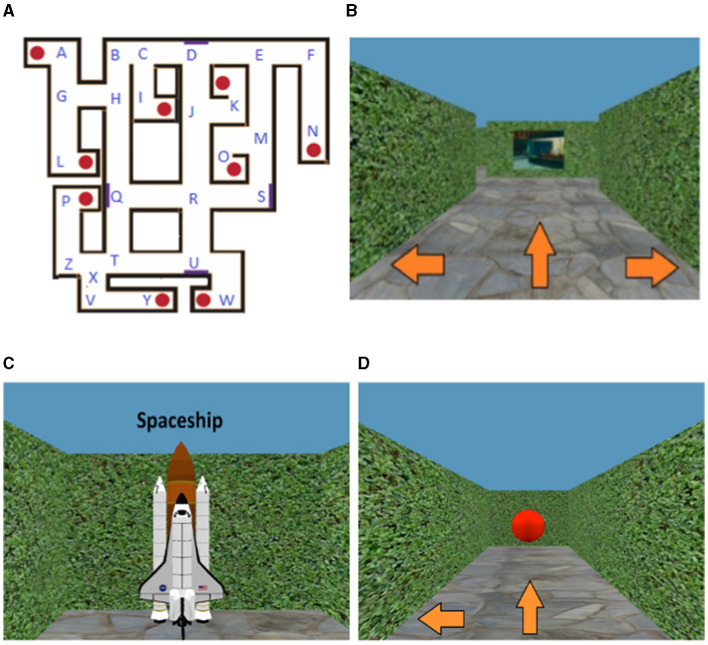
Fifty healthy young (aged 18-28) and 87 healthy midlife adults (aged 43-61) freely explored a desktop virtual maze, learning the locations of nine target objects. Various exploration behaviors (object visits, distance traveled, turns made, etc.) were measured. In the test phase, participants navigated from one target object to another without feedback, and their wayfinding success (% correct trials) was measured.
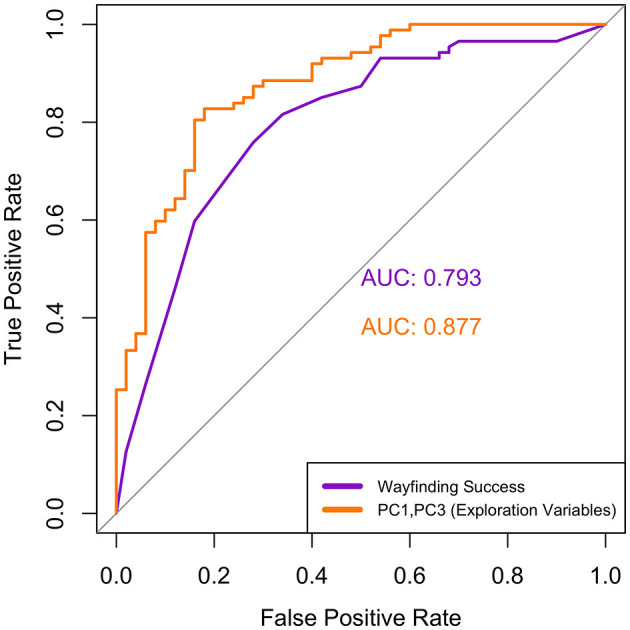
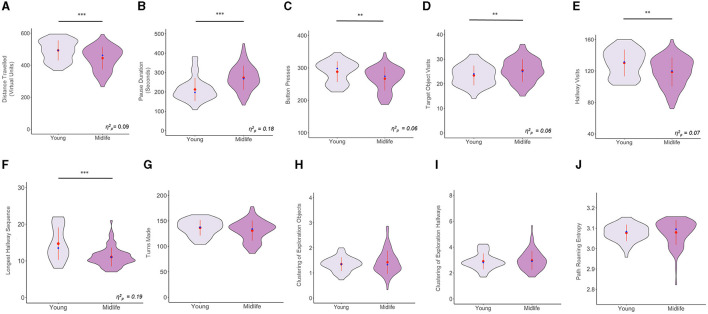
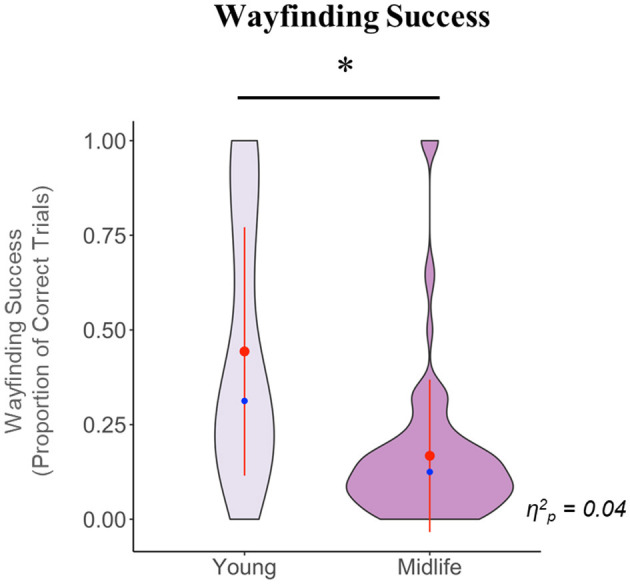
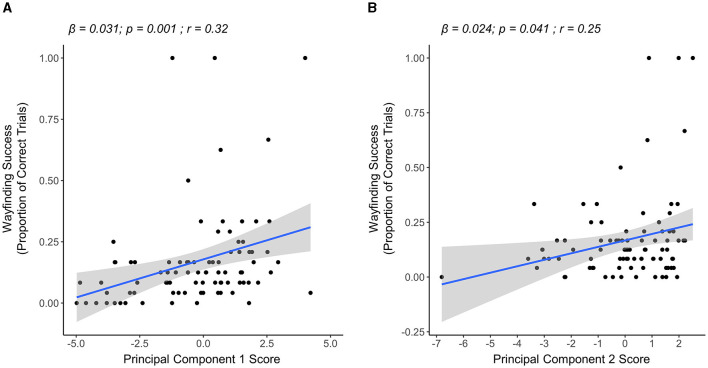
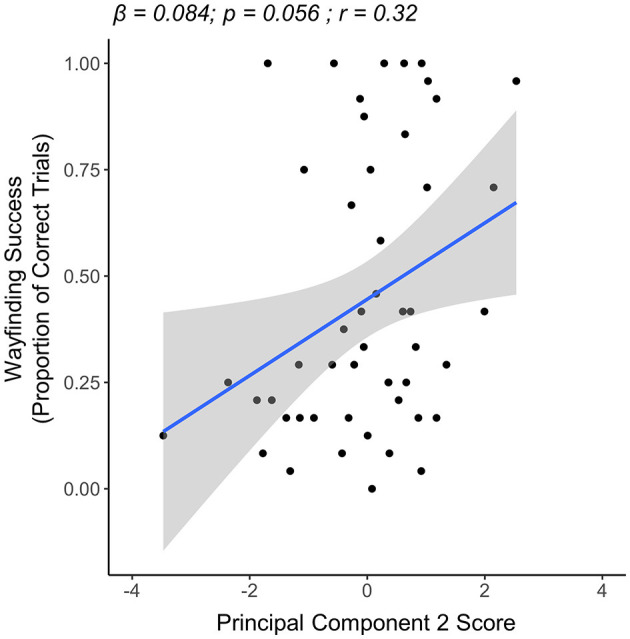
In the exploration phase, midlife adults exhibited less exploration overall compared to young adults, and prioritized learning target object locations over maze layout. In the test phase, midlife adults exhibited less wayfinding success when compared to the young adults. Furthermore, following principal components analysis (PCA), regression analyses indicated that both exploration quantity and quality components were associated with wayfinding success in the midlife group, but not the young adults. Finally, we could classify participants according to age with similar accuracy using either their exploration behavior or wayfinding success scores.
Our results aid in the understanding of how aging impacts spatial exploration, and encourages future investigations into how pathological aging may affect spatial exploration behavior.
尽管空间探索行为对导航很重要,但对于正常衰老过程如何影响空间探索行为,我们知之甚少。我们旨在研究:(1)衰老过程早期空间探索行为可能如何改变;(2)探索行为与后续空间记忆之间的关系;(3)探索行为是否可以根据年龄对参与者进行分类。
50名健康的年轻人(年龄在18 - 28岁之间)和87名健康的中年成年人(年龄在43 - 61岁之间)自由探索一个桌面虚拟迷宫,学习九个目标物体的位置。测量了各种探索行为(物体访问次数、行进距离、转弯次数等)。在测试阶段,参与者在没有反馈的情况下从一个目标物体导航到另一个目标物体,并测量他们的寻路成功率(正确试验的百分比)。
在探索阶段,与年轻人相比,中年成年人总体上表现出较少的探索行为,并且优先学习目标物体的位置而不是迷宫布局。在测试阶段,与年轻人相比,中年成年人的寻路成功率较低。此外,经过主成分分析(PCA)后,回归分析表明,在中年组中,探索数量和质量成分均与寻路成功相关,但在年轻组中并非如此。最后,我们可以使用参与者的探索行为或寻路成功分数以相似的准确率根据年龄对他们进行分类。
我们的结果有助于理解衰老如何影响空间探索,并鼓励未来研究病理性衰老可能如何影响空间探索行为。