Norwich Medical School, 2.04 Bob Champion Research and Education Building, University of East Anglia, Norwich, NR4 7TJ, UK.
Department of Neurobiology and Behaviour, University of California Irvine, Irvine, 92617, USA.
Sci Rep. 2022 Aug 4;12(1):13397. doi: 10.1038/s41598-022-17634-w.
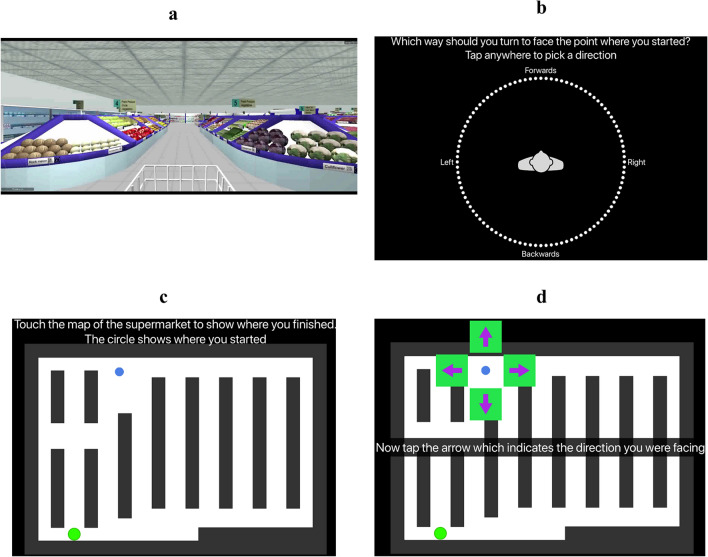
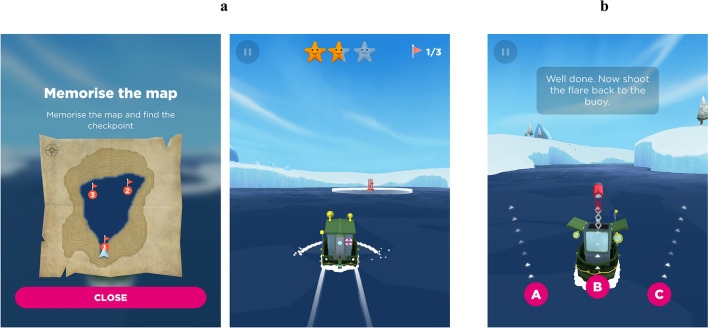
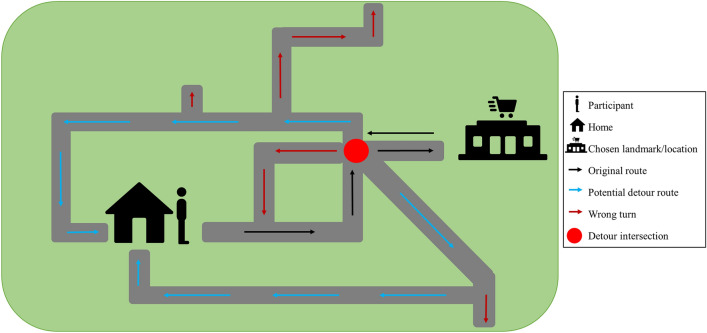
Spatial navigation impairments in Alzheimer's disease (AD) have been suggested to underlie patients experiencing spatial disorientation. Though many studies have highlighted navigation impairments for AD patients in virtual reality (VR) environments, the extent to which these impairments predict a patient's risk for spatial disorientation in the real world is still poorly understood. The aims of this study were to (a) investigate the spatial navigation abilities of AD patients in VR environments as well as in a real world community setting and (b) explore whether we could predict patients at a high risk for spatial disorientation in the community based on their VR navigation. Sixteen community-dwelling AD patients and 21 age/gender matched controls were assessed on their egocentric and allocentric navigation abilities in VR environments using the Virtual Supermarket Test (VST) and Sea Hero Quest (SHQ) as well as in the community using the Detour Navigation Test (DNT). When compared to controls, AD patients exhibited impairments on the VST, SHQ, and DNT. For patients, only SHQ wayfinding distance and wayfinding duration significantly predicted composite disorientation score on the DNT (β = 0.422, p = 0.034, R = 0.299 and β = 0.357, p = 0.046, R = 0.27 respectively). However, these same VR measures could not reliably predict which patients were at highest risk of spatial disorientation in the community (p > 0.1). Future studies should focus on developing VR-based tests which can predict AD patients at high risk of getting spatially disorientated in the real world.
阿尔茨海默病(AD)患者的空间导航障碍被认为是导致其出现空间定向障碍的原因。虽然许多研究已经强调了 AD 患者在虚拟现实(VR)环境中的导航障碍,但这些障碍在多大程度上可以预测患者在现实世界中出现空间定向障碍的风险仍不清楚。本研究的目的是:(a)研究 AD 患者在 VR 环境以及现实世界社区环境中的空间导航能力;(b)探讨我们是否可以根据患者在 VR 导航中的表现,预测其在社区中出现空间定向障碍的高风险。16 名居住在社区中的 AD 患者和 21 名年龄/性别匹配的对照组在 VR 环境中使用虚拟超市测试(VST)和海英雄任务(SHQ)以及在社区中使用绕路导航测试(DNT)评估了他们的自我中心和相对导航能力。与对照组相比,AD 患者在 VST、SHQ 和 DNT 上表现出障碍。对于患者,只有 SHQ 寻路距离和寻路时间显著预测了 DNT 的综合定向障碍评分(β=0.422,p=0.034,R=0.299 和 β=0.357,p=0.046,R=0.27)。然而,这些相同的 VR 测量方法无法可靠地预测哪些患者在社区中存在最高的空间定向障碍风险(p>0.1)。未来的研究应集中于开发基于 VR 的测试方法,以预测在现实世界中存在高度空间定向障碍风险的 AD 患者。