Department of Health, Medicine and Caring Sciences, Unit of Physiotherapy, Linköping University, Linköping, Sweden.
Occupational and Environmental Medicine Centre, Department of Health, Medicine and Caring Sciences, Unit of Clinical Medicine, Linköping University, Linköping, Sweden.
Sci Rep. 2024 Jul 2;14(1):15235. doi: 10.1038/s41598-024-66176-w.
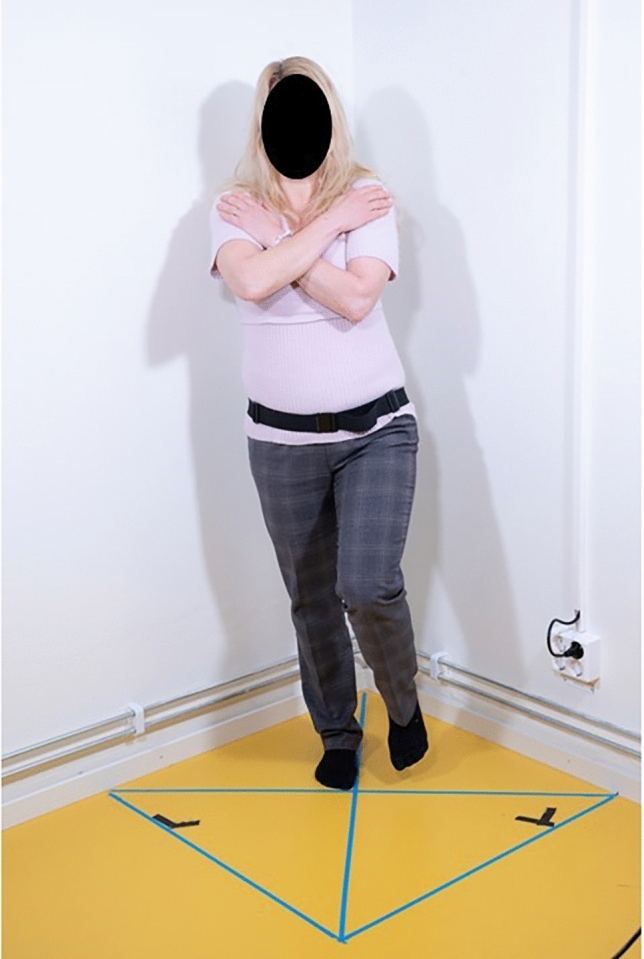
Postural sway has not been investigated before or after a neck exercise intervention in individuals with chronic whiplash-associated disorders (WAD). The aim of the study was to investigate postural sway in individuals with chronic WAD grades 2 and 3: (a) compared with healthy matched controls at baseline; (b) after three months of neck-specific exercise and (c) to investigate the correlation between postural sway with self-reported dizziness during motion and balance problems/unsteadiness. This is a longitudinal prospective experimental case-control intervention study. Individuals with WAD (n = 30) and age- and gender-matched healthy volunteers (n = 30) participated. Postural sway was assessed using an iPhone application. Measurements were carried out at baseline, and for those with WAD a second measurement was performed at the three-month follow-up when neck-specific exercise intervention ended. The WAD group performed significantly worse than the healthy group in both pathway and ellipse area double stance eyes closed at baseline (main outcome), but not at the three-month follow-up. The WAD group significantly improved after rehabilitation in both pathway double stance eyes closed and pathway single stance eyes open. The correlation between postural sway and self-rated dizziness during motion and balance problems was low to moderate. One may conclude that postural sway was improved after a neck-specific exercise programme. The study results strengthen earlier findings that individuals with WAD have worse balance outcome when they have to rely on neck proprioception (eyes closed). The study results may be important for the development of improved rehabilitation methods for WAD.
姿势摆动在慢性颈源性疾病(WAD)患者接受颈部运动干预前后尚未进行过研究。本研究旨在调查慢性 WAD 2 级和 3 级患者的姿势摆动:(a)与健康对照组在基线时进行比较;(b)在三个月的颈部专项运动后进行比较;(c)调查姿势摆动与运动时自我报告的头晕以及平衡问题/不稳定之间的相关性。这是一项纵向前瞻性实验病例对照干预研究。共纳入慢性 WAD 患者(n=30)和年龄、性别匹配的健康志愿者(n=30)。使用 iPhone 应用程序评估姿势摆动。在基线时进行测量,对于 WAD 患者,在三个月的随访时进行第二次测量,此时颈部专项运动干预结束。WAD 组在闭眼双足姿势下的路径和椭圆面积均明显差于健康组(主要结局),但在三个月随访时无明显差异。WAD 组在康复后闭眼单足姿势下的路径和睁眼单足姿势下的路径均明显改善。姿势摆动与运动时自我报告的头晕以及平衡问题之间的相关性为低到中度。由此可以得出结论,在进行颈部专项运动方案后,姿势摆动得到了改善。研究结果加强了先前的发现,即当依赖颈部本体感觉(闭眼)时,WAD 患者的平衡结果更差。研究结果对于开发 WAD 的改良康复方法可能很重要。