Human Nutrition, Debre Markos University College of Health Science, Debre Markos, Ethiopia
Human Nutrition, Debre Markos University College of Health Science, Debre Markos, Ethiopia.
BMJ Open. 2024 Jul 5;14(7):e087218. doi: 10.1136/bmjopen-2024-087218.
Despite the implementation of a short-term direct observation treatment programme, HIV coinfection is one of the main determinants of tuberculosis (TB) treatment success. This meta-analysis was conducted to report the impact of HIV on TB treatment outcomes using inconsistent and variable study findings.
Systematic review and meta-analysis was performed.
The PubMed/Medline, Web of Science and Google Scholar databases were used to access the articles. The Joanna Briggs Institute (JBI) Meta-Analysis of Statistics Assessment and Review Instrument was used for the critical appraisal.
All observational studies conducted in Ethiopia and reporting TB treatment outcomes in relation to HIV coinfection were included in the final analysis.
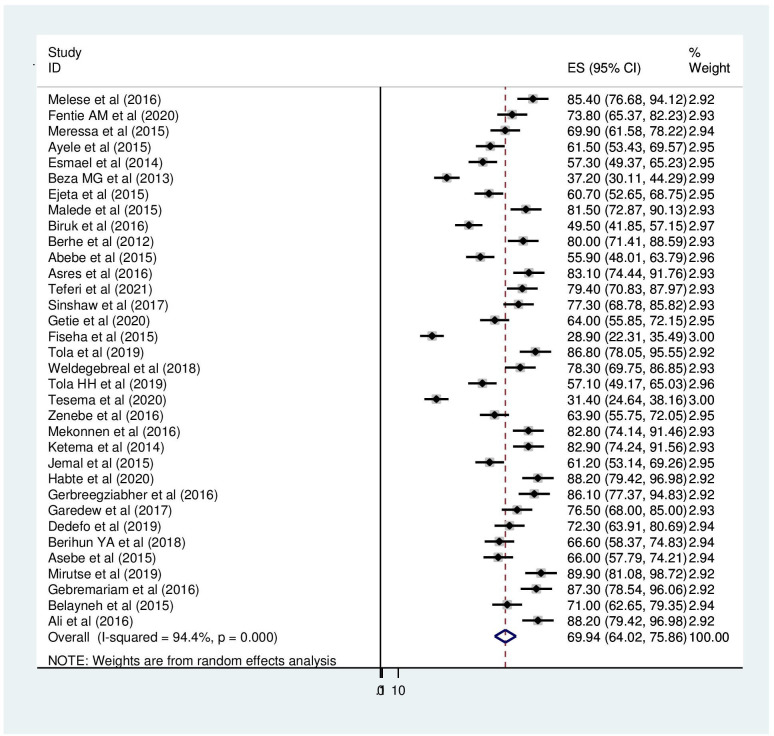
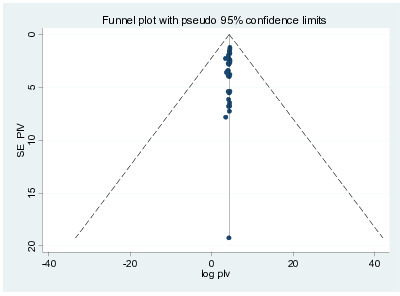
Two independent reviewers extracted the data using a standardised data extraction format. The JBI critical appraisal tool was used to assess the quality of primary studies. Stata V.14 was used for the data analysis. Cochran's Q statistic with inverse variance (I) and funnel plot are used to assess the presence of heterogeneity (I=94.4%, p<0.001) and publication bias, respectively. A random effect model was used to estimate TB treatment outcomes with a 95% CI.
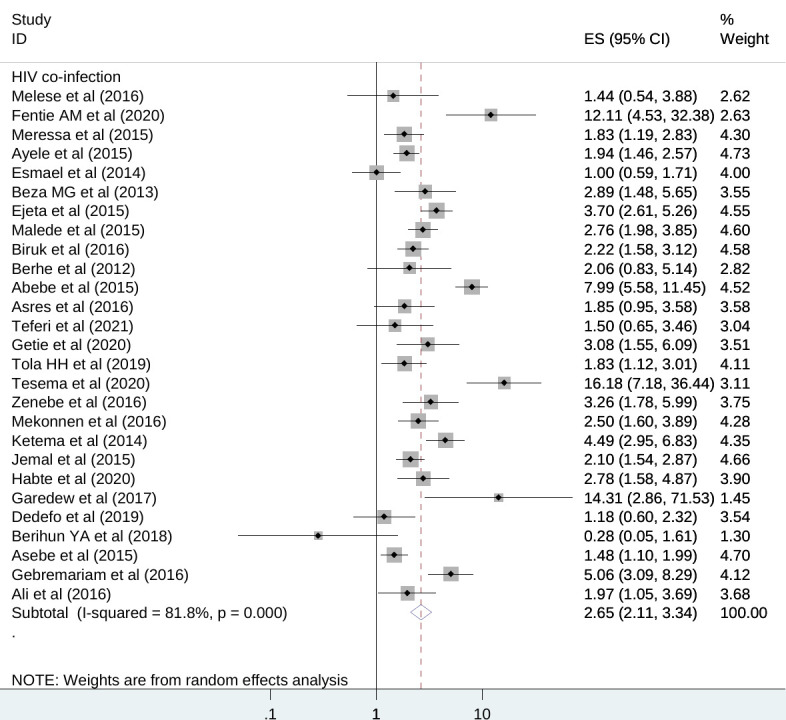
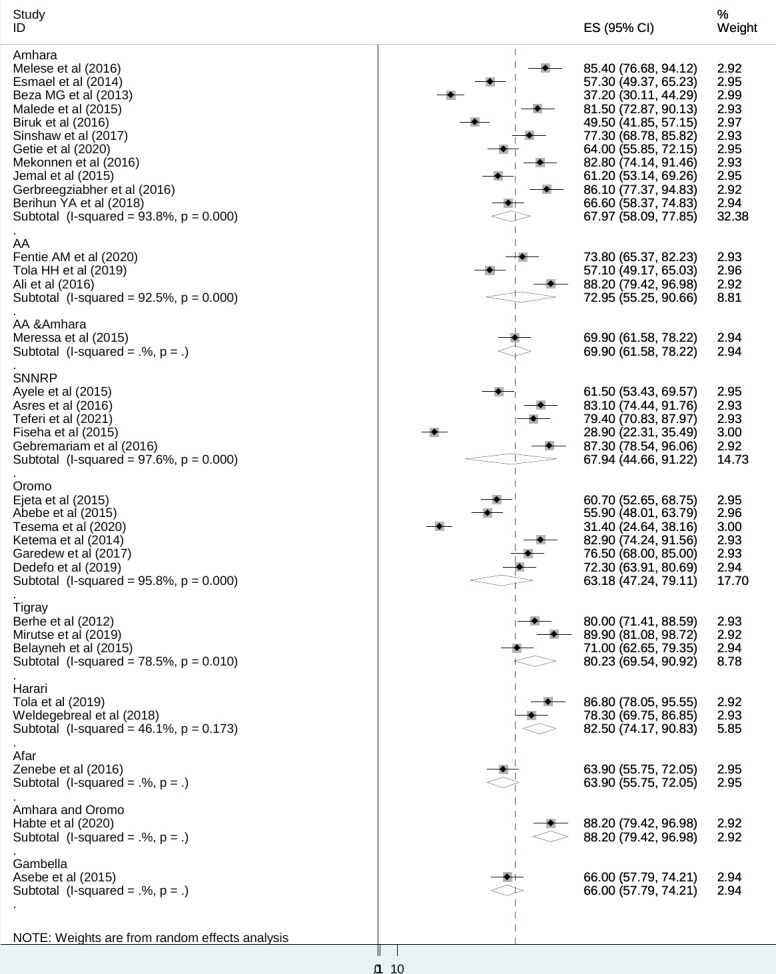
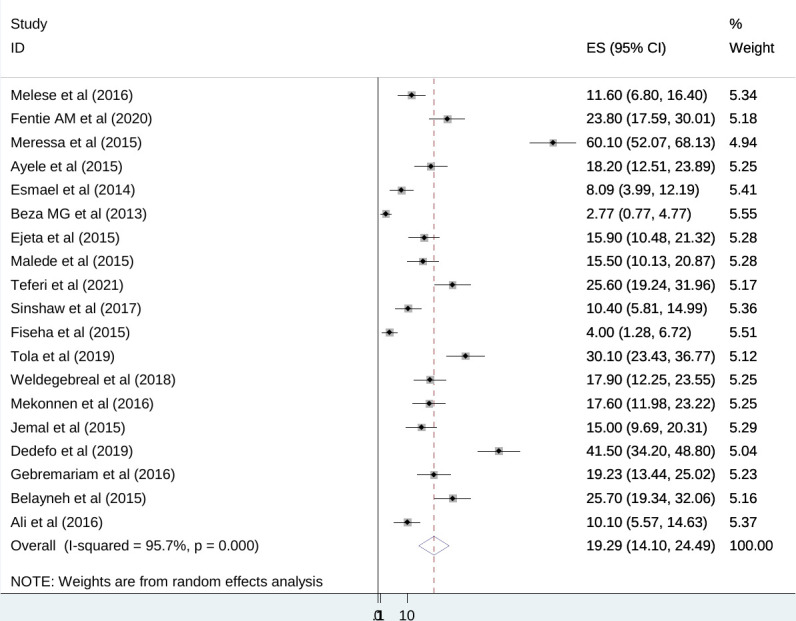
The overall success rate of TB treatment was 69.9% (95% CI 64% to 75%). The cure rate of TB among patients living with HIV was 19.3%. Furthermore, the odds of unsuccessful treatment among TB-HIV coinfected patients were 2.6 times greater than those among HIV nonreactive patients (OR 2.65; 95% CI 2.1 to 3.3).
The success of TB treatment among patients living with HIV in Ethiopia was lower than the WHO standard threshold (85%). HIV coinfection hurts TB treatment success. Therefore, collaborative measurements and management, such as early treatment initiation, follow-up and the management of complications, are important.
尽管实施了短期直接观察治疗方案,但 HIV 合并感染仍是结核病(TB)治疗成功的主要决定因素之一。本荟萃分析旨在报告 HIV 对 TB 治疗结果的影响,所用方法是综合不一致和可变的研究结果。
系统评价和荟萃分析。
使用 PubMed/Medline、Web of Science 和 Google Scholar 数据库查阅文章。采用 Joanna Briggs 研究所(JBI)的荟萃分析统计评估和审查工具进行批判性评价。
所有在埃塞俄比亚进行的、报告与 HIV 合并感染相关的 TB 治疗结果的观察性研究均纳入最终分析。
两名独立评审员使用标准化的数据提取格式提取数据。采用 JBI 批判性评价工具对原始研究进行质量评价。采用 Stata V.14 进行数据分析。采用 Cochran's Q 统计量和逆方差(I)以及漏斗图分别评估异质性(I=94.4%,p<0.001)和发表偏倚的存在。采用随机效应模型估计 TB 治疗结果,置信区间为 95%。
TB 治疗的总体成功率为 69.9%(95%置信区间 64%至 75%)。HIV 感染者的 TB 治愈率为 19.3%。此外,TB-HIV 合并感染患者治疗失败的几率是 HIV 非反应患者的 2.6 倍(OR 2.65;95%置信区间 2.1 至 3.3)。
埃塞俄比亚 HIV 感染者的 TB 治疗成功率低于世卫组织标准阈值(85%)。HIV 合并感染影响 TB 治疗成功。因此,早期治疗启动、随访和并发症管理等协同措施和管理非常重要。