Petr Martin, Haller Benjamin C, Ralph Peter L, Racimo Fernando
Lundbeck Foundation GeoGenetics Centre, Globe Institute, University of Copenhagen, Denmark.
Section for Molecular Ecology and Evolution, Globe Institute, University of Copenhagen, Denmark.
Peer Community J. 2023;3. doi: 10.24072/pcjournal.354. Epub 2023 Dec 15.
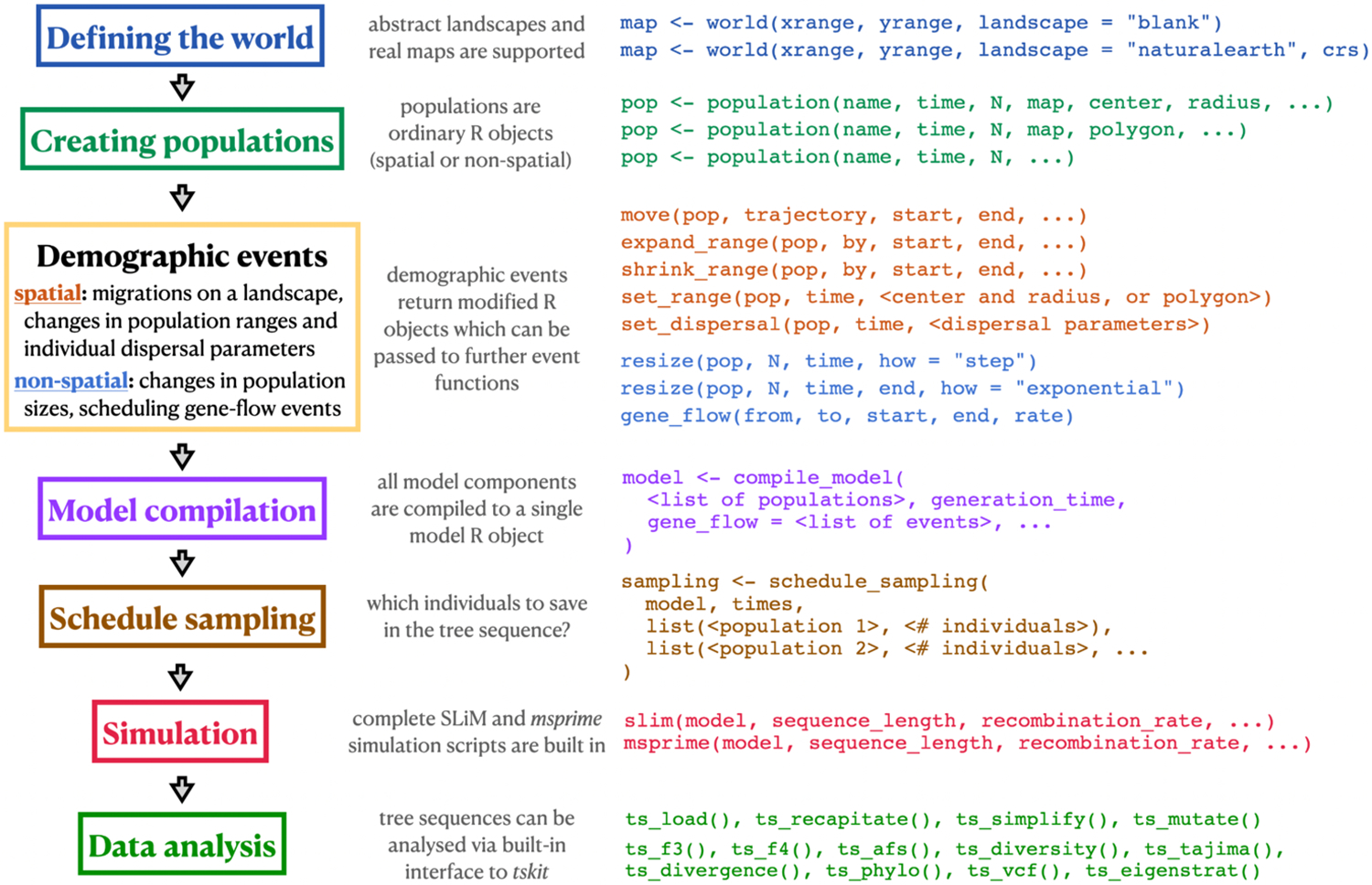
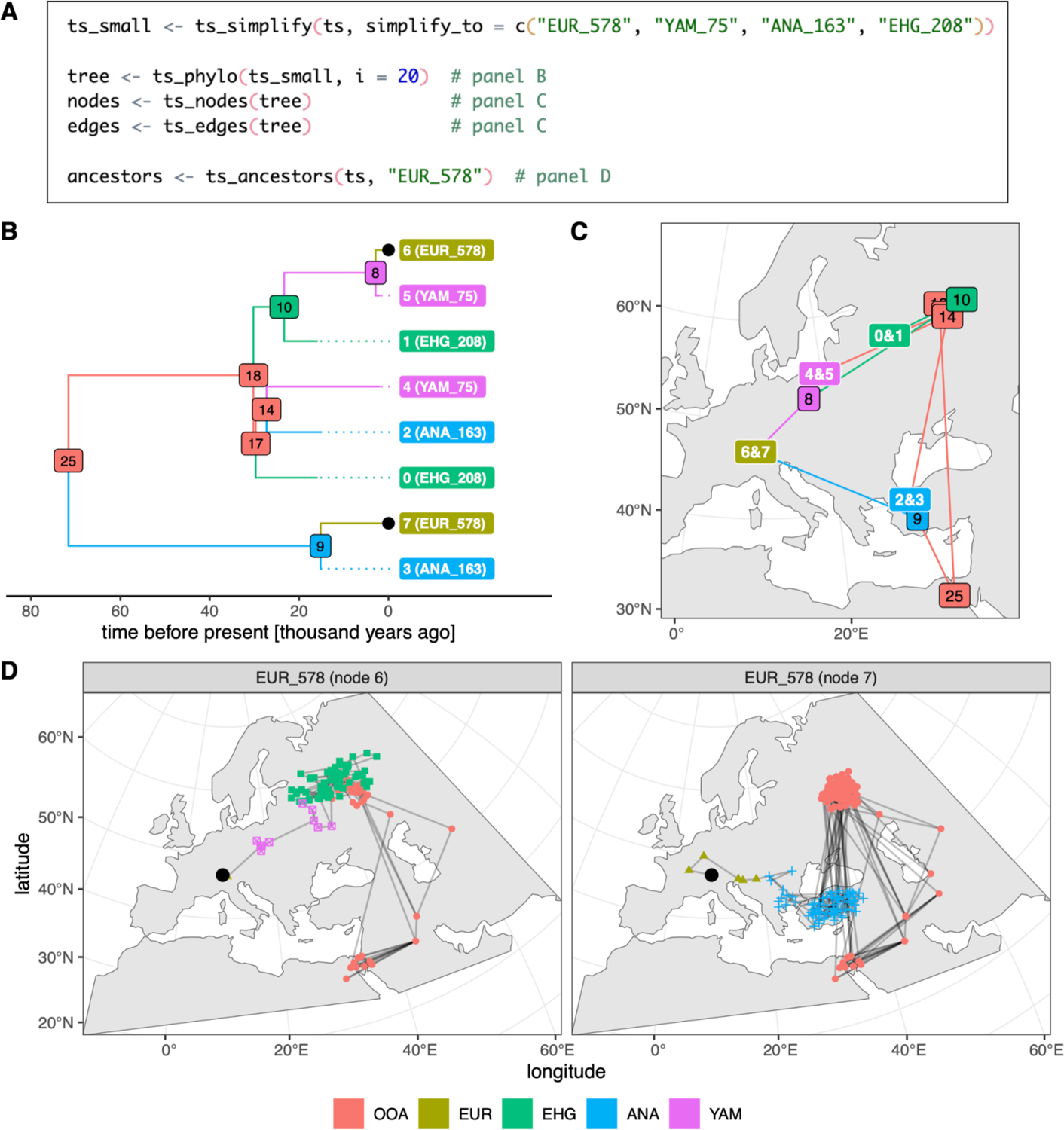
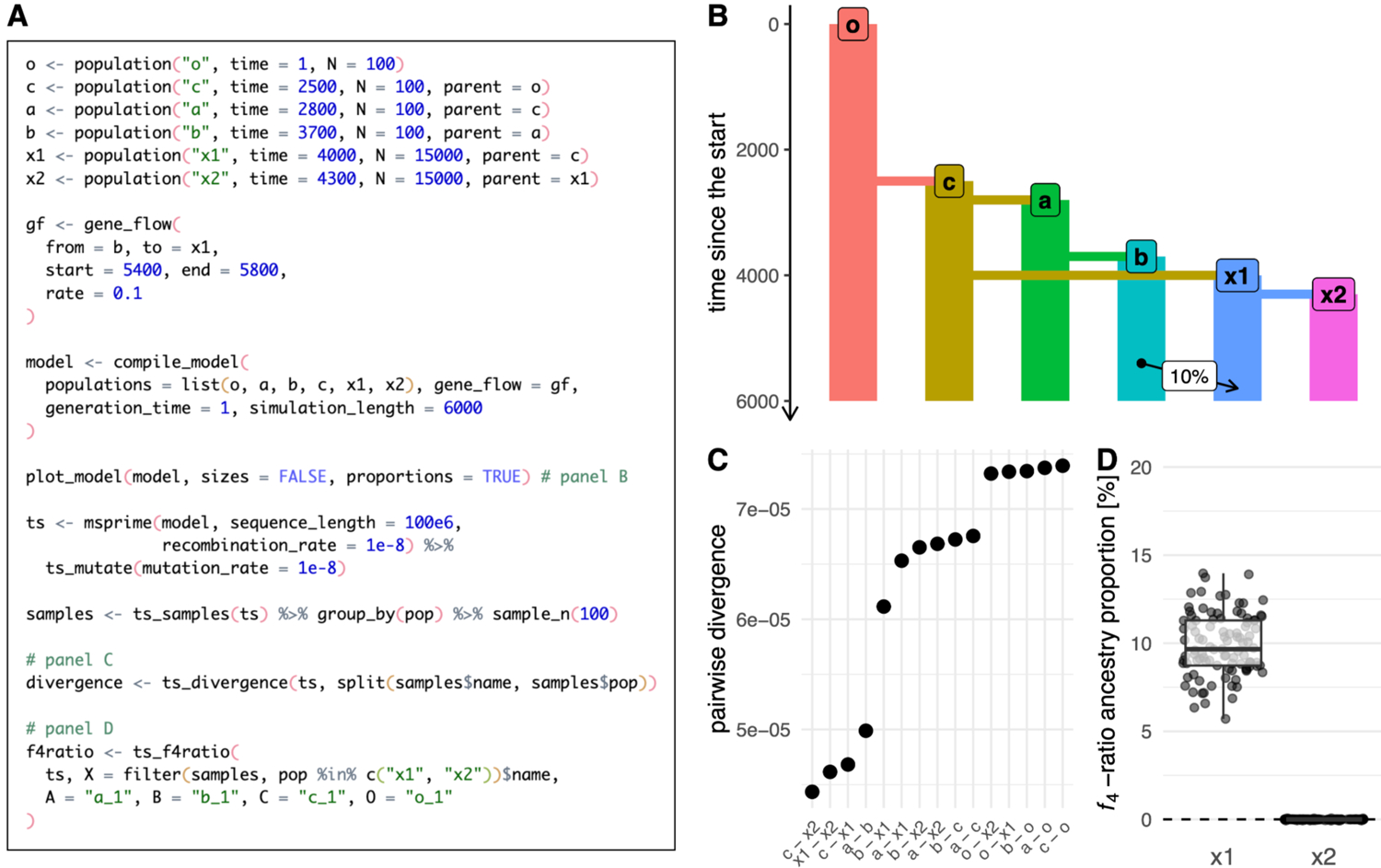
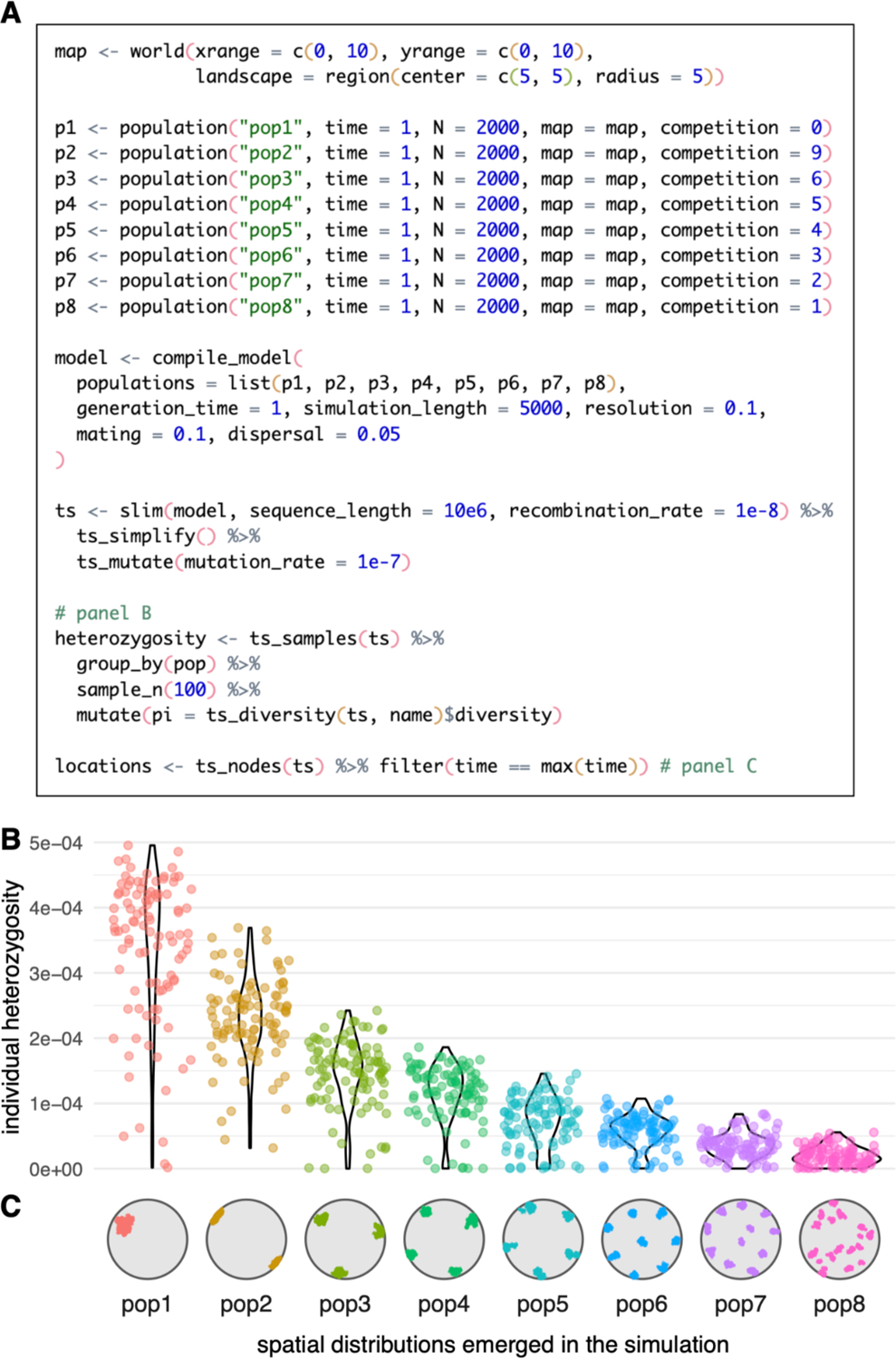
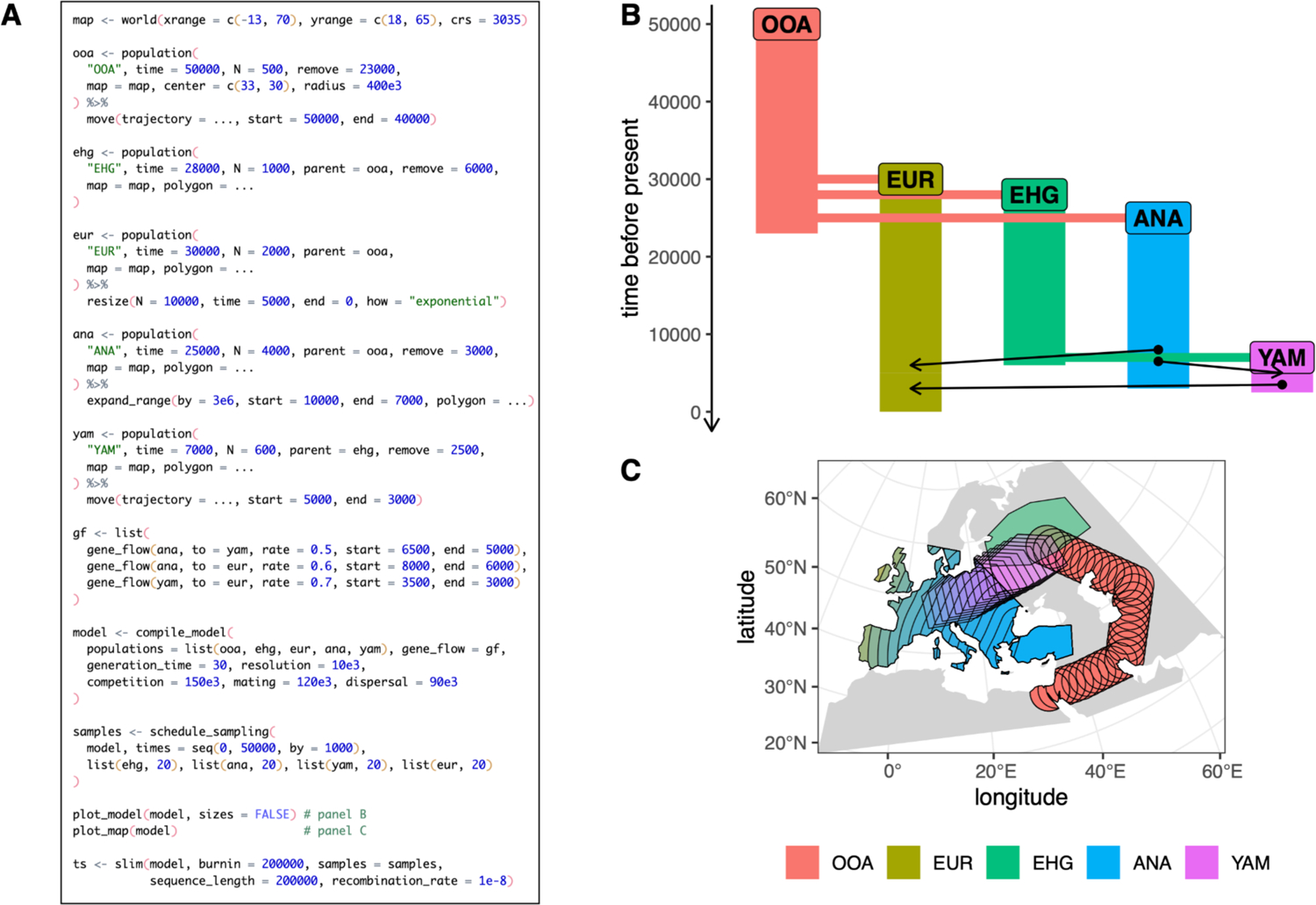
One of the goals of population genetics is to understand how evolutionary forces shape patterns of genetic variation over time. However, because populations evolve across both time and space, most evolutionary processes also have an important spatial component, acting through phenomena such as isolation by distance, local mate choice, or uneven distribution of resources. This spatial dimension is often neglected, partly due to the lack of tools specifically designed for building and evaluating complex spatio-temporal population genetic models. To address this methodological gap, we present a new framework for simulating spatially-explicit genomic data, implemented in a new R package called (www.slendr.net), which leverages a SLiM simulation back-end script bundled with the package. With this framework, the users can programmatically and visually encode spatial population ranges and their temporal dynamics (i.e., population displacements, expansions, and contractions) either on real Earth landscapes or on abstract custom maps, and schedule splits and gene-flow events between populations using a straightforward declarative language. Additionally, can simulate data from traditional, non-spatial models, either with SLiM or using an alternative built-in coalescent back end. Together with its R-idiomatic interface to the library for tree-sequence processing and analysis, opens up the possibility of performing efficient, reproducible simulations of spatio-temporal genomic data entirely within the R environment, leveraging its wealth of libraries for geospatial data analysis, statistics, and visualization. Here, we present the design of the R package and demonstrate its features on several practical example workflows.
群体遗传学的目标之一是了解进化力量如何随着时间塑造遗传变异模式。然而,由于种群在时间和空间上都在进化,大多数进化过程也具有重要的空间成分,通过诸如距离隔离、本地配偶选择或资源分布不均等现象起作用。这个空间维度常常被忽视,部分原因是缺乏专门用于构建和评估复杂时空群体遗传模型的工具。为了解决这一方法上的差距,我们提出了一个用于模拟空间明确基因组数据的新框架,该框架在一个名为 (www.slendr.net) 的新R包中实现,它利用了与该包捆绑的SLiM模拟后端脚本。通过这个框架,用户可以以编程方式和可视化方式在真实的地球景观或抽象的自定义地图上编码空间种群范围及其时间动态(即种群迁移、扩张和收缩),并使用一种简单的声明性语言安排种群之间的分裂和基因流事件。此外, 可以使用SLiM或使用替代的内置合并 后端模拟来自传统非空间模型的数据。连同其用于树序列处理和分析的 库的R风格接口, 开启了在R环境中完全执行高效、可重复的时空基因组数据模拟的可能性,利用其丰富的地理空间数据分析、统计和可视化库。在这里,我们展示了 R包的设计,并在几个实际示例工作流程中展示了它的功能。