Integrative Agriculture Department, College of Agriculture and Veterinary Medicine, United Arab Emirates University, 15551, Al Ain, UAE.
Mechanical and Aerospace Engineering Department, College of Engineering, United Arab Emirates University, 15551, Al Ain, UAE.
Sci Rep. 2024 Jul 10;14(1):15946. doi: 10.1038/s41598-024-67025-6.
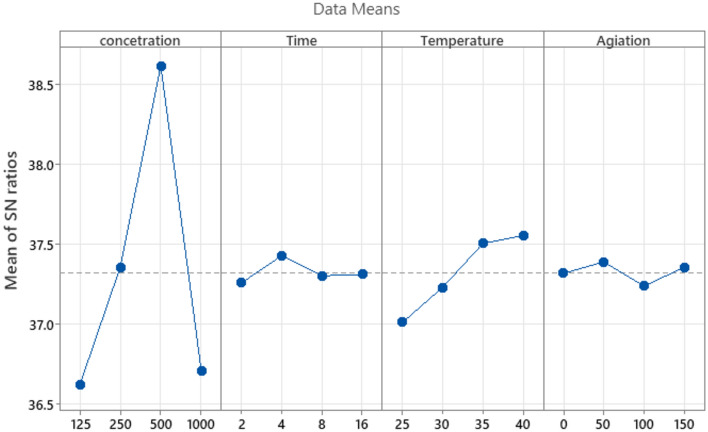
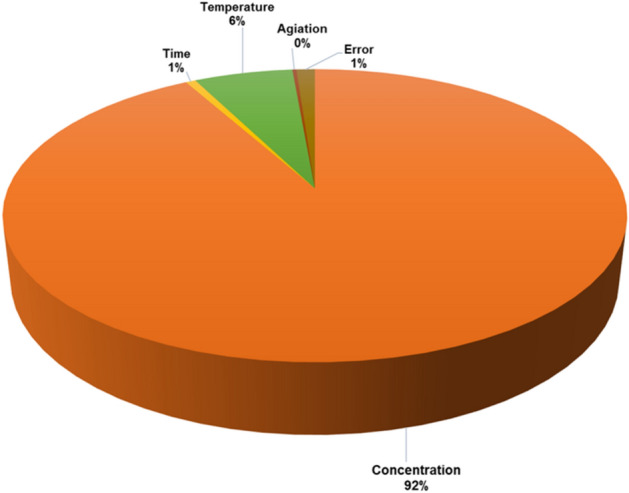
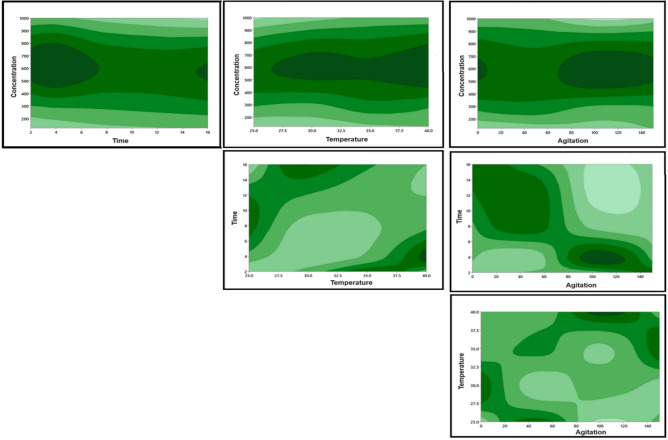
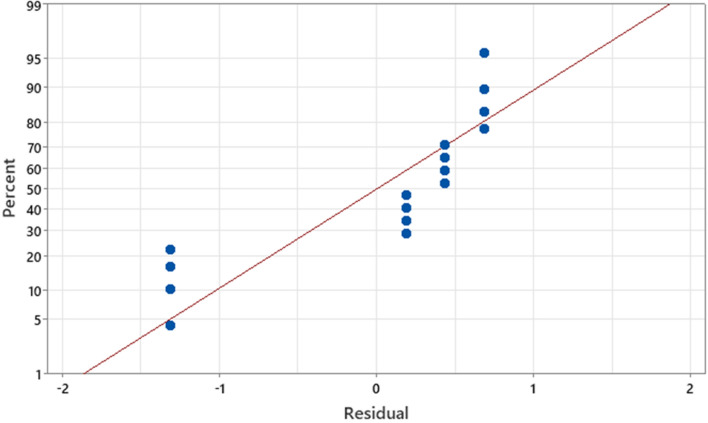
Ghaf, a resilient tree in arid environments, plays a critical role in ecological restoration, desertification mitigation, and cultural heritage preservation. However, the seeds' inherent challenges, notably their hard outer coating restricting germination, emphasize the pressing need for innovative strategies. This work aimed to investigate the optimization of Ghaf seed germination process through seed priming with ZnO nanoparticles treatment (duration (t), concentration (c), temperature (T), and agitation (a), employing the Taguchi method for efficient experimental design. Furthermore, the study includes Analysis of Variance (ANOVA), analysis for the regression model to assess the significance of predictor variables and their interactions, thereby strengthening the statistical validity of our optimization approach. Notably, it revealed that concentration is a pivotal influencer in optimization of Ghaf seed germination. The results showed that the concentration of ZnO nanoparticles has no linear relation with any other parameters. To verify the outcomes, validation tests were performed utilizing the predicted optimal parameters. The observed low error ratio, falling within the range of 1 to 6%, confirmed the success of the Taguchi methodology in identifying optimal levels of the factors chosen. Significantly, ZnO-primed seeds showcased a remarkable enhancement in Ghaf seed germination, increasing from 15 to 88%. This study introduces a novel approach utilizing ZnO nanoparticle treatment optimized through the Taguchi method, significantly enhancing seed germination rates of Ghaf seeds and offering a promising avenue for sustainable agricultural practices in arid environments.
在干旱环境中具有很强适应能力的 Ghaf 树在生态恢复、荒漠化缓解和文化遗产保护方面发挥着关键作用。然而,种子本身存在的挑战,特别是其坚硬的外壳限制了发芽,这强调了需要创新策略的紧迫性。本研究旨在通过使用 ZnO 纳米粒子处理(处理时间(t)、浓度(c)、温度(T)和搅拌(a))对 Ghaf 种子进行引发处理来优化种子发芽过程,采用田口法进行有效的实验设计。此外,还进行了方差分析(ANOVA),对回归模型进行分析以评估预测变量及其相互作用的显著性,从而增强我们优化方法的统计有效性。值得注意的是,结果表明浓度是优化 Ghaf 种子发芽的关键因素。研究结果表明,ZnO 纳米粒子的浓度与其他任何参数之间没有线性关系。为了验证结果,利用预测的最佳参数进行了验证测试。观察到的低误差率在 1 到 6%的范围内,这证实了田口方法在确定所选因素的最佳水平方面的成功。重要的是,经过 ZnO 引发处理的种子显著提高了 Ghaf 种子的发芽率,从 15%提高到 88%。本研究提出了一种利用 ZnO 纳米粒子处理的新方法,通过田口法进行优化,显著提高了 Ghaf 种子的发芽率,为干旱环境中的可持续农业实践提供了有前途的途径。