• 文献检索
  • 文档翻译
  • 深度研究
  • 学术资讯
  • Suppr Zotero 插件Zotero 插件
  • 邀请有礼
  • 套餐&价格
  • 历史记录
应用&插件
Suppr Zotero 插件Zotero 插件浏览器插件Mac 客户端Windows 客户端微信小程序
定价
高级版会员购买积分包购买API积分包
服务
文献检索文档翻译深度研究API 文档MCP 服务
关于我们
关于 Suppr公司介绍联系我们用户协议隐私条款
关注我们

Suppr 超能文献

核心技术专利:CN118964589B侵权必究
粤ICP备2023148730 号-1Suppr @ 2026

文献检索

告别复杂PubMed语法,用中文像聊天一样搜索,搜遍4000万医学文献。AI智能推荐,让科研检索更轻松。

立即免费搜索

文件翻译

保留排版,准确专业,支持PDF/Word/PPT等文件格式,支持 12+语言互译。

免费翻译文档

深度研究

AI帮你快速写综述,25分钟生成高质量综述,智能提取关键信息,辅助科研写作。

立即免费体验

电子健康素养与日本 COVID-19 期间的网络健康信息搜索行为:基于互联网的混合方法研究。

eHealth Literacy and Web-Based Health Information-Seeking Behaviors on COVID-19 in Japan: Internet-Based Mixed Methods Study.

机构信息

Human Care Research Team, Tokyo Metropolitan Institute for Geriatrics and Gerontology, Tokyo, Japan.

Australian Institute of Health Innovation, Macquarie University, NSW, Australia.

出版信息

J Med Internet Res. 2024 Jul 11;26:e57842. doi: 10.2196/57842.

DOI:10.2196/57842
PMID:38990625
原文链接:https://pmc.ncbi.nlm.nih.gov/articles/PMC11273073/
Abstract

BACKGROUND

During the COVID-19 pandemic, much misinformation and disinformation emerged and spread rapidly via the internet, posing a severe public health challenge. While the need for eHealth literacy (eHL) has been emphasized, few studies have compared the difficulties involved in seeking and using COVID-19 information between adult internet users with low or high eHL.

OBJECTIVE

This study examines the association between eHL and web-based health information-seeking behaviors among adult Japanese internet users. Moreover, this study qualitatively shed light on the difficulties encountered in seeking and using this information and examined its relationship with eHL.

METHODS

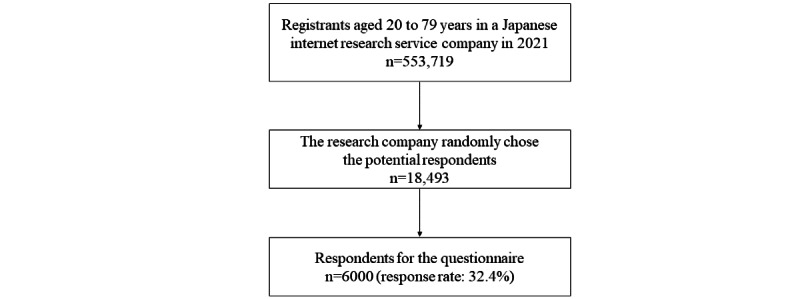
This cross-sectional internet-based survey (October 2021) collected data from 6000 adult internet users who were equally divided into sample groups by gender, age, and income. We used the Japanese version of the eHL Scale (eHEALS). We also used a Digital Health Literacy Instrument (DHLI) adapted to the COVID-19 pandemic to assess eHL after we translated it to Japanese. Web-based health information-seeking behaviors were assessed by using a 10-item list of web sources and evaluating 10 topics participants searched for regarding COVID-19. Sociodemographic and other factors (eg, health-related behavior) were selected as covariates. Furthermore, we qualitatively explored the difficulties in information seeking and using. The descriptive contents of the responses regarding difficulties in seeking and using COVID-19 information were analyzed using an inductive qualitative content analysis approach.

RESULTS

Participants with high eHEALS and DHLI scores on information searching, adding self-generated information, evaluating reliability, determining relevance, and operational skills were more likely to use all web sources of information about COVID-19 than those with low scores. However, there were negative associations between navigation skills and privacy protection scores when using several information sources, such as YouTube (Google LLC), to search for COVID-19 information. While half of the participants reported no difficulty seeking and using COVID-19 information, participants who reported any difficulties, including information discernment, incomprehensible information, information overload, and disinformation, had lower DHLI score. Participants expressed significant concerns regarding "information quality and credibility," "abundance and shortage of relevant information," "public trust and skepticism," and "credibility of COVID-19-related information." Additionally, they disclosed more specific concerns, including "privacy and security concerns," "information retrieval challenges," "anxieties and panic," and "movement restriction."

CONCLUSIONS

Although Japanese internet users with higher eHEALS and total DHLI scores were more actively using various web sources for COVID-19 information, those with high navigation skills and privacy protection used web-based information about COVID-19 cautiously compared with those with lower proficiency. The study also highlighted an increased need for information discernment when using social networking sites in the "Health 2.0" era. The identified categories and themes from the qualitative content analysis, such as "information quality and credibility," suggest a framework for addressing the myriad challenges anticipated in future infodemics.
https://cdn.ncbi.nlm.nih.gov/pmc/blobs/c6fe/11273073/27dc50e02b33/jmir_v26i1e57842_fig1.jpg
摘要

背景

在 COVID-19 大流行期间,大量错误和虚假信息通过互联网迅速传播,对公共卫生构成严重挑战。尽管人们强调需要电子健康素养(eHL),但很少有研究比较高低 eHL 的成年互联网用户在搜索和使用 COVID-19 信息方面的困难。

目的

本研究旨在检验 eHL 与日本成年互联网用户基于网络的健康信息搜索行为之间的关联。此外,本研究还从质的角度探讨了搜索和使用这些信息所遇到的困难,并探讨了其与 eHL 的关系。

方法

这是一项基于互联网的横断面调查(2021 年 10 月),共纳入 6000 名成年互联网用户,他们按照性别、年龄和收入均等分为样本组。我们使用了日本版电子健康素养量表(eHEALS)。我们还使用了针对 COVID-19 进行了改编的数字健康素养工具(DHLI)来评估 eHL。基于网络的健康信息搜索行为通过使用包含 10 个网络来源的清单和评估参与者搜索的 10 个 COVID-19 相关主题来评估。选择社会人口统计学和其他因素(例如健康相关行为)作为协变量。此外,我们还从质的角度探讨了信息搜索和使用的困难。使用归纳定性内容分析方法分析了关于 COVID-19 信息搜索和使用困难的回复的描述性内容。

结果

在信息搜索、添加自生成信息、评估可靠性、确定相关性和操作技能方面,eHEALS 和 DHLI 评分较高的参与者比评分较低的参与者更有可能使用所有与 COVID-19 相关的网络信息来源。然而,在使用某些信息来源(如 YouTube(Google LLC))搜索 COVID-19 信息时,导航技能和隐私保护评分之间存在负相关。尽管有一半的参与者表示在搜索和使用 COVID-19 信息方面没有困难,但报告存在任何困难的参与者,包括信息辨别、信息难以理解、信息过载和虚假信息,DHLI 评分较低。参与者对“信息质量和可信度”、“相关信息的丰富程度和短缺程度”、“公众信任和怀疑”以及“与 COVID-19 相关信息的可信度”表示了极大的关注。此外,他们还透露了更具体的担忧,包括“隐私和安全问题”、“信息检索挑战”、“焦虑和恐慌”以及“行动限制”。

结论

尽管 eHEALS 和总 DHLI 评分较高的日本互联网用户更积极地使用各种网络来源获取 COVID-19 信息,但与技能较低的用户相比,具有较高导航技能和隐私保护技能的用户在使用基于网络的 COVID-19 信息时更为谨慎。研究还强调了在“健康 2.0”时代使用社交网络时需要提高信息辨别能力。定性内容分析中确定的类别和主题,如“信息质量和可信度”,为解决未来信息泛滥中预期的诸多挑战提供了框架。

相似文献

1
eHealth Literacy and Web-Based Health Information-Seeking Behaviors on COVID-19 in Japan: Internet-Based Mixed Methods Study.电子健康素养与日本 COVID-19 期间的网络健康信息搜索行为:基于互联网的混合方法研究。
J Med Internet Res. 2024 Jul 11;26:e57842. doi: 10.2196/57842.
2
Relationship Between Coronavirus-Related eHealth Literacy and COVID-19 Knowledge, Attitudes, and Practices among US Adults: Web-Based Survey Study.美国成年人中与冠状病毒相关的电子健康素养与COVID-19知识、态度和行为之间的关系:基于网络的调查研究
J Med Internet Res. 2021 Mar 29;23(3):e25042. doi: 10.2196/25042.
3
Digital Health Literacy and Web-Based Information-Seeking Behaviors of University Students in Germany During the COVID-19 Pandemic: Cross-sectional Survey Study.新冠疫情期间德国大学生的数字健康素养和基于网络的信息搜索行为:横断面调查研究。
J Med Internet Res. 2021 Jan 15;23(1):e24097. doi: 10.2196/24097.
4
[Developing a Japanese version of the Digital Health Literacy Instrument].[开发数字健康素养量表的日语版本]
Nihon Koshu Eisei Zasshi. 2024 Jan 26;71(1):3-14. doi: 10.11236/jph.23-021. Epub 2023 Sep 5.
5
Socioeconomic Disparities in eHealth Literacy and Preventive Behaviors During the COVID-19 Pandemic in Hong Kong: Cross-sectional Study.**题目**:在香港,新冠疫情期间电子健康素养和预防行为的社会经济差异:一项横断面研究。 **解析**:原文“Socioeconomic Disparities in eHealth Literacy and Preventive Behaviors During the COVID-19 Pandemic in Hong Kong: Cross-sectional Study.”是一个较长的英文句子,翻译时需要注意断句和中文表达习惯。“eHealth Literacy”翻译为“电子健康素养”,“preventive behaviors”翻译为“预防行为”。
J Med Internet Res. 2021 Apr 14;23(4):e24577. doi: 10.2196/24577.
6
Comparison of eHealth Literacy Scale (eHEALS) and Digital Health Literacy Instrument (DHLI) in Assessing Electronic Health Literacy in Chinese Older Adults: A Mixed-Methods Approach.中文老年人电子健康素养评估中电子健康素养量表(eHEALS)和数字健康素养工具(DHLI)的比较:混合方法研究。
Int J Environ Res Public Health. 2023 Feb 13;20(4):3293. doi: 10.3390/ijerph20043293.
7
Development of the Digital Health Literacy Instrument: Measuring a Broad Spectrum of Health 1.0 and Health 2.0 Skills.数字健康素养工具的开发:衡量广泛的健康1.0和健康2.0技能
J Med Internet Res. 2017 Jan 24;19(1):e27. doi: 10.2196/jmir.6709.
8
Assessing Electronic Health Literacy in the State of Kuwait: Survey of Internet Users From an Arab State.科威特国电子健康素养评估:对一个阿拉伯国家互联网用户的调查
J Med Internet Res. 2019 May 24;21(5):e11174. doi: 10.2196/11174.
9
Associations Between Health Literacy, eHealth Literacy, and COVID-19-Related Health Behaviors Among Chinese College Students: Cross-sectional Online Study.健康素养、电子健康素养与中国大学生 COVID-19 相关健康行为的关系:一项横断面在线研究。
J Med Internet Res. 2021 May 6;23(5):e25600. doi: 10.2196/25600.
10
Social Media Use, eHealth Literacy, Disease Knowledge, and Preventive Behaviors in the COVID-19 Pandemic: Cross-Sectional Study on Chinese Netizens.新冠疫情期间社交媒体使用、电子健康素养、疾病知识及预防行为:针对中国网民的横断面研究
J Med Internet Res. 2020 Oct 9;22(10):e19684. doi: 10.2196/19684.

引用本文的文献

1
Evaluation of the psychometric properties of the Brazilian version of the Digital Health Literacy Instrument for individuals with heart failure.针对心力衰竭患者的巴西版数字健康素养工具的心理测量学特性评估。
Int J Nurs Stud Adv. 2025 Jul 30;9:100391. doi: 10.1016/j.ijnsa.2025.100391. eCollection 2025 Dec.
2
Digital health literacy and trust in health information sources: A comparative study of university students in Japan, the United States, and India.数字健康素养与对健康信息来源的信任:日本、美国和印度大学生的比较研究。
SSM Popul Health. 2025 Jul 20;31:101844. doi: 10.1016/j.ssmph.2025.101844. eCollection 2025 Sep.
3

本文引用的文献

1
Information is a determinant of health.信息是健康的一个决定因素。
Nat Med. 2024 Apr;30(4):927-928. doi: 10.1038/s41591-023-02792-9.
2
Digital literacy as a new determinant of health: A scoping review.数字素养作为健康的新决定因素:一项范围综述。
PLOS Digit Health. 2023 Oct 12;2(10):e0000279. doi: 10.1371/journal.pdig.0000279. eCollection 2023 Oct.
3
The Role of Social Media in Health Misinformation and Disinformation During the COVID-19 Pandemic: Bibliometric Analysis.社交媒体在 COVID-19 大流行期间健康错误信息和虚假信息中的作用:文献计量分析。
Public Discourse Toward Older Drivers in Japan Using Social Media Data From 2010 to 2022: Longitudinal Analysis.
利用2010年至2022年社交媒体数据对日本老年驾驶员的公众话语进行纵向分析
JMIR Infodemiology. 2025 Jun 16;5:e69321. doi: 10.2196/69321.
JMIR Infodemiology. 2023 Sep 20;3:e48620. doi: 10.2196/48620.
4
[Developing a Japanese version of the Digital Health Literacy Instrument].[开发数字健康素养量表的日语版本]
Nihon Koshu Eisei Zasshi. 2024 Jan 26;71(1):3-14. doi: 10.11236/jph.23-021. Epub 2023 Sep 5.
5
Psychological Inoculation for Credibility Assessment, Sharing Intention, and Discernment of Misinformation: Systematic Review and Meta-Analysis.心理接种对可信度评估、分享意愿和错误信息识别的作用:系统评价和荟萃分析。
J Med Internet Res. 2023 Aug 29;25:e49255. doi: 10.2196/49255.
6
Association of digital health literacy and information-seeking behaviors among physicians during COVID-19 in Ethiopia: A cross-sectional study.埃塞俄比亚新冠疫情期间医生的数字健康素养与信息寻求行为的关联:一项横断面研究
Digit Health. 2023 Jun 4;9:20552076231180436. doi: 10.1177/20552076231180436. eCollection 2023 Jan-Dec.
7
Chronic Diseases and Sociodemographic Characteristics Associated With Online Health Information Seeking and Using Social Networking Sites: Nationally Representative Cross-sectional Survey in Japan.与在线健康信息搜索和使用社交网站相关的慢性疾病和社会人口统计学特征:日本全国代表性横断面调查。
J Med Internet Res. 2023 Mar 2;25:e44741. doi: 10.2196/44741.
8
Development of Principles for Health-Related Information on Social Media: Delphi Study.社交媒体健康相关信息原则的制定:德尔菲研究。
J Med Internet Res. 2022 Sep 8;24(9):e37337. doi: 10.2196/37337.
9
Psychological inoculation improves resilience against misinformation on social media.心理预接种可提高抵御社交媒体错误信息的恢复力。
Sci Adv. 2022 Aug 26;8(34):eabo6254. doi: 10.1126/sciadv.abo6254. Epub 2022 Aug 24.
10
The Relationship Between Information Sources, Health Literacy, and COVID-19 Knowledge in the COVID-19 Infodemic: Cross-sectional Online Study in Japan.在 COVID-19 信息疫情中信息来源、健康素养与 COVID-19 知识之间的关系:日本的横断面在线研究。
J Med Internet Res. 2022 Jul 22;24(7):e38332. doi: 10.2196/38332.