Dai Ze, Deng Kai-Li, Wang Xiao-Mei, Yang Dong-Xue, Tang Chun-Lan, Zhou Yu-Ping
Department of Gastroenterology, The First Affiliated Hospital of Ningbo University, Ningbo 315020, Zhejiang Province, China.
Health Science Center, Ningbo University, Ningbo 315211, Zhejiang Province, China.
World J Gastrointest Oncol. 2024 Jun 15;16(6):2697-2715. doi: 10.4251/wjgo.v16.i6.2697.
Colorectal cancer (CRC) has a high incidence and mortality. Recent studies have shown that indole derivatives involved in gut microbiota metabolism can impact the tumorigenesis, progression, and metastasis of CRC.
To investigate the effect of indole-3-acetaldehyde (IAAD) on CRC.
The effect of IAAD was evaluated in a syngeneic mouse model of CRC and CRC cell lines (HCT116 and DLD-1). Cell proliferation was assessed by Ki-67 fluorescence staining and cytotoxicity tests. Cell apoptosis was analysed by flow cytometry after staining with Annexin V-fluorescein isothiocyanate and propidium iodide. Invasiveness was investigated using the transwell assay. Western blotting and real-time fluorescence quantitative polymerase chain reaction were performed to evaluate the expression of epithelial-mesenchymal transition related genes and aryl hydrocarbon receptor (AhR) downstream genes. The PharmMapper, SEA, and SWISS databases were used to screen for potential target proteins of IAAD, and the core proteins were identified through the String database.
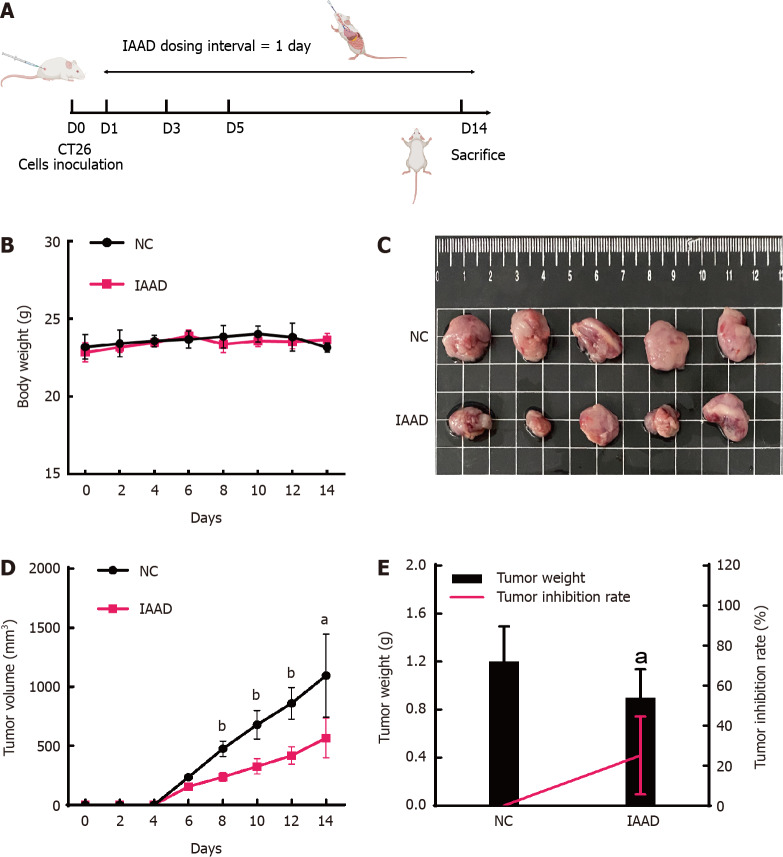
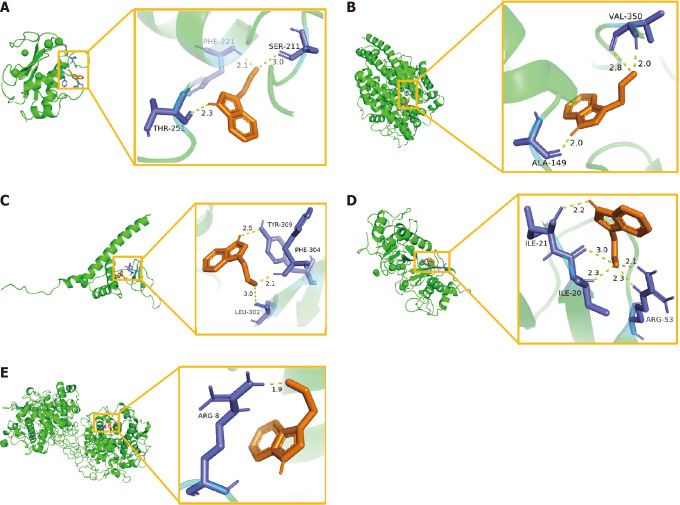
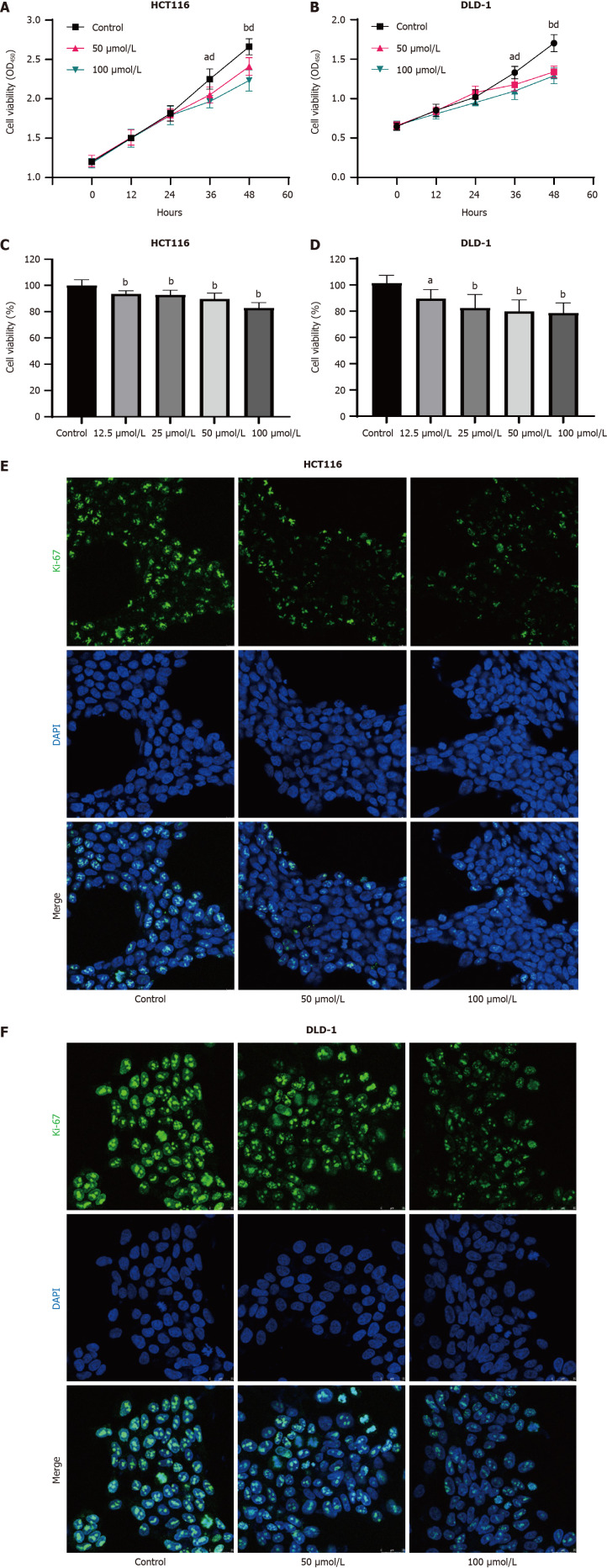
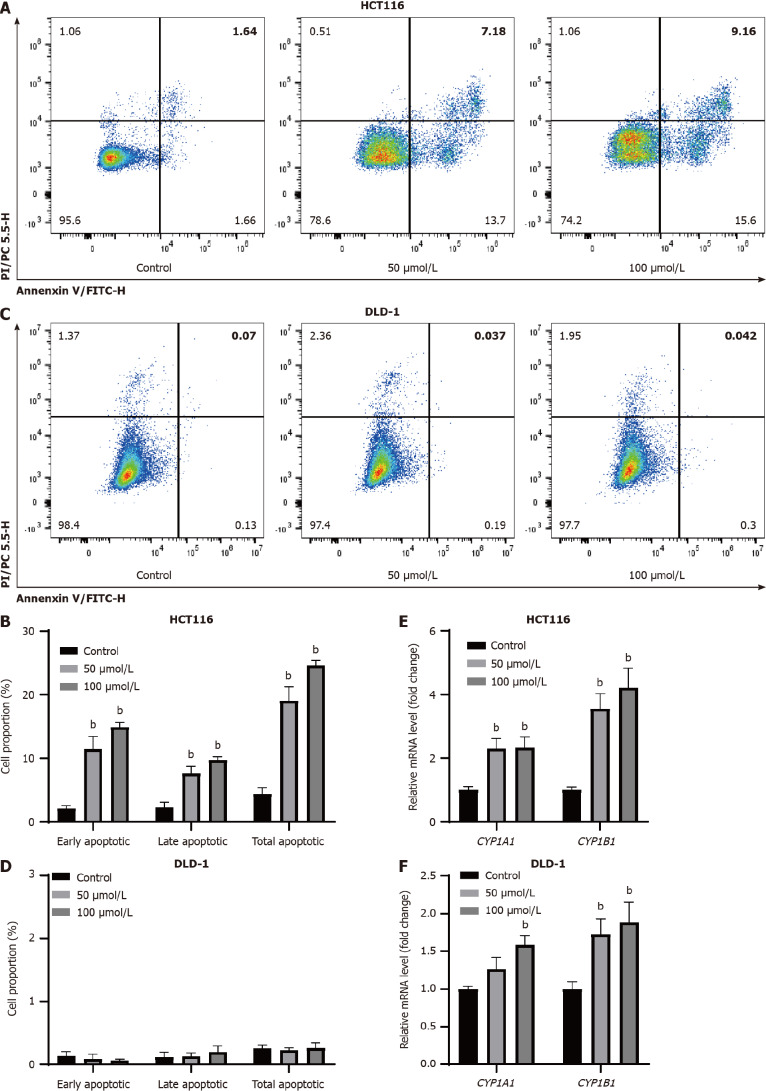
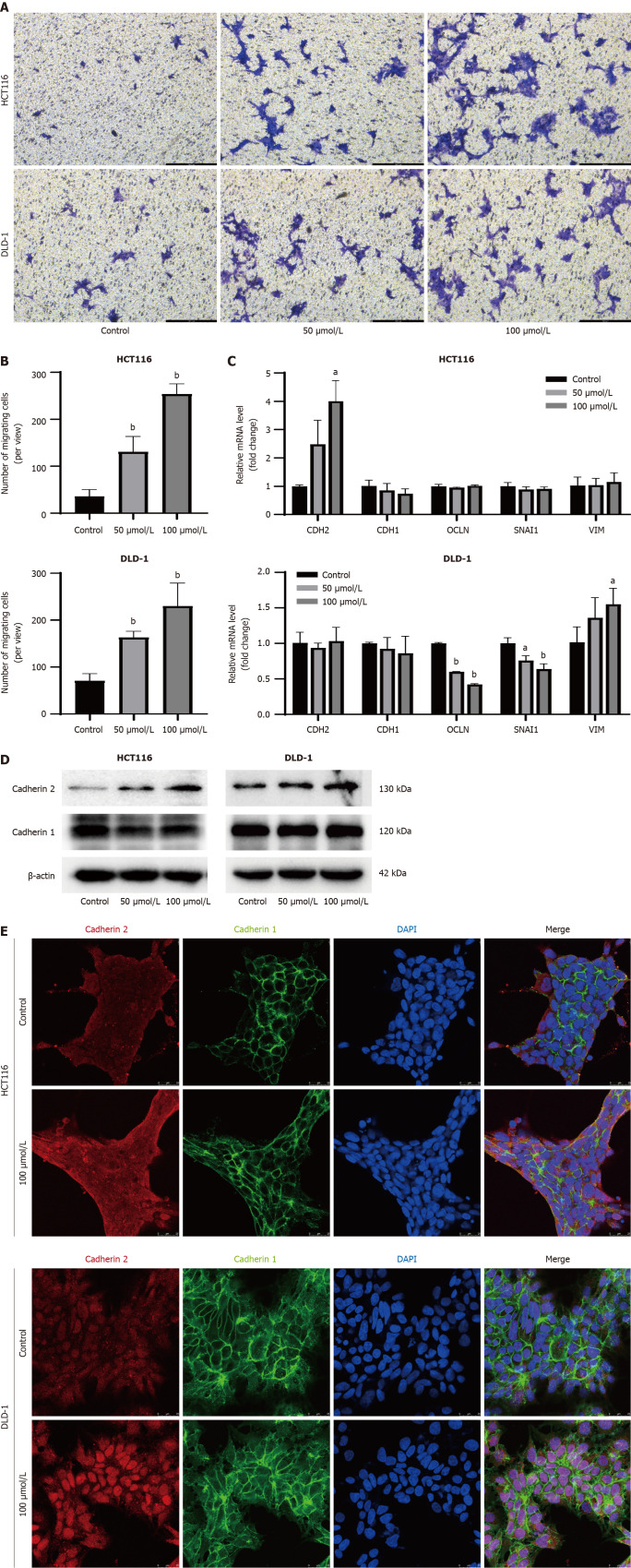
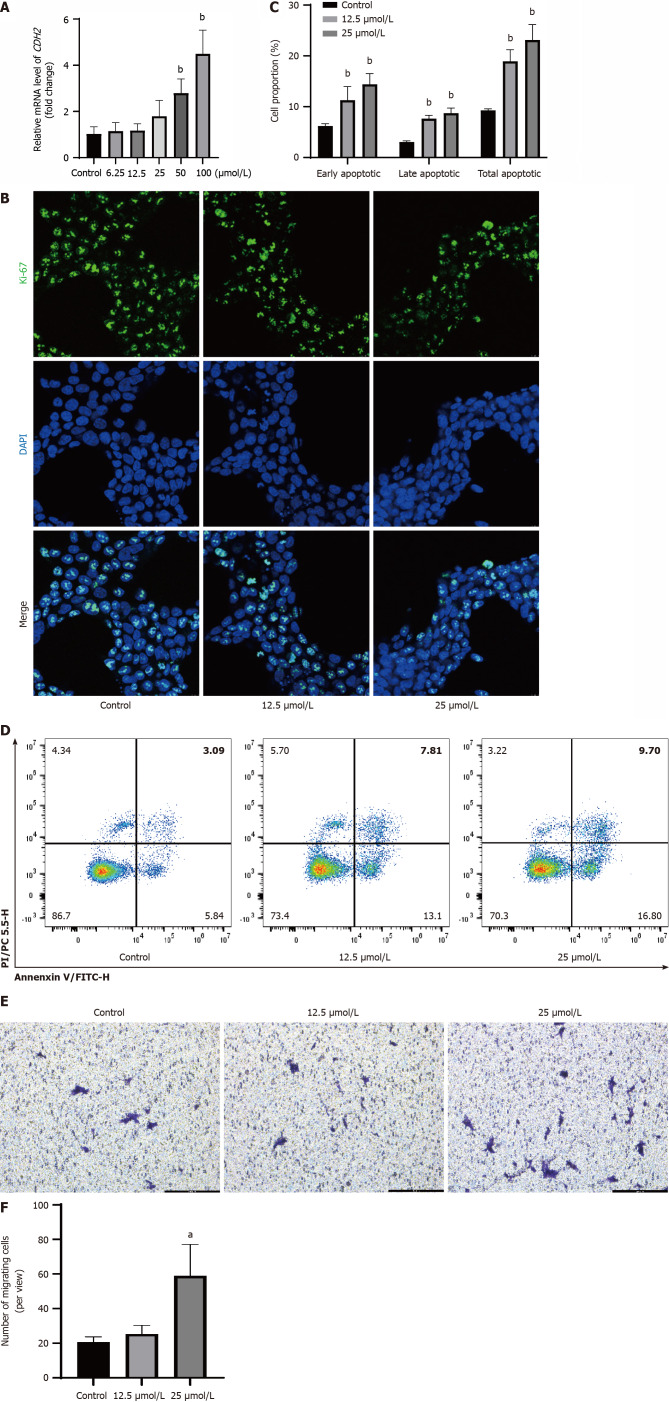
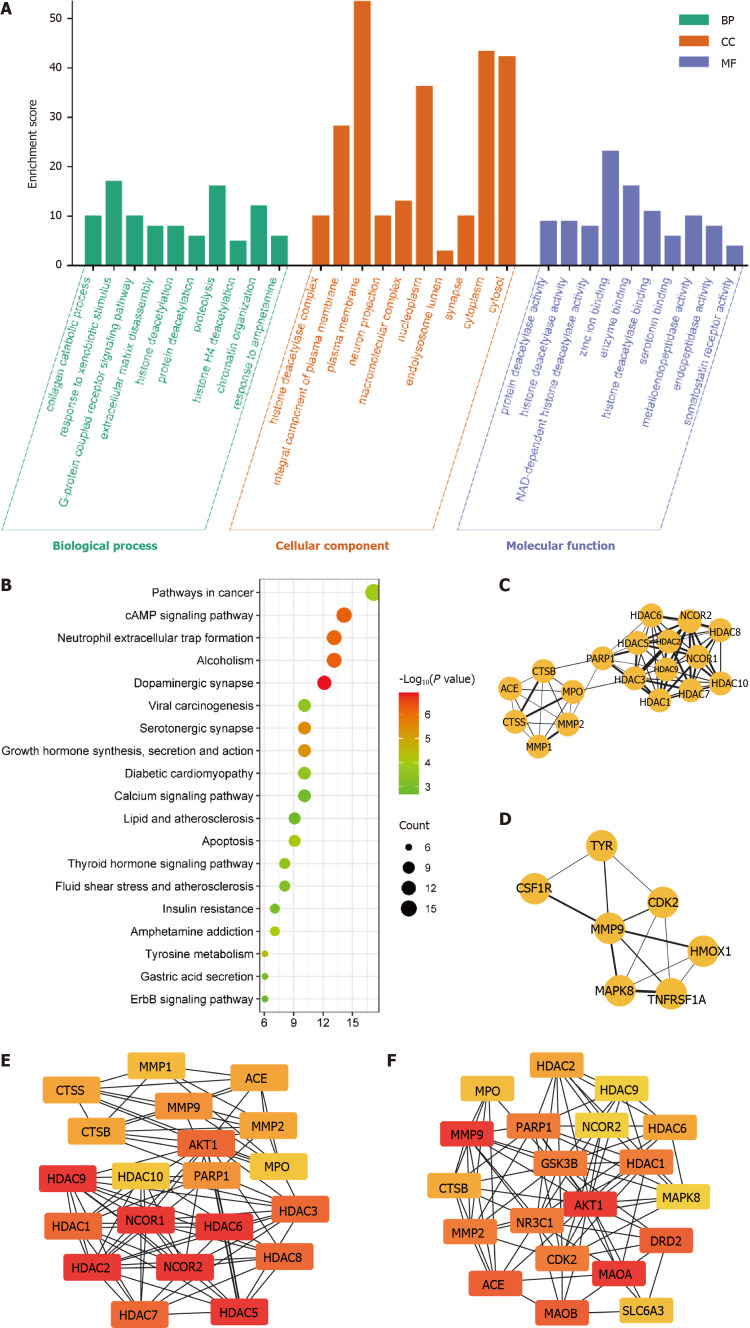
IAAD reduced tumorigenesis in a syngeneic mouse model. In CRC cell lines HCT116 and DLD1, IAAD exhibited cytotoxicity starting at 24 h of treatment, while it reduced Ki67 expression in the nucleus. The results of flow cytometry showed that IAAD induced apoptosis in HCT116 cells but had no effect on DLD1 cells, which may be related to the activation of AhR. IAAD can also increase the invasiveness and epithelial-mesenchymal transition of HCT116 and DLD1 cells. At low concentrations (< 12.5 μmol/L), IAAD only exhibited cytotoxic effects without promoting cell invasion. In addition, predictions based on online databases, protein-protein interaction analysis, and molecular docking showed that IAAD can bind to matrix metalloproteinase-9 (MMP9), angiotensin converting enzyme (ACE), poly(ADP-ribose) polymerase-1 (PARP1), matrix metalloproteinase-2 (MMP2), and myeloperoxidase (MPO).
Indole-3-aldehyde can induce cell apoptosis and inhibit cell proliferation to prevent the occurrence of CRC; however, at high concentrations (≥ 25 μmol/L), it can also promote epithelial-mesenchymal transition and invasion in CRC cells. IAAD activates AhR and directly binds MMP9, ACE, PARP1, MMP2, and MPO, which partly reveals why it has a bidirectional effect.
结直肠癌(CRC)的发病率和死亡率都很高。最近的研究表明,参与肠道微生物群代谢的吲哚衍生物会影响CRC的肿瘤发生、进展和转移。
研究吲哚-3-乙醛(IAAD)对CRC的影响。
在CRC同基因小鼠模型和CRC细胞系(HCT116和DLD-1)中评估IAAD的作用。通过Ki-67荧光染色和细胞毒性试验评估细胞增殖。用膜联蛋白V-异硫氰酸荧光素和碘化丙啶染色后,通过流式细胞术分析细胞凋亡。使用Transwell试验研究侵袭性。进行蛋白质印迹和实时荧光定量聚合酶链反应以评估上皮-间质转化相关基因和芳烃受体(AhR)下游基因的表达。使用PharmMapper、SEA和SWISS数据库筛选IAAD的潜在靶蛋白,并通过String数据库鉴定核心蛋白。
IAAD在同基因小鼠模型中降低了肿瘤发生。在CRC细胞系HCT116和DLD1中,IAAD在处理24小时后开始表现出细胞毒性,同时降低了细胞核中Ki67的表达。流式细胞术结果显示,IAAD诱导HCT116细胞凋亡,但对DLD1细胞无影响,这可能与AhR的激活有关。IAAD还可以增加HCT116和DLD1细胞的侵袭性和上皮-间质转化。在低浓度(<12.5μmol/L)时,IAAD仅表现出细胞毒性作用,而不促进细胞侵袭。此外,基于在线数据库的预测、蛋白质-蛋白质相互作用分析和分子对接表明,IAAD可以与基质金属蛋白酶-9(MMP9)、血管紧张素转换酶(ACE)、聚(ADP-核糖)聚合酶-1(PARP1)、基质金属蛋白酶-2(MMP2)和髓过氧化物酶(MPO)结合。
吲哚-3-醛可诱导细胞凋亡并抑制细胞增殖以预防CRC的发生;然而,在高浓度(≥25μmol/L)时,它也可促进CRC细胞的上皮-间质转化和侵袭。IAAD激活AhR并直接结合MMP9、ACE、PARP1、MMP2和MPO,这部分揭示了它具有双向作用的原因。