• 文献检索
  • 文档翻译
  • 深度研究
  • 学术资讯
  • Suppr Zotero 插件Zotero 插件
  • 邀请有礼
  • 套餐&价格
  • 历史记录
应用&插件
Suppr Zotero 插件Zotero 插件浏览器插件Mac 客户端Windows 客户端微信小程序
定价
高级版会员购买积分包购买API积分包
服务
文献检索文档翻译深度研究API 文档MCP 服务
关于我们
关于 Suppr公司介绍联系我们用户协议隐私条款
关注我们

Suppr 超能文献

核心技术专利:CN118964589B侵权必究
粤ICP备2023148730 号-1Suppr @ 2026

文献检索

告别复杂PubMed语法,用中文像聊天一样搜索,搜遍4000万医学文献。AI智能推荐,让科研检索更轻松。

立即免费搜索

文件翻译

保留排版,准确专业,支持PDF/Word/PPT等文件格式,支持 12+语言互译。

免费翻译文档

深度研究

AI帮你快速写综述,25分钟生成高质量综述,智能提取关键信息,辅助科研写作。

立即免费体验

从全新的多模态感官视角看集群鱼类。

Schooling Fish from a New, Multimodal Sensory Perspective.

作者信息

Larsson Matz

机构信息

Clinical Health Promotion Centre, Lund University, 22100 Lund, Sweden.

School of Health and Medical Sciences, Örebro University, 70182 Örebro, Sweden.

出版信息

Animals (Basel). 2024 Jul 5;14(13):1984. doi: 10.3390/ani14131984.

DOI:10.3390/ani14131984
PMID:38998096
原文链接:https://pmc.ncbi.nlm.nih.gov/articles/PMC11240491/
Abstract

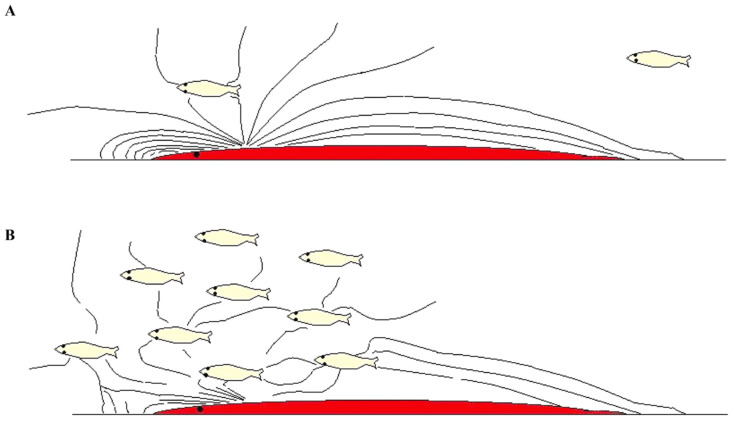
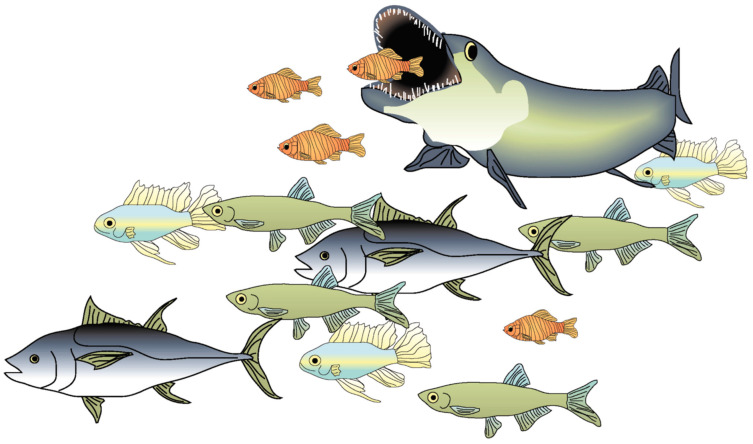
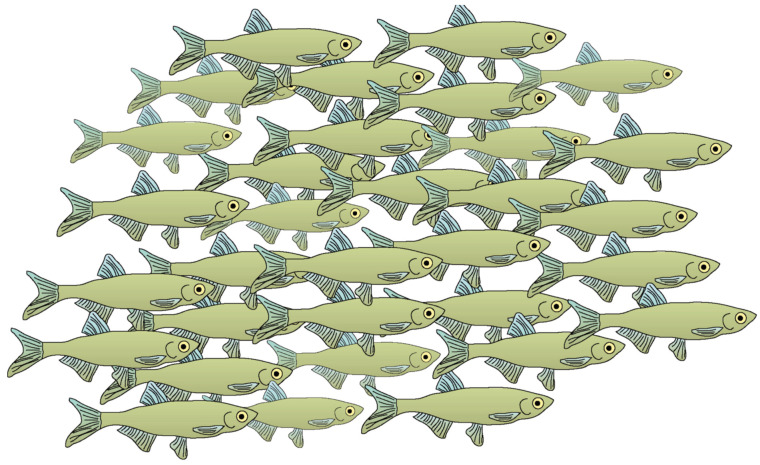
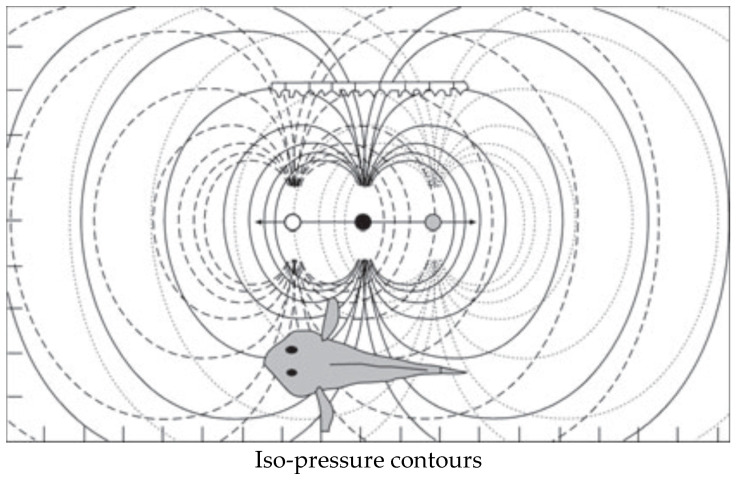
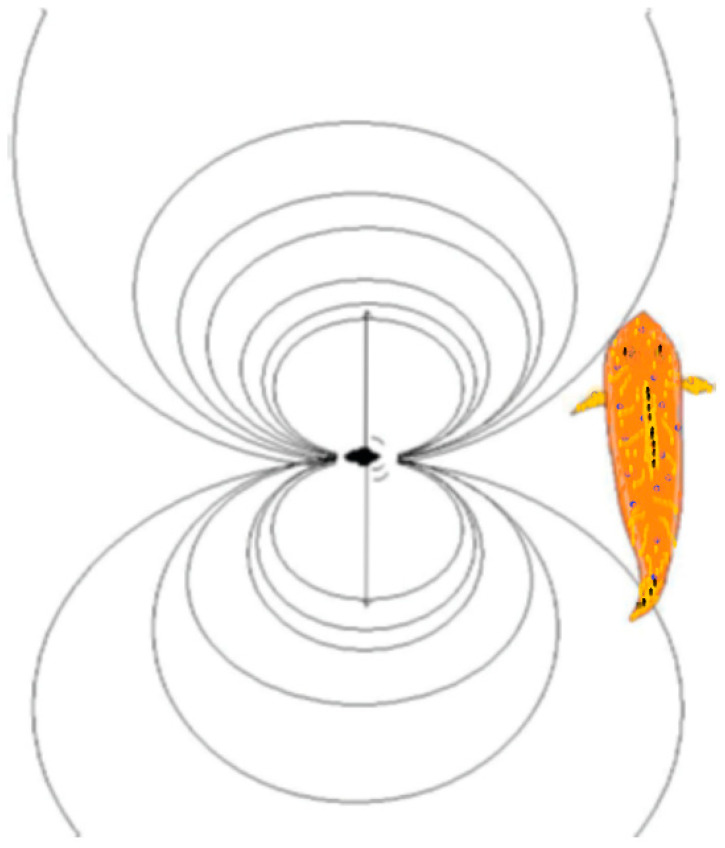
The suggests that schooling can result in several benefits. (1) The acoustic pattern (AP) (pressure waves and other water movements) produced by swimming are likely to serve as signals within fish shoals, communicating useful spatial and temporal information between school members, enabling synchronized locomotion and influencing join, stay or leave decisions and shoal assortment. (2) Schooling is likely to reduce the masking of environmental signals, e.g., by auditory grouping, and fish may achieve windows of silence by simultaneously stopping their movements. (3) A solitary swimming fish produces an uncomplicated AP that will give a nearby predator's lateral line organ (LLO) excellent information, but, if extra fish join, they will produce increasingly complex and indecipherable APs. (4) Fishes swimming close to one another will also blur the electrosensory system (ESS) of predators. Since predators use multimodal information, and since information from the LLO and the ESS is more important than vision in many situations, schooling fish may acquire increased survival by confusing these sensory systems. The combined effects of such predator confusion and other acoustical benefits may contribute to why schooling became an adaptive success. A model encompassing the complex effects of synchronized group locomotion on LLO and ESS perception might increase the understanding of schooling behavior.

摘要

研究表明,集群行为能带来诸多益处。(1)鱼类游动产生的声学模式(AP)(压力波和其他水体运动)很可能在鱼群中充当信号,在鱼群成员之间传递有用的空间和时间信息,实现同步游动,并影响加入、停留或离开的决策以及鱼群的分类。(2)集群行为可能会减少环境信号的掩蔽,例如通过听觉分组,并且鱼类可能通过同时停止游动来获得安静的时段。(3)单独游动的鱼产生的声学模式简单,会给附近捕食者的侧线器官(LLO)提供很好的信息,但是,如果有额外的鱼加入,它们会产生越来越复杂且难以解读的声学模式。(4)彼此靠近游动的鱼也会模糊捕食者的电感应系统(ESS)。由于捕食者使用多模态信息,并且在许多情况下,来自侧线器官和电感应系统的信息比视觉信息更重要,集群的鱼可能通过混淆这些感官系统而提高生存率。这种捕食者混淆效应和其他声学益处的综合作用可能有助于解释为什么集群行为成为一种适应性成功。一个包含同步群体游动对侧线器官和电感应系统感知的复杂影响的模型,可能会增进对集群行为的理解。
https://cdn.ncbi.nlm.nih.gov/pmc/blobs/f55c/11240491/f50f935c774b/animals-14-01984-g005.jpg
https://cdn.ncbi.nlm.nih.gov/pmc/blobs/f55c/11240491/6b86552f2243/animals-14-01984-g001.jpg
https://cdn.ncbi.nlm.nih.gov/pmc/blobs/f55c/11240491/906862a305ae/animals-14-01984-g002.jpg
https://cdn.ncbi.nlm.nih.gov/pmc/blobs/f55c/11240491/7e3c3588b01d/animals-14-01984-g003.jpg
https://cdn.ncbi.nlm.nih.gov/pmc/blobs/f55c/11240491/b243d677b735/animals-14-01984-g004.jpg
https://cdn.ncbi.nlm.nih.gov/pmc/blobs/f55c/11240491/f50f935c774b/animals-14-01984-g005.jpg
https://cdn.ncbi.nlm.nih.gov/pmc/blobs/f55c/11240491/6b86552f2243/animals-14-01984-g001.jpg
https://cdn.ncbi.nlm.nih.gov/pmc/blobs/f55c/11240491/906862a305ae/animals-14-01984-g002.jpg
https://cdn.ncbi.nlm.nih.gov/pmc/blobs/f55c/11240491/7e3c3588b01d/animals-14-01984-g003.jpg
https://cdn.ncbi.nlm.nih.gov/pmc/blobs/f55c/11240491/b243d677b735/animals-14-01984-g004.jpg
https://cdn.ncbi.nlm.nih.gov/pmc/blobs/f55c/11240491/f50f935c774b/animals-14-01984-g005.jpg

相似文献

1
Schooling Fish from a New, Multimodal Sensory Perspective.从全新的多模态感官视角看集群鱼类。
Animals (Basel). 2024 Jul 5;14(13):1984. doi: 10.3390/ani14131984.
2
Tail Beat Synchronization during Schooling Requires a Functional Posterior Lateral Line System in Giant Danios, Devario aequipinnatus.斑马鱼在洄游过程中的尾鳍拍动同步需要功能完整的后侧线系统。
Integr Comp Biol. 2021 Sep 8;61(2):427-441. doi: 10.1093/icb/icab071.
3
Is the Capacity for Vocal Learning in Vertebrates Rooted in Fish Schooling Behavior?脊椎动物的发声学习能力是否源于鱼类的集群行为?
Evol Biol. 2018;45(4):359-373. doi: 10.1007/s11692-018-9457-8. Epub 2018 Jun 13.
4
Energy conservation by collective movement in schooling fish.集群鱼类通过集体运动实现的能量节约。
Elife. 2024 Feb 20;12:RP90352. doi: 10.7554/eLife.90352.
5
Bioluminescent flashes drive nighttime schooling behavior and synchronized swimming dynamics in flashlight fish.生物发光闪烁驱动闪光鱼的夜间洄游行为和同步游泳动力学。
PLoS One. 2019 Aug 14;14(8):e0219852. doi: 10.1371/journal.pone.0219852. eCollection 2019.
6
Incidental sounds of locomotion in animal cognition.动物认知中的运动伴随声音。
Anim Cogn. 2012 Jan;15(1):1-13. doi: 10.1007/s10071-011-0433-2. Epub 2011 Jul 12.
7
In-line swimming dynamics revealed by fish interacting with a robotic mechanism.鱼类与机器人机制相互作用揭示的直线游动动力学。
Elife. 2023 Feb 6;12:e81392. doi: 10.7554/eLife.81392.
8
The role of vision and lateral line sensing for schooling in giant danios (Devario aequipinnatus).视觉和侧线感知在大鳍鱲(Devario aequipinnatus)群体游动中的作用。
J Exp Biol. 2024 May 15;227(10). doi: 10.1242/jeb.246887. Epub 2024 May 28.
9
Spontaneous response of a self-organized fish school to a predator.自组织鱼群对捕食者的自发反应。
Bioinspir Biomim. 2021 Jun 10;16(4). doi: 10.1088/1748-3190/abfd7f.
10
The sensory basis of schooling by intermittent swimming in the rummy-nose tetra ().间歇性游泳训练对斑纹鼻鱼()的感觉基础的影响。
Proc Biol Sci. 2020 Oct 28;287(1937):20200568. doi: 10.1098/rspb.2020.0568.

引用本文的文献

1
Spatiotemporal Dynamics of Fish Density in a Deep-Water Reservoir: Hydroacoustic Assessment of Aggregation Patterns and Key Drivers.深水水库中鱼类密度的时空动态:聚集模式和关键驱动因素的水声评估
Animals (Basel). 2025 Apr 7;15(7):1068. doi: 10.3390/ani15071068.

本文引用的文献

1
Vocal production learning in mammals revisited.哺乳动物发声学习的再思考。
Philos Trans R Soc Lond B Biol Sci. 2021 Oct 25;376(1836):20200244. doi: 10.1098/rstb.2020.0244. Epub 2021 Sep 6.
2
Inferring collective behaviour from a fossilized fish shoal.从化石鱼群推断集体行为。
Proc Biol Sci. 2019 May 29;286(1903):20190891. doi: 10.1098/rspb.2019.0891.
3
Sensory ecology of the fish lateral-line system: Morphological and physiological adaptations for the perception of hydrodynamic stimuli.鱼类侧线系统的感觉生态学:用于感知水动力刺激的形态和生理适应。
J Fish Biol. 2019 Jul;95(1):53-72. doi: 10.1111/jfb.13966. Epub 2019 May 7.
4
Electroreception, electrogenesis and electric signal evolution.电感受、电发生和电信号进化。
J Fish Biol. 2019 Jul;95(1):92-134. doi: 10.1111/jfb.13922. Epub 2019 Mar 18.
5
Is the Capacity for Vocal Learning in Vertebrates Rooted in Fish Schooling Behavior?脊椎动物的发声学习能力是否源于鱼类的集群行为?
Evol Biol. 2018;45(4):359-373. doi: 10.1007/s11692-018-9457-8. Epub 2018 Jun 13.
6
The behavioral response of prey fish to predators: the role of predator size.被捕食鱼类对捕食者的行为反应:捕食者体型的作用。
PeerJ. 2017 Apr 20;5:e3222. doi: 10.7717/peerj.3222. eCollection 2017.
7
Hydrodynamic schooling of flapping swimmers.扑翼游泳者的水动力集群行为
Nat Commun. 2015 Oct 6;6:8514. doi: 10.1038/ncomms9514.
8
Tool-use-associated sound in the evolution of language.语言进化中与工具使用相关的声音。
Anim Cogn. 2015 Sep;18(5):993-1005. doi: 10.1007/s10071-015-0885-x. Epub 2015 Jun 29.
9
Fish swimming in schools save energy regardless of their spatial position.成群游动的鱼无论处于何种空间位置都能节省能量。
Behav Ecol Sociobiol. 2015;69:219-226. doi: 10.1007/s00265-014-1834-4. Epub 2014 Oct 30.
10
Multisensory integration and behavioral plasticity in sharks from different ecological niches.不同生态位鲨鱼的多感觉整合与行为可塑性。
PLoS One. 2014 Apr 2;9(4):e93036. doi: 10.1371/journal.pone.0093036. eCollection 2014.