Meng Zihao, Hu Feifei, Xiang Miao, Fu Xuejun, Li Xuemei
Yangtze River Fisheries Research Institute, Chinese Academy of Fishery Sciences, Wuhan 430223, China.
Aquatic Conservation and Rescue Center of Jiangxi Province, Nanchang 330096, China.
Animals (Basel). 2025 Apr 7;15(7):1068. doi: 10.3390/ani15071068.
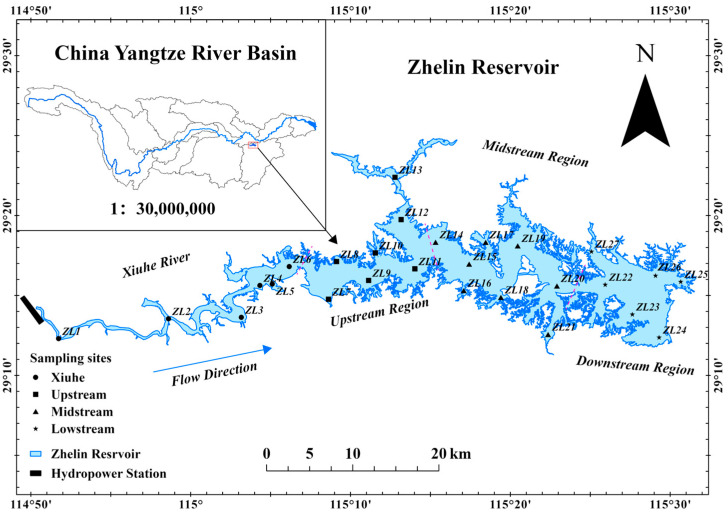
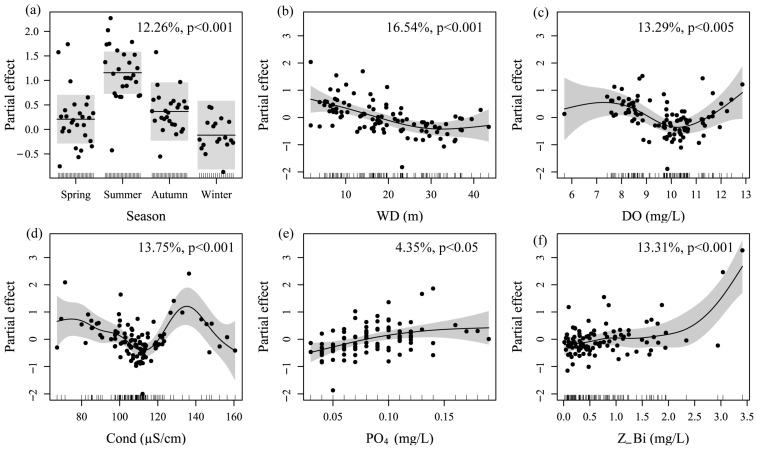
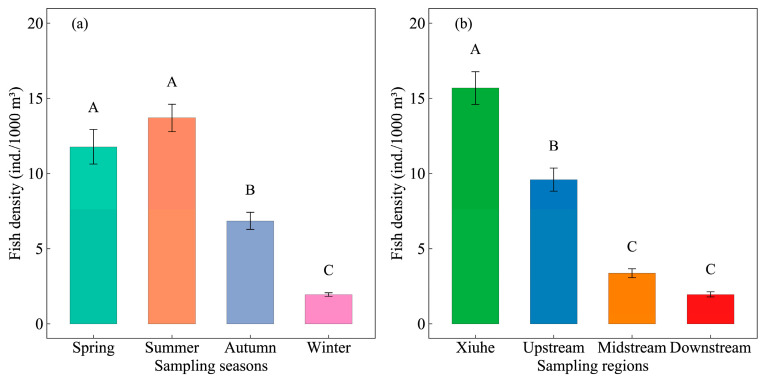
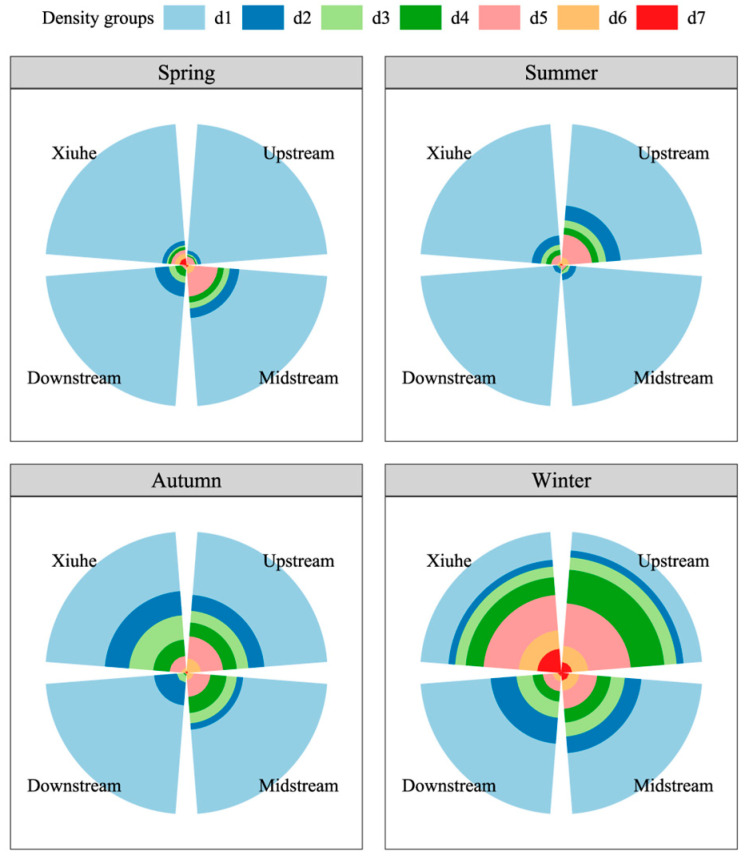
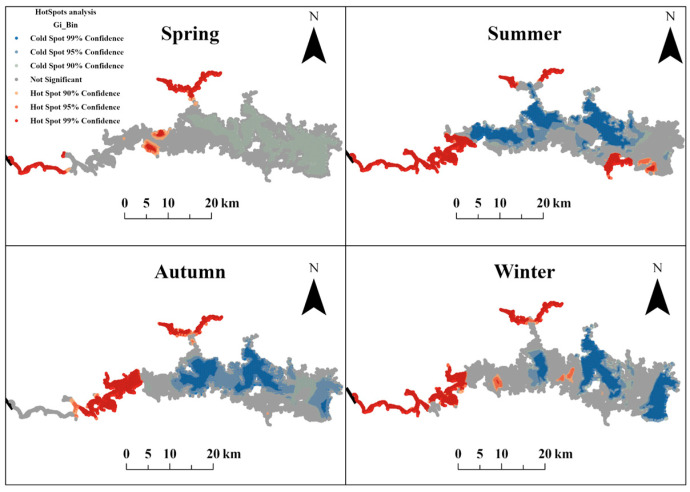
Understanding spatiotemporal patterns of fish density and their environmental drivers is critical for managing river-lake ecosystems, yet dynamic interactions in heterogeneous habitats remain poorly quantified. This study combined hydroacoustic surveys, spatial autocorrelation analysis (Moran's I), and generalized additive models (GAMs) to investigate seasonal and spatial fish distribution, aggregation characteristics, and regulatory mechanisms in China's Zhelin Reservoir. The results reveal pronounced seasonal fluctuations, with summer fish density peaking at 13.70 ± 0.91 ind./1000 m and declining to 1.95 ± 0.13 ind./1000 m in winter. Spatial heterogeneity was evident, with the Xiuhe region sustaining the highest density (15.69 ± 1.09 ind./1000 m) and persistent hotspots in upstream bays. Transient high-density clusters (90-99% confidence) near the Zhelin Dam during summer suggested thermal or hydrodynamic disturbances. GAM analysis (Radj = 0.712, 78.5% deviance explained) identified seasonal transitions (12.26% variance), water depth (16.54%), conductivity (13.75%), and dissolved oxygen (13.29%) as dominant drivers, with nonlinear responses to depth and bimodal patterns for conductivity/oxygen. These findings demonstrate that hydrological seasonality and habitat heterogeneity jointly govern fish aggregation, underscoring the ecological priority of Xiuhe and upstream bays as core habitats. This study provides a mechanistic framework for guiding reservoir management, including targeted conservation, dam operation adjustments to mitigate hydrodynamic impacts, and integrated strategies for balancing hydrological and ecological needs in similar ecosystems.
了解鱼类密度的时空模式及其环境驱动因素对于管理河湖生态系统至关重要,但异质生境中的动态相互作用仍缺乏量化。本研究结合了声学调查、空间自相关分析(莫兰指数I)和广义相加模型(GAMs),以调查中国柘林水库鱼类的季节和空间分布、聚集特征及调控机制。结果显示出明显的季节性波动,夏季鱼类密度峰值为13.70±0.91尾/1000立方米,冬季降至1.95±0.13尾/1000立方米。空间异质性明显,修河区域密度最高(15.69±1.09尾/1000立方米),上游河湾存在持续的高密度热点区域。夏季柘林大坝附近出现的短暂高密度集群(90-99%置信度)表明存在热或水动力干扰。GAM分析(调整后的R=0.712,解释了78.5%的偏差)确定季节变化(12.26%的方差)、水深(16.54%)、电导率(13.75%)和溶解氧(13.29%)为主要驱动因素,对水深呈非线性响应,对电导率/氧气呈双峰模式。这些发现表明,水文季节性和生境异质性共同控制着鱼类聚集,凸显了修河和上游河湾作为核心生境的生态重要性。本研究为指导水库管理提供了一个机制框架,包括有针对性的保护、调整大坝运行以减轻水动力影响,以及在类似生态系统中平衡水文和生态需求的综合策略。