State Key Laboratory of Vegetation and Environmental Change, Institute of Botany, Chinese Academy of Sciences, Beijing, China.
China National Botanical Garden, Beijing, China.
Nat Commun. 2024 Jul 14;15(1):5920. doi: 10.1038/s41467-024-50276-2.
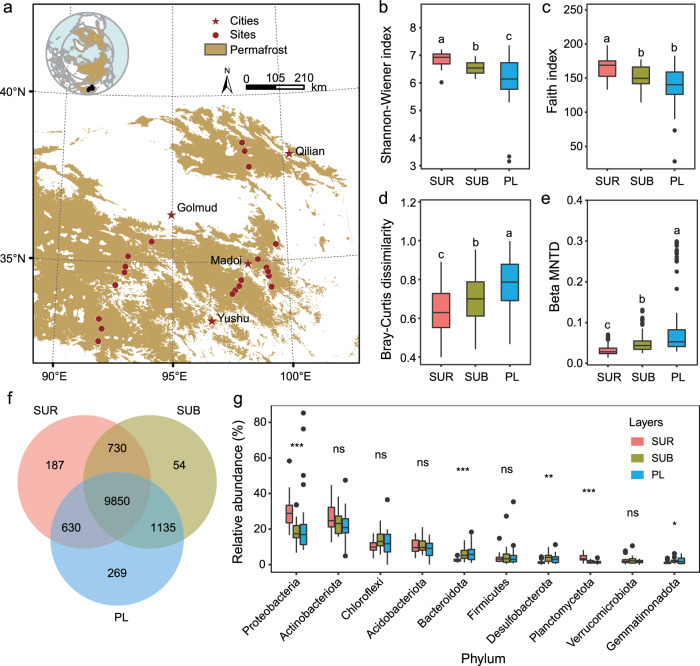
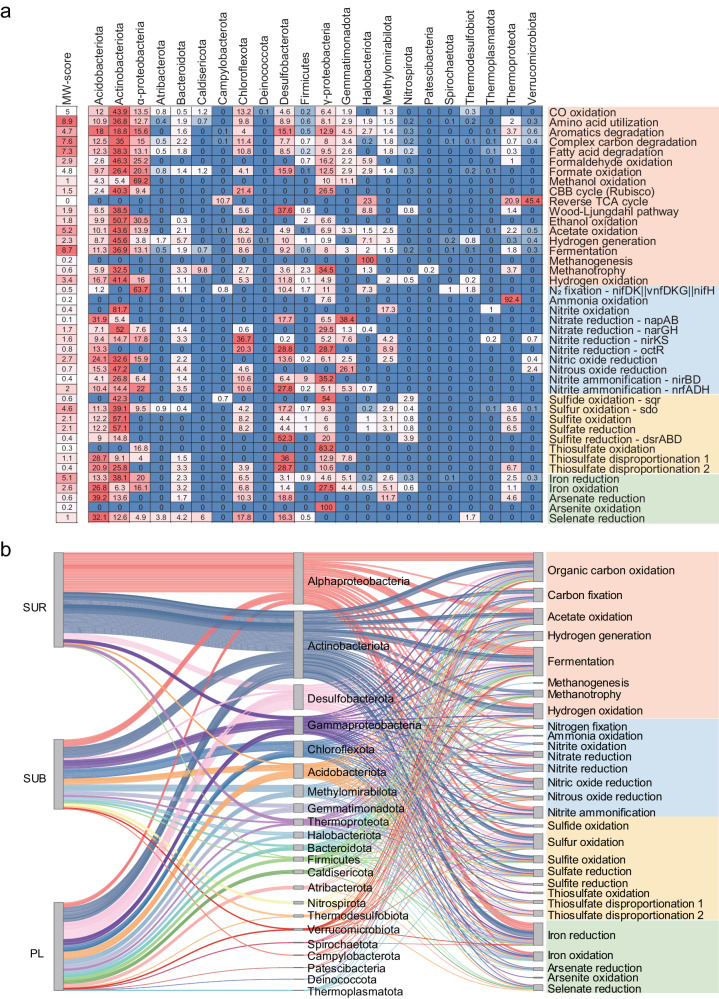
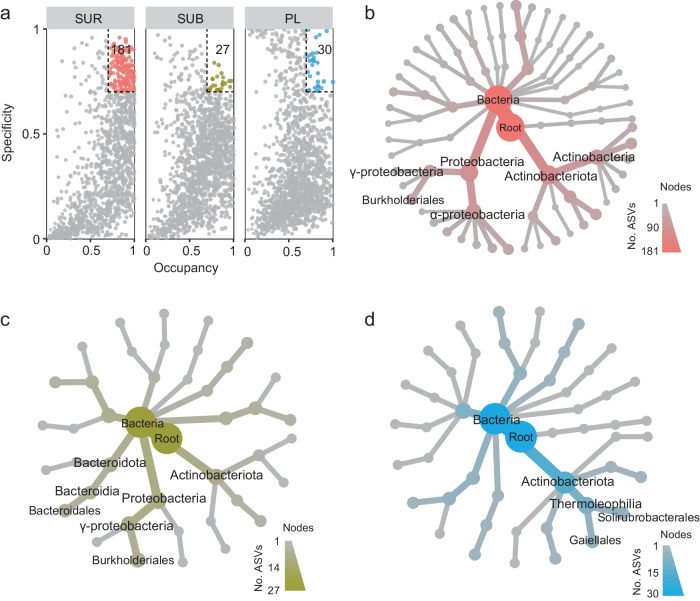
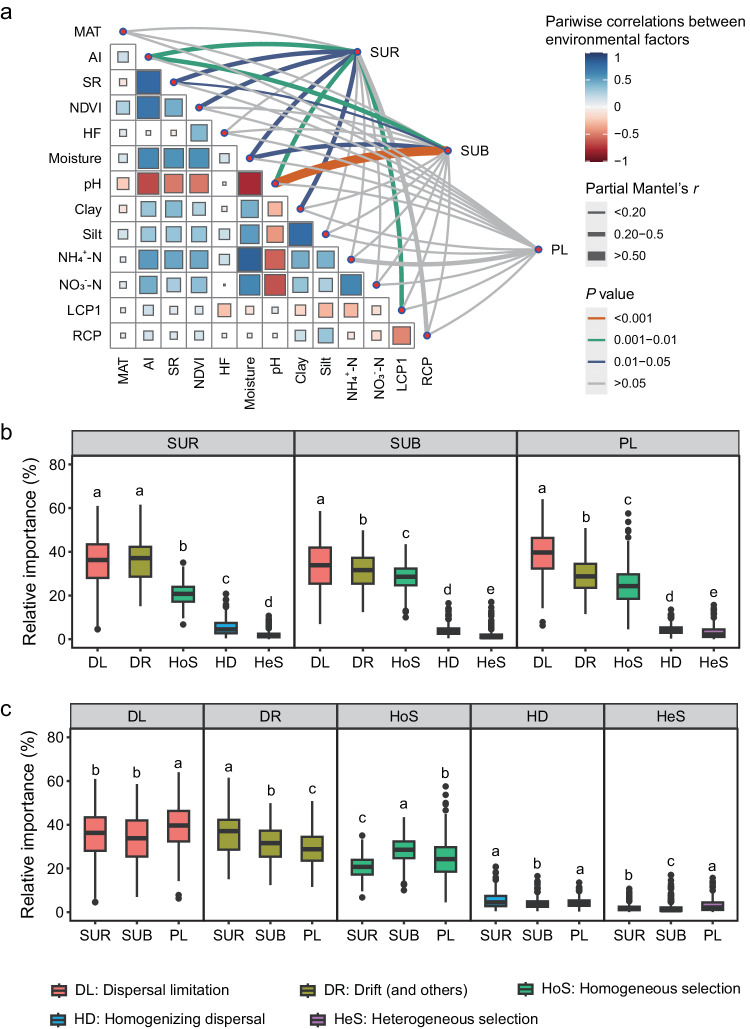
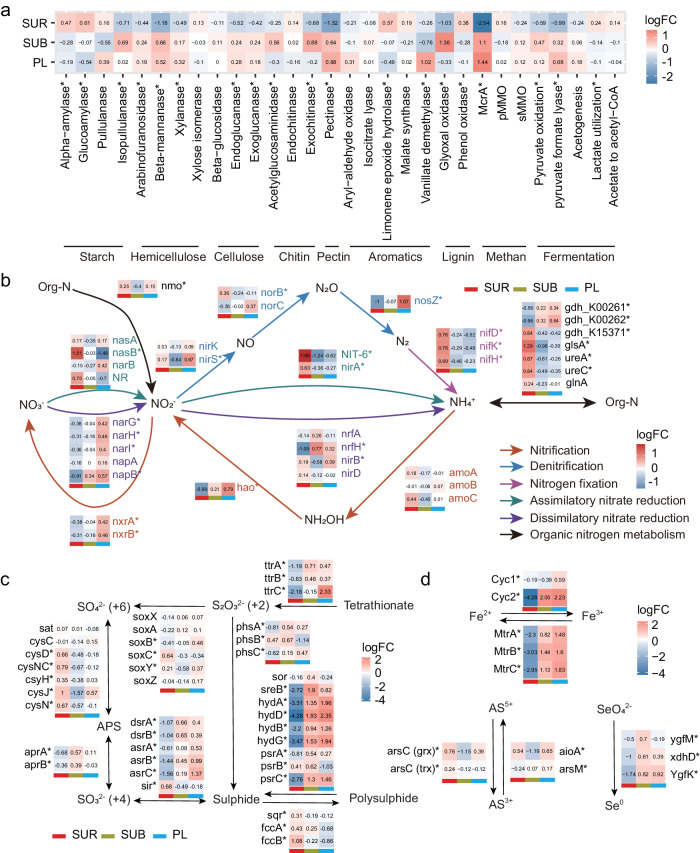
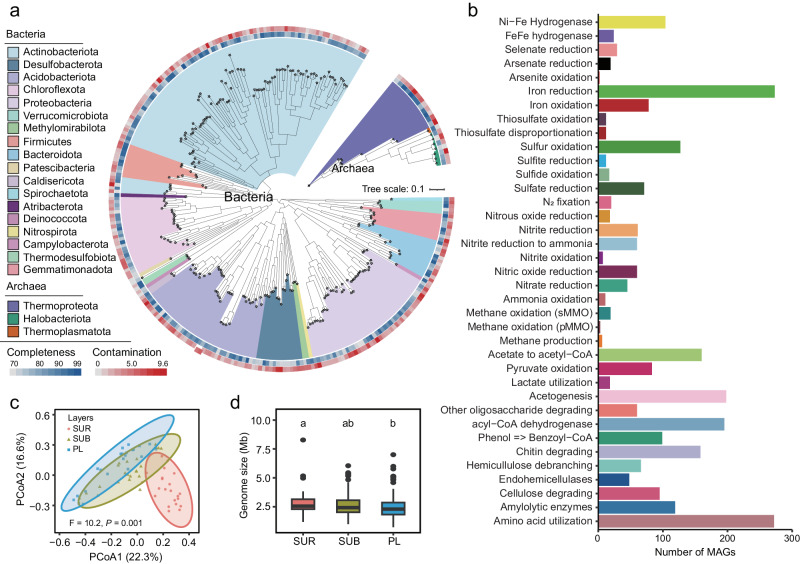
Permafrost, characterized by its frozen soil, serves as a unique habitat for diverse microorganisms. Understanding these microbial communities is crucial for predicting the response of permafrost ecosystems to climate change. However, large-scale evidence regarding stratigraphic variations in microbial profiles remains limited. Here, we analyze microbial community structure and functional potential based on 16S rRNA gene amplicon sequencing and metagenomic data obtained from an ∼1000 km permafrost transect on the Tibetan Plateau. We find that microbial alpha diversity declines but beta diversity increases down the soil profile. Microbial assemblages are primarily governed by dispersal limitation and drift, with the importance of drift decreasing but that of dispersal limitation increasing with soil depth. Moreover, genes related to reduction reactions (e.g., ferric iron reduction, dissimilatory nitrate reduction, and denitrification) are enriched in the subsurface and permafrost layers. In addition, microbial groups involved in alternative electron accepting processes are more diverse and contribute highly to community-level metabolic profiles in the subsurface and permafrost layers, likely reflecting the lower redox potential and more complicated trophic strategies for microorganisms in deeper soils. Overall, these findings provide comprehensive insights into large-scale stratigraphic profiles of microbial community structure and functional potentials in permafrost regions.
多年冻土以其冻土为特征,是多种微生物的独特栖息地。了解这些微生物群落对于预测多年冻土生态系统对气候变化的反应至关重要。然而,关于微生物分布的大规模证据仍然有限。在这里,我们根据从青藏高原约 1000 公里长的多年冻土横剖面获得的 16S rRNA 基因扩增子测序和宏基因组数据,分析了微生物群落结构和功能潜力。我们发现,微生物 α多样性随土壤剖面的深度而下降,但 β多样性增加。微生物组合主要受扩散限制和漂移控制,随着土壤深度的增加,漂移的重要性降低,但扩散限制的重要性增加。此外,与还原反应(例如,铁还原、异化硝酸盐还原和反硝化)相关的基因在地下和多年冻土层中富集。此外,参与替代电子接受过程的微生物群落在地下和多年冻土层中更加多样化,并对群落水平的代谢特征有很大贡献,这可能反映了更深土壤中微生物较低的氧化还原电位和更复杂的营养策略。总的来说,这些发现为多年冻土区微生物群落结构和功能潜力的大规模地层剖面提供了全面的见解。