Tastekin Fatih, Karatas Ezgi, Aydin Ozgur, Zihni Figen Yargucu, Kabasakal Yasemin, Barutcuoglu Burcu, Karabulut Gonca
Ege University Faculty of Medicine, Department of Internal Medicine, Division of Rheumatology, Izmir, Turkey.
Ege University Faculty of Health Sciences, Department of Nutrition and Dietetics, Izmir, Turkey.
Int J Gen Med. 2024 Jul 9;17:2981-2991. doi: 10.2147/IJGM.S465367. eCollection 2024.
Primary Sjögren's syndrome (PSS) has many effects such as fatigue, pain, physical activity limitation and sleep disturbance, which limit patient's daily and social lives. The aim of our study was to assess fatigue, depression, physical activity status and quality of life in patients with PSS, and to determine the relationship between these data and disease-related parameters.
This study was conducted with 117 primary Sjögren's syndrome patients. Demographic and anthropometric characteristics, disease activity (ESSDAI), quality of life scale (SF36), depression (Beck Depression Scale), physical activity status (International Physical Activity Questionnaire Short Form (IPAQ) score) and sleep status (Pittsburgh Sleep Quality Scale) of PSS patients were evaluated and relationships have been examined.
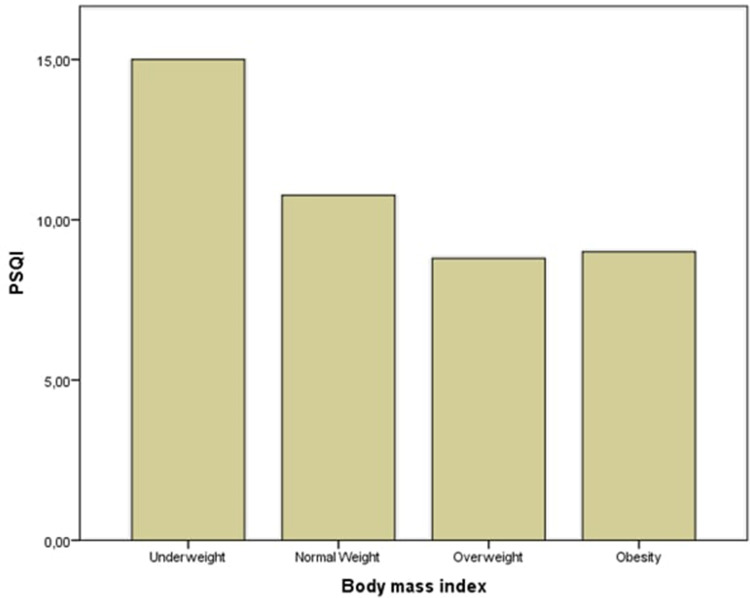
According to the results of our study, we found that sleep disorders are common in PSS patients (74.4%). Overweight patients, particularly higher lean mass sleep better (r:-0.201, p:0.043). Poor sleep causes fatigue (p=0.062) and depression (p=0.030). Sleep disturbance could not be explained by depressive state alone. However, after controlling for depression, the effect of sleep on fatigue seriously decreases (p=0.311). Exercise did not improve sleep quality (p=0.35) and the rate of poor sleep was higher among who exercised (p=0.192).
Based on the results of our study, we believe that, treating depression in PSS patients is crucial for reducing fatigue. Patients need education on performing the correct exercises and weight gain should done in a professional manner. Gaining a deeper understanding of the multisystem involvement of the disease and the impact of exercise on the disease, will have positive effects on patient care and treatment decisions.
原发性干燥综合征(PSS)具有多种影响,如疲劳、疼痛、身体活动受限和睡眠障碍,这些都会限制患者的日常生活和社交生活。我们研究的目的是评估PSS患者的疲劳、抑郁、身体活动状况和生活质量,并确定这些数据与疾病相关参数之间的关系。
本研究对117例原发性干燥综合征患者进行。评估了PSS患者的人口统计学和人体测量学特征、疾病活动度(ESSDAI)、生活质量量表(SF36)、抑郁(贝克抑郁量表)、身体活动状况(国际体力活动问卷简表(IPAQ)评分)和睡眠状况(匹兹堡睡眠质量量表),并检查了它们之间的关系。
根据我们的研究结果,我们发现睡眠障碍在PSS患者中很常见(74.4%)。超重患者,尤其是瘦体重较高的患者睡眠更好(r:-0.201,p:0.043)。睡眠不佳会导致疲劳(p=0.062)和抑郁(p=0.030)。睡眠障碍不能仅由抑郁状态来解释。然而,在控制抑郁后,睡眠对疲劳的影响会显著降低(p=0.311)。运动并未改善睡眠质量(p=0.35),且运动患者中睡眠不佳的比例更高(p=0.192)。
基于我们的研究结果,我们认为,治疗PSS患者的抑郁对于减轻疲劳至关重要。患者需要接受关于正确运动的教育,并且体重增加应该以专业的方式进行。更深入地了解该疾病的多系统受累情况以及运动对该疾病的影响,将对患者护理和治疗决策产生积极影响。