Department of Neurosurgery, Virginia Commonwealth University, Richmond, VA, USA.
Department of Pediatrics, Washington University in St. Louis School of Medicine, St. Louis, MO, USA.
J Neuroinflammation. 2024 Jul 15;21(1):171. doi: 10.1186/s12974-024-03158-9.
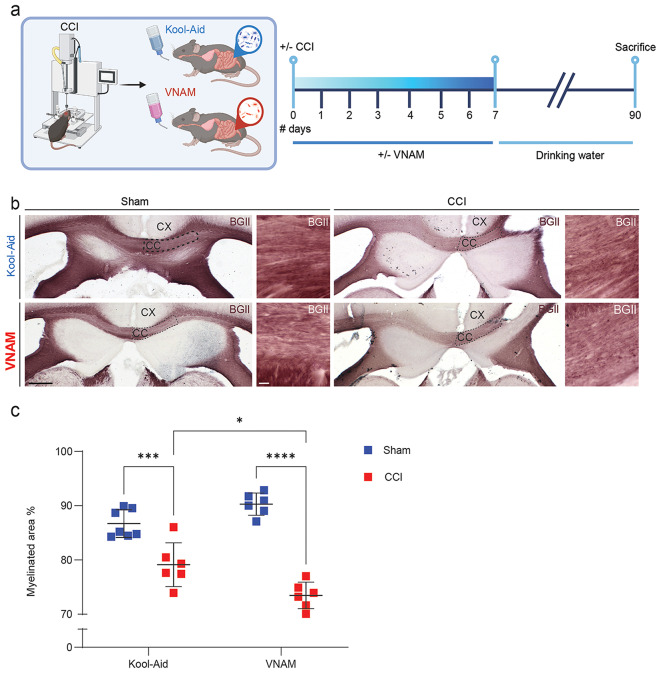
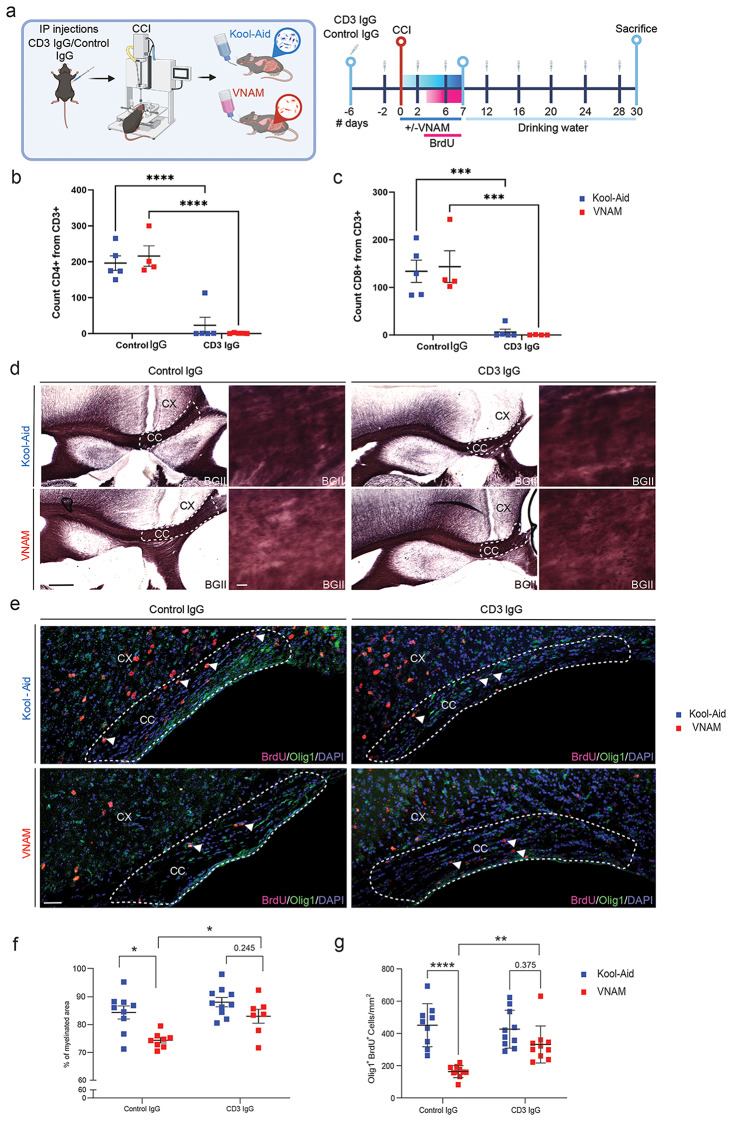
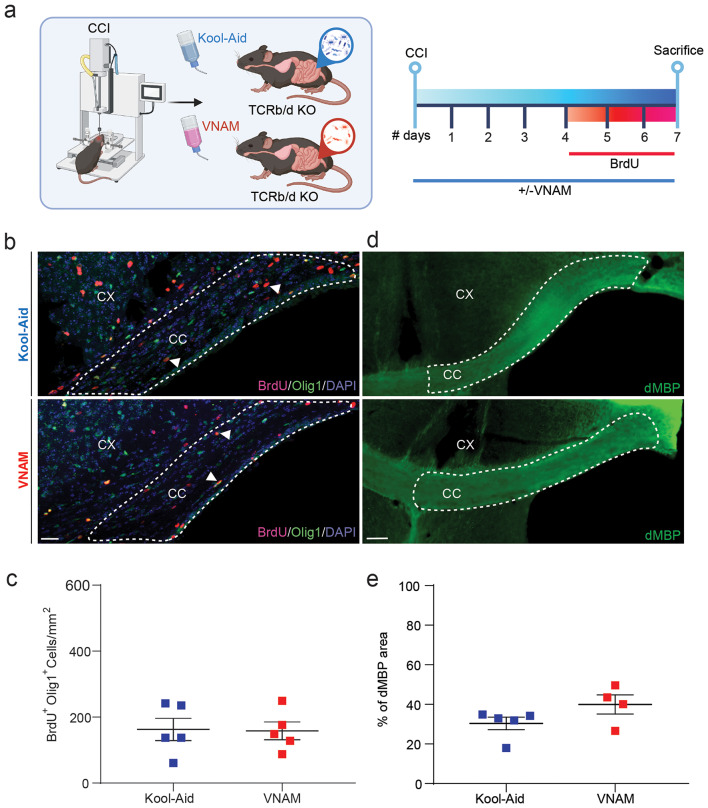
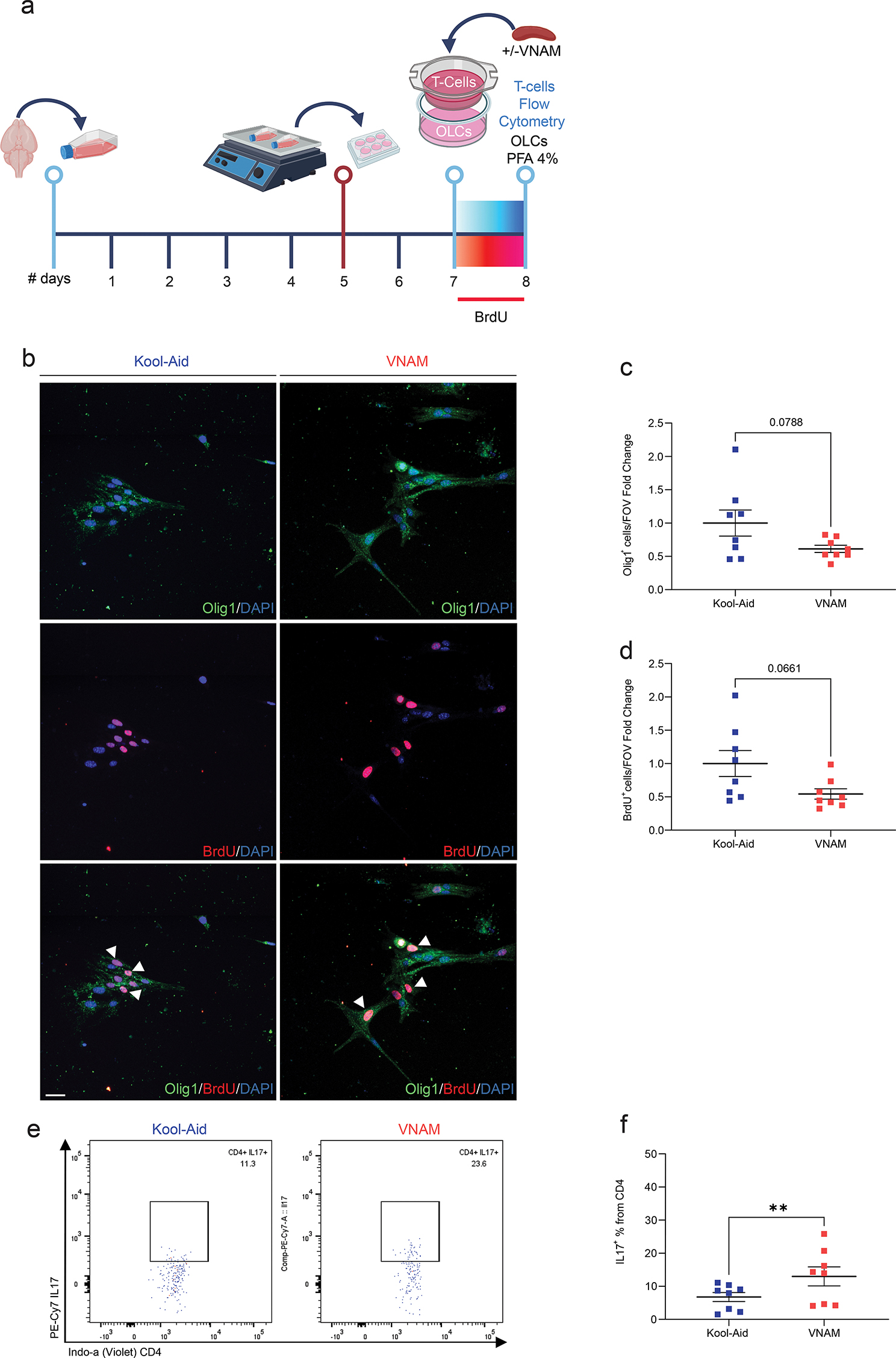
White matter injury (WMI) is thought to be a major contributor to long-term cognitive dysfunctions after traumatic brain injury (TBI). This damage occurs partly due to apoptotic death of oligodendrocyte lineage cells (OLCs) after the injury, triggered directly by the trauma or in response to degenerating axons. Recent research suggests that the gut microbiota modulates the inflammatory response through the regulation of peripheral immune cell infiltration after TBI. Additionally, T-cells directly impact OLCs differentiation and proliferation. Therefore, we hypothesized that the gut microbiota plays a critical role in regulating the OLC response to WMI influencing T-cells differentiation and activation. Gut microbial depletion early after TBI chronically reduced re-myelination, acutely decreased OLCs proliferation, and was associated with increased myelin debris accumulation. Surprisingly, the absence of T-cells in gut microbiota depleted mice restored OLC proliferation and remyelination after TBI. OLCs co-cultured with T-cells derived from gut microbiota depleted mice resulted in impaired proliferation and increased expression of MHC-II compared with T cells from control-injured mice. Furthermore, MHC-II expression in OLCs appears to be linked to impaired proliferation under gut microbiota depletion and TBI conditions. Collectively our data indicates that depletion of the gut microbiota after TBI impaired remyelination, reduced OLCs proliferation with concomitantly increased OLC MHCII expression, and required the presence of T cells. This data suggests that T cells are an important mechanistic link by which the gut microbiota modulate the oligodendrocyte response and white matter recovery after TBI.
脑外伤(TBI)后,白质损伤(WMI)被认为是长期认知功能障碍的主要原因。这种损伤部分是由于伤后少突胶质细胞谱系细胞(OLC)的凋亡死亡引起的,其直接由创伤触发,或响应于退化的轴突。最近的研究表明,肠道微生物群通过调节 TBI 后外周免疫细胞浸润来调节炎症反应。此外,T 细胞直接影响 OLC 分化和增殖。因此,我们假设肠道微生物群在调节 OLC 对 WMI 的反应中起着关键作用,影响 T 细胞的分化和激活。TBI 后早期肠道微生物群耗竭会慢性减少髓鞘再生,急性减少 OLC 增殖,并与髓鞘碎片积累增加有关。令人惊讶的是,在肠道微生物群耗竭的小鼠中缺乏 T 细胞,可恢复 TBI 后 OLC 的增殖和髓鞘形成。与来自对照损伤小鼠的 T 细胞相比,与来自肠道微生物群耗竭小鼠的 T 细胞共培养的 OLC 增殖减少,且 MHC-II 表达增加。此外,OLC 中 MHC-II 的表达似乎与肠道微生物群耗竭和 TBI 条件下的增殖受损有关。总的来说,我们的数据表明,TBI 后肠道微生物群的耗竭会损害髓鞘再生,减少 OLC 增殖,同时增加 OLC MHC-II 的表达,并需要 T 细胞的存在。这些数据表明,T 细胞是肠道微生物群调节 TBI 后少突胶质细胞反应和白质恢复的重要机制联系。