School of Chinese Medicine, Hubei University of Chinese Medicine, Wuhan, China; Hubei Shizhen Laboratory, Wuhan, China; School of Basic Medical Sciences, Central South University, Changsha, China; Key Laboratory of Carcinogenesis and Cancer Invasion of the Chinese Ministry of Education, Cancer Research Institute, Central South University, Changsha, China.
Liyang Branch of Jiangsu Provincial Hospital of Chinese Medicine, Changzhou, China.
Adv Nutr. 2024 Aug;15(8):100273. doi: 10.1016/j.advnut.2024.100273. Epub 2024 Jul 15.
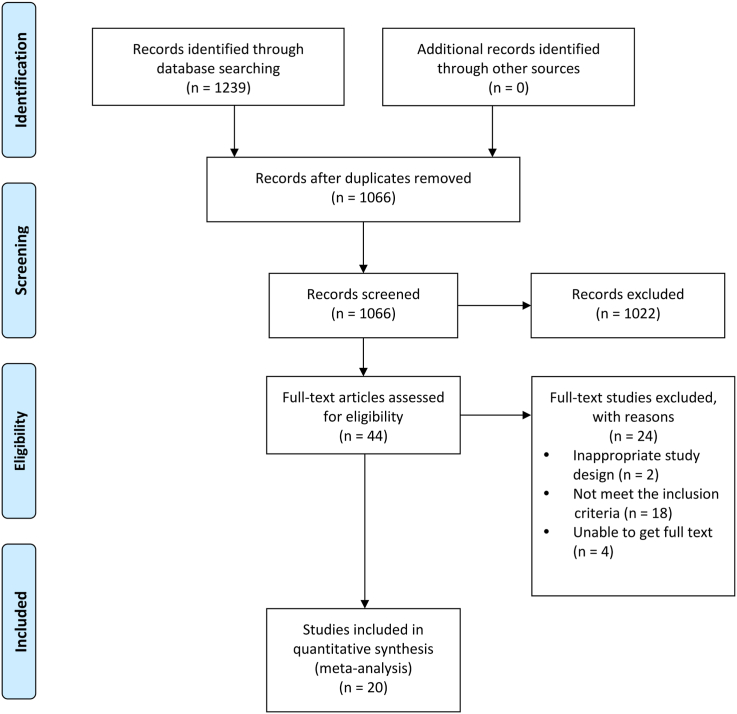
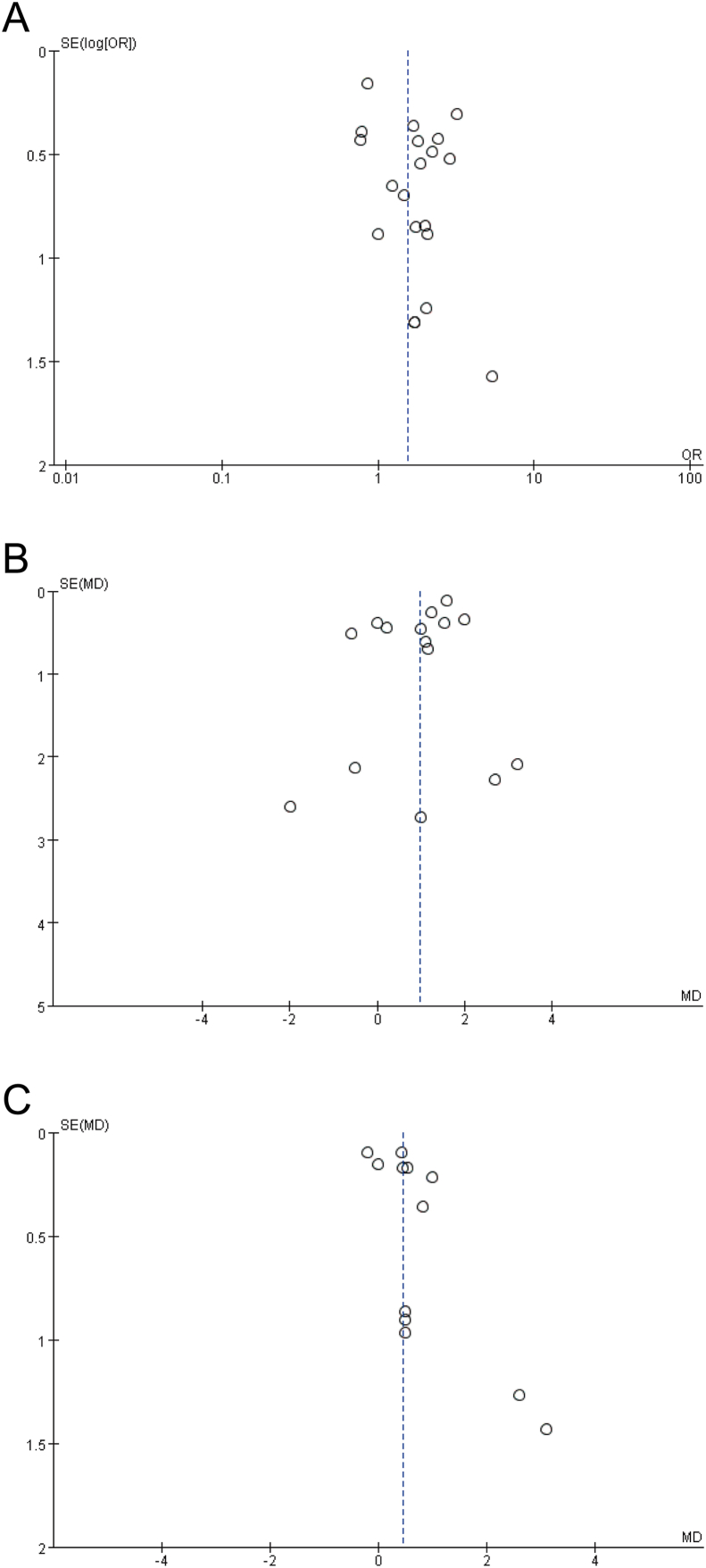
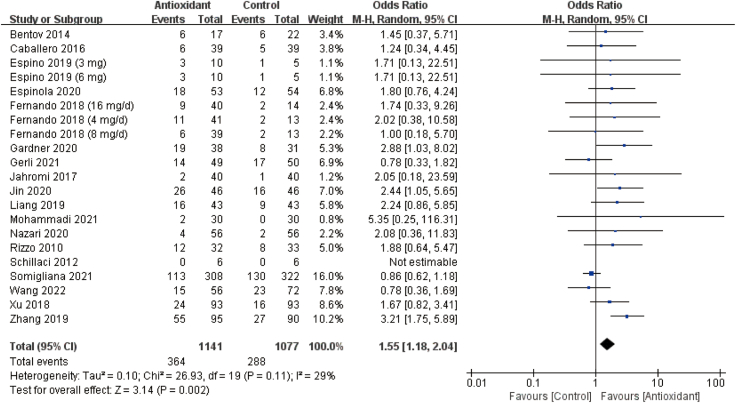
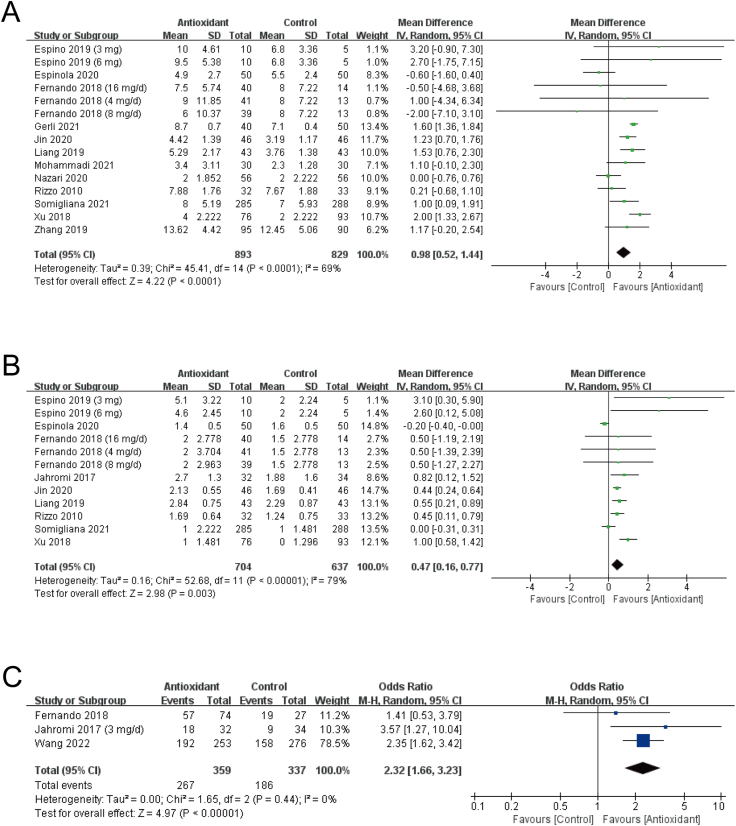
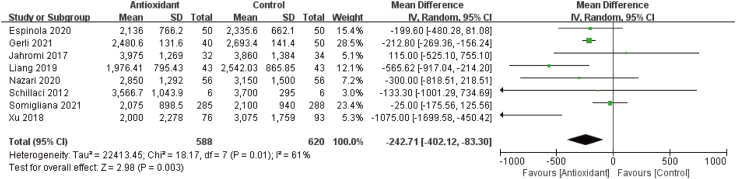
Ovarian aging is a major factor for female subfertility. Multiple antioxidants have been applied in different clinical scenarios, but their effects on fertility in women with ovarian aging are still unclear. To address this, a meta-analysis was performed to evaluate the effectiveness and safety of antioxidants on fertility in women with ovarian aging. A total of 20 randomized clinical trials with 2617 participants were included. The results showed that use of antioxidants not only significantly increased the number of retrieved oocytes and high-quality embryo rates but also reduced the dose of gonadotropin, contributing to higher clinical pregnancy rates. According to the subgroup analysis of different dose settings, better effects were more pronounced with lower doses; in terms of antioxidant types, coenzyme Q10 (CoQ10) tended to be more effective than melatonin, myo-inositol, and vitamins. When compared with placebo or no treatment, CoQ10 showed more advantages, whereas small improvements were observed with other drugs. In addition, based on subgroup analysis of CoQ10, the optimal treatment regimen of CoQ10 for improving pregnancy rate was 30 mg/d for 3 mo before the controlled ovarian stimulation cycle, and women with diminished ovarian reserve clearly benefited from CoQ10 treatment, especially those aged <35 y. Our study suggests that antioxidant consumption is an effective and safe complementary therapy for women with ovarian aging. Appropriate antioxidant treatment should be offered at a low dose according to the patient's age and ovarian reserve. This study was registered at PROSPERO as CRD42022359529.
卵巢衰老(Ovarian aging)是女性不孕的主要因素。多种抗氧化剂已应用于不同的临床情况,但它们对卵巢衰老女性生育能力的影响仍不清楚。为解决这一问题,进行了一项荟萃分析,以评估抗氧化剂对卵巢衰老女性生育能力的有效性和安全性。共有 20 项随机临床试验,2617 名参与者被纳入。结果表明,使用抗氧化剂不仅显著增加了可回收卵母细胞和优质胚胎的数量,还降低了促性腺激素的剂量,从而提高了临床妊娠率。根据不同剂量设定的亚组分析,较低剂量的效果更好;就抗氧化剂类型而言,辅酶 Q10(CoQ10)的效果似乎优于褪黑素、肌醇和维生素。与安慰剂或无治疗相比,CoQ10 显示出更多的优势,而其他药物则观察到较小的改善。此外,根据 CoQ10 的亚组分析,改善妊娠率的 CoQ10 最佳治疗方案是在控制性卵巢刺激周期前 3 个月每天服用 30mg,卵巢储备减少的女性明显受益于 CoQ10 治疗,尤其是年龄<35 岁的女性。本研究表明,抗氧化剂的摄入是卵巢衰老女性的一种有效且安全的补充治疗方法。应根据患者的年龄和卵巢储备情况,给予适当的低剂量抗氧化剂治疗。本研究在 PROSPERO 注册,注册号为 CRD42022359529。