Yale School of Medicine, Yale University, New Haven, CT, USA.
Brigham and Women's Hospital, Boston, MA, USA.
Nat Med. 2024 Sep;30(9):2648-2656. doi: 10.1038/s41591-024-03155-8. Epub 2024 Jul 19.
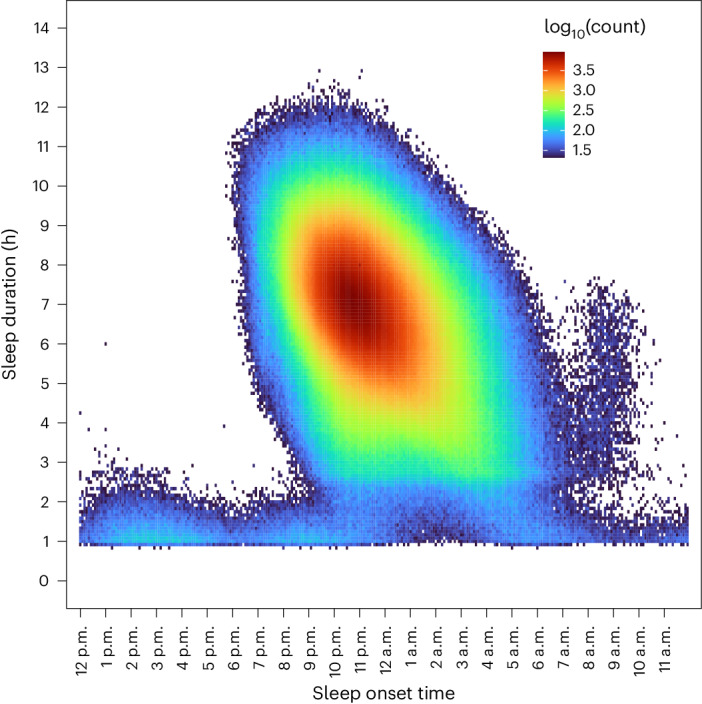
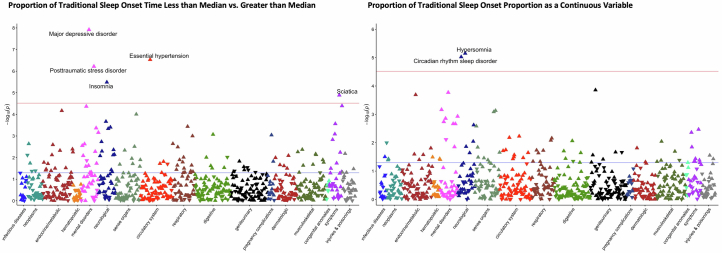
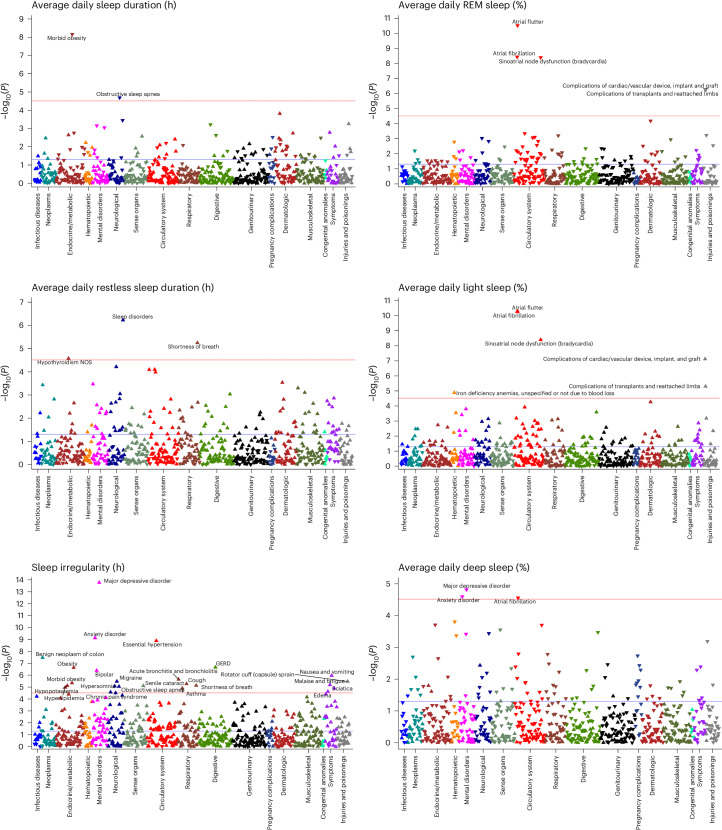
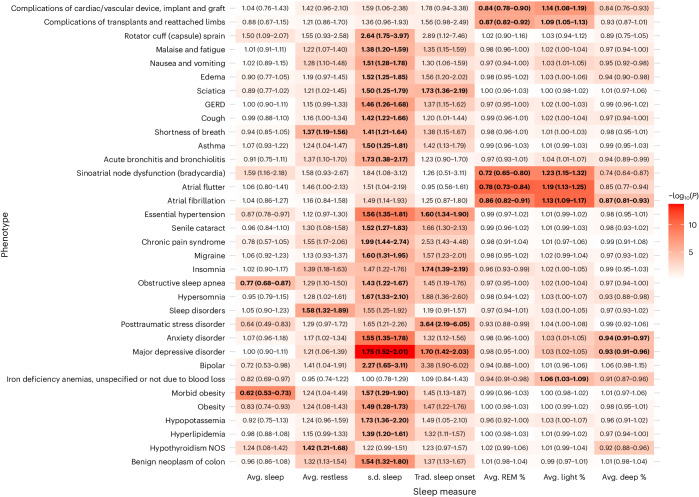
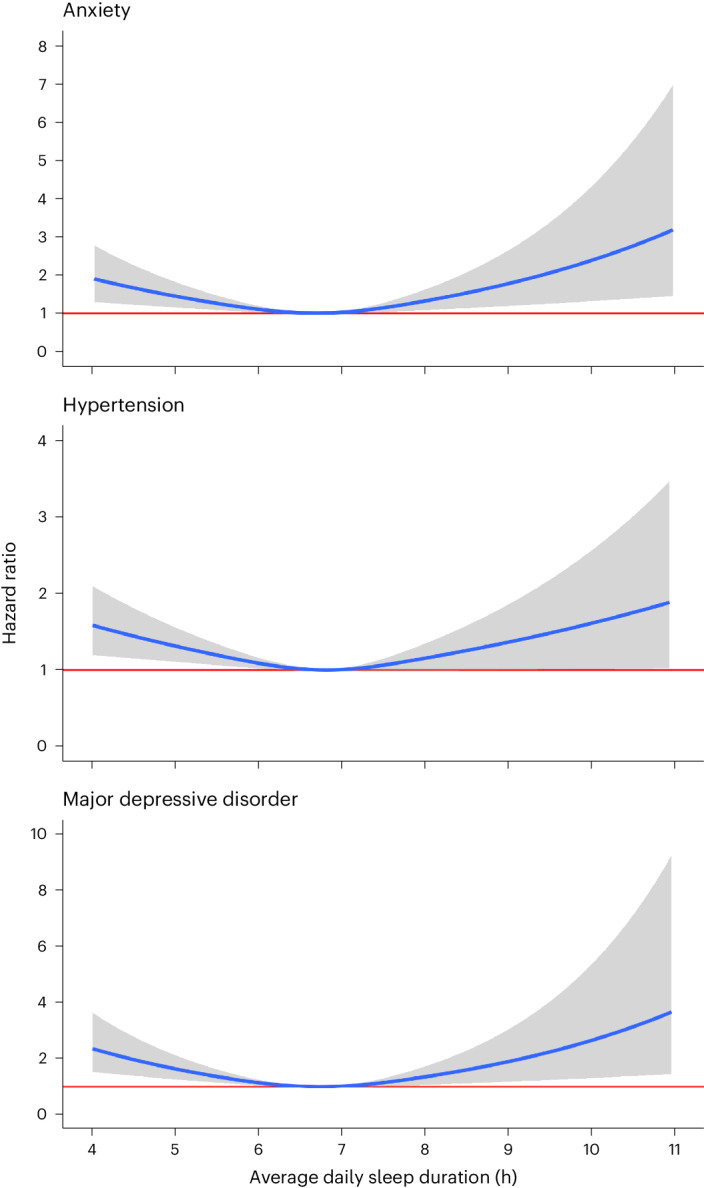
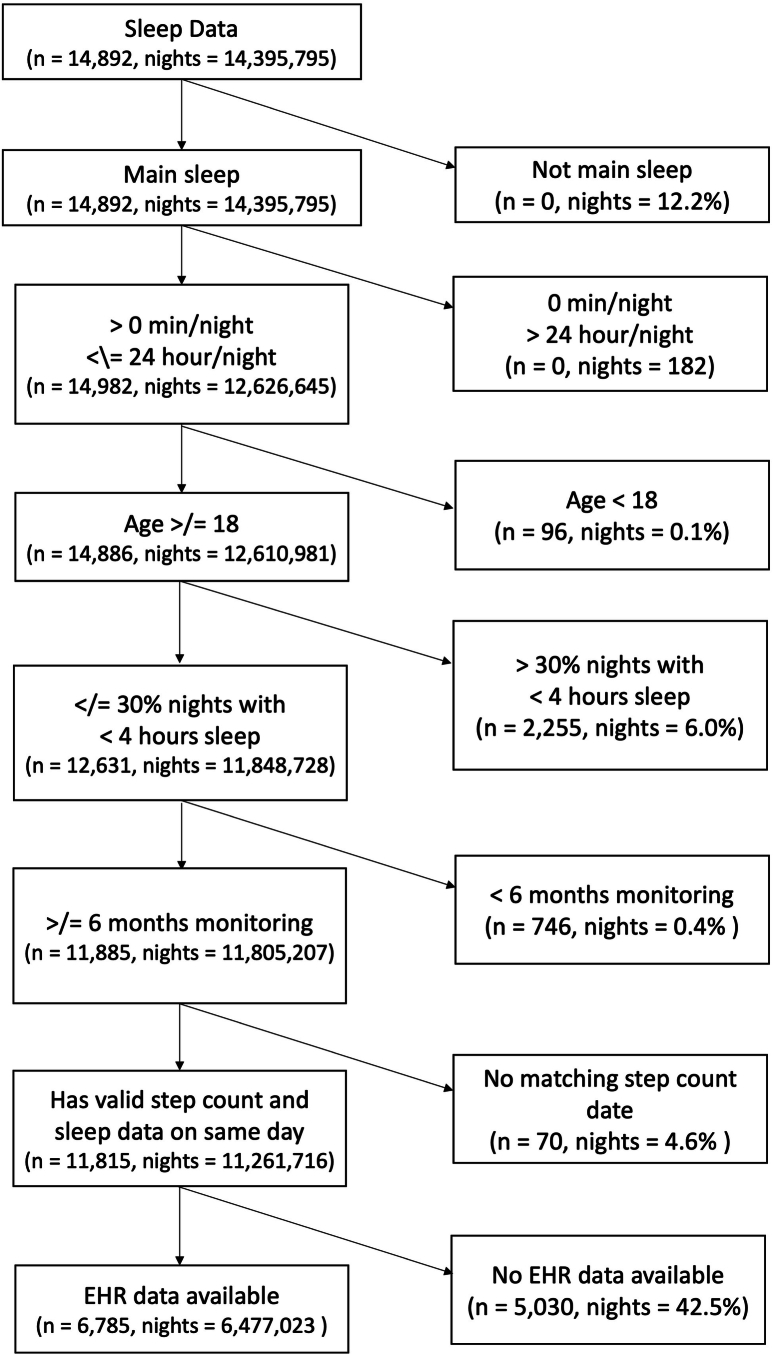
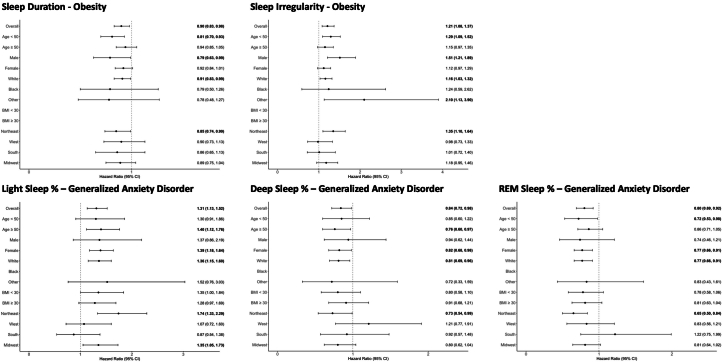
Poor sleep health is associated with increased all-cause mortality and incidence of many chronic conditions. Previous studies have relied on cross-sectional and self-reported survey data or polysomnograms, which have limitations with respect to data granularity, sample size and longitudinal information. Here, using objectively measured, longitudinal sleep data from commercial wearable devices linked to electronic health record data from the All of Us Research Program, we show that sleep patterns, including sleep stages, duration and regularity, are associated with chronic disease incidence. Of the 6,785 participants included in this study, 71% were female, 84% self-identified as white and 71% had a college degree; the median age was 50.2 years (interquartile range = 35.7, 61.5) and the median sleep monitoring period was 4.5 years (2.5, 6.5). We found that rapid eye movement sleep and deep sleep were inversely associated with the odds of incident atrial fibrillation and that increased sleep irregularity was associated with increased odds of incident obesity, hyperlipidemia, hypertension, major depressive disorder and generalized anxiety disorder. Moreover, J-shaped associations were observed between average daily sleep duration and hypertension, major depressive disorder and generalized anxiety disorder. These findings show that sleep stages, duration and regularity are all important factors associated with chronic disease development and may inform evidence-based recommendations on healthy sleeping habits.
睡眠健康不佳与全因死亡率增加和许多慢性疾病的发病率增加有关。以前的研究依赖于横断面和自我报告的调查数据或多导睡眠图,但这些数据在数据粒度、样本量和纵向信息方面存在局限性。在这里,我们使用来自 All of Us 研究计划的电子健康记录数据链接的商业可穿戴设备客观测量的纵向睡眠数据,表明睡眠模式,包括睡眠阶段、持续时间和规律性,与慢性疾病的发病率有关。在这项研究中,纳入了 6785 名参与者,其中 71%为女性,84%自我认定为白人,71%拥有大学学历;中位年龄为 50.2 岁(四分位距为 35.7,61.5),中位睡眠监测期为 4.5 年(2.5,6.5)。我们发现,快速眼动睡眠和深度睡眠与心房颤动发病的几率呈负相关,而睡眠不规律增加与肥胖、高血脂、高血压、重度抑郁症和广泛性焦虑症发病几率增加有关。此外,平均每日睡眠时间与高血压、重度抑郁症和广泛性焦虑症之间存在 J 形关联。这些发现表明,睡眠阶段、持续时间和规律性都是与慢性疾病发展相关的重要因素,并可能为健康睡眠习惯的循证建议提供信息。