Laboratório de Glicobiologia de Eucariotos, Departamento de Microbiologia Geral, Instituto de Microbiologia, Universidade Federal do Rio de Janeiro, Rio de Janeiro, Brazil.
Laboratório de Biofísica de Fungos, Instituto de Biofísica Carlos Chagas Filhos (IBCCF), Universidade Federal do Rio de Janeiro, Rio de Janeiro, Brazil.
mSphere. 2024 Aug 28;9(8):e0046724. doi: 10.1128/msphere.00467-24. Epub 2024 Jul 22.
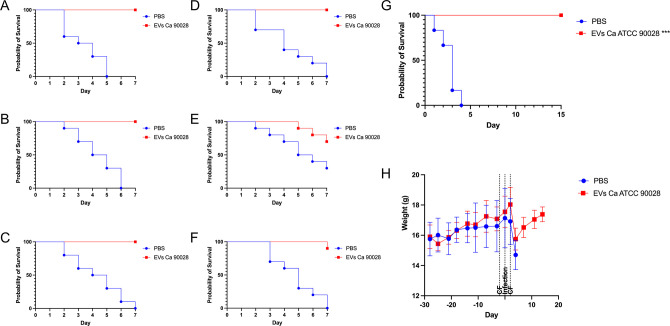
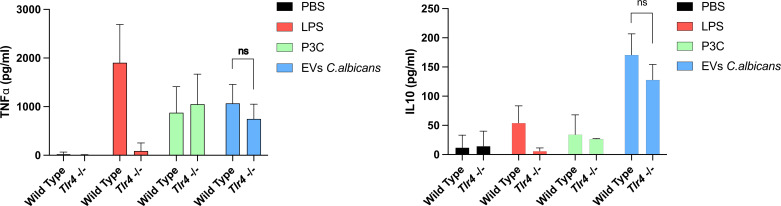
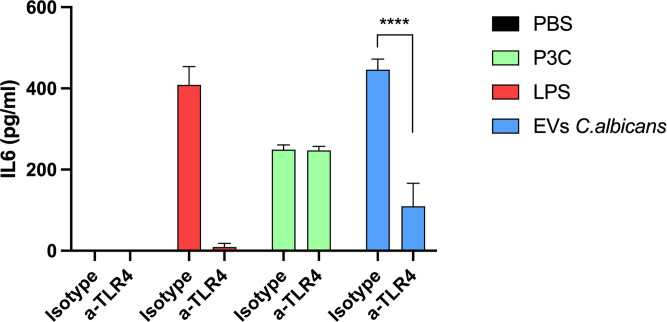
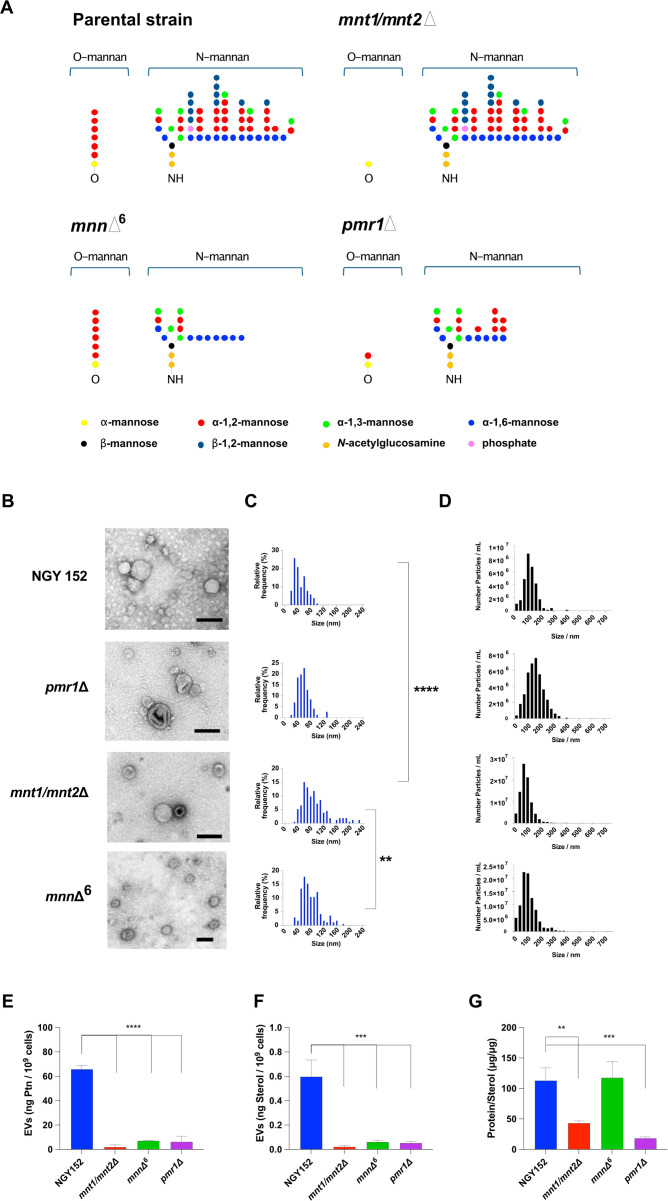
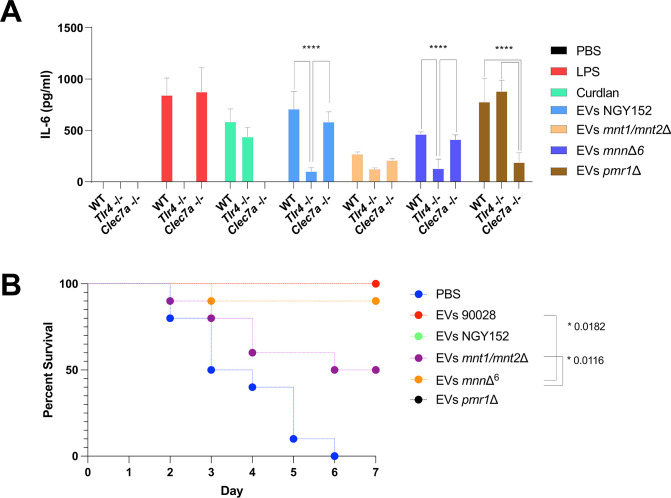
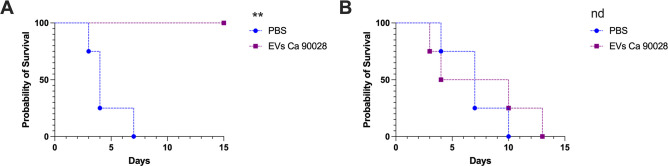
Systemic candidiasis remains a significant public health concern worldwide, with high mortality rates despite available antifungal drugs. Drug-resistant strains add to the urgency for alternative therapies. In this context, vaccination has reemerged as a prominent immune-based strategy. Extracellular vesicles (EVs), nanosized lipid bilayer particles, carry a diverse array of native fungal antigens, including proteins, nucleic acids, lipids, and glycans. Previous studies from our laboratory demonstrated that EVs triggered the innate immune response, activating bone marrow-derived dendritic cells (BMDCs) and potentially acting as a bridge between innate and adaptive immunity. Vaccination with EVs induced the production of specific antibodies, modulated cytokine production, and provided protection in immunosuppressed mice infected with lethal inoculum. To elucidate the mechanisms underlying EV-induced immune activation, our study investigated pathogen-associated molecular patterns (PAMPs) and pattern recognition receptors (PRRs) involved in EVs-phagocyte engagement. EVs from wild-type and mutant strains with truncated mannoproteins were compared for their ability to stimulate BMDCs. Our findings revealed that EV decoration with - and -linked mannans and the presence of -1,3-glucans and chitin oligomers may modulate the activation of specific PRRs, in particular Toll-like receptor 4 (TLR4) and dectin-1. The protective effect of vaccination with wild-type EVs was found to be dependent on TLR4. These results suggest that fungal EVs can be harnessed in vaccine formulations to selectively activate PRRs in phagocytes, offering potential avenues for combating or preventing candidiasis.IMPORTANCESystemic candidiasis is a serious global health concern with high mortality rates and growing drug resistance. Vaccination offers a promising solution. A unique approach involves using tiny lipid-coated particles called extracellular vesicles (EVs), which carry various fungal components. Previous studies found that EVs activate the immune response and may bridge the gap between innate and adaptive immunity. To understand this better, we investigated how these EVs activate immune cells. We demonstrated that specific components on EV surfaces, such as mannans and glucans, interact with receptors on immune cells, including Toll-like receptor 4 (TLR4) and dectin-1. Moreover, vaccinating with these EVs led to strong immune responses and full protection in mice infected with . This work shows how harnessing fungal EVs might lead to effective vaccines against candidiasis.
系统性念珠菌病仍然是一个全球性的重大公共卫生关注问题,尽管有抗真菌药物,但死亡率仍然很高。耐药菌株加剧了对替代疗法的迫切需求。在这种情况下,疫苗接种作为一种突出的免疫策略重新出现。细胞外囊泡(EVs)是纳米级脂质双层颗粒,携带多种天然真菌抗原,包括蛋白质、核酸、脂质和聚糖。我们实验室的先前研究表明,EVs 触发了先天免疫反应,激活了骨髓来源的树突状细胞(BMDCs),并可能在先天免疫和适应性免疫之间起到桥梁作用。用 EVs 进行疫苗接种可诱导产生特异性抗体,调节细胞因子的产生,并为接受致死性接种物感染的免疫抑制小鼠提供保护。为了阐明 EV 诱导免疫激活的机制,我们的研究调查了参与 EV-吞噬细胞结合的病原体相关分子模式(PAMPs)和模式识别受体(PRRs)。比较了野生型和突变型菌株的 EVs,这些菌株的甘露糖蛋白被截断,以比较它们刺激 BMDCs 的能力。我们的研究结果表明,-和-β-连接的甘露聚糖以及-1,3-葡聚糖和几丁质寡聚物的存在可能调节特定 PRRs 的激活,特别是 Toll 样受体 4(TLR4)和 dectin-1。用野生型 EVs 进行疫苗接种的保护作用依赖于 TLR4。这些结果表明,真菌 EVs 可以被用于疫苗制剂中,以选择性地激活吞噬细胞中的 PRRs,为治疗或预防念珠菌病提供了潜在途径。
系统性念珠菌病是一个严重的全球健康问题,死亡率高,且耐药性日益增加。疫苗接种提供了一个有前途的解决方案。一种独特的方法是使用称为细胞外囊泡(EVs)的微小脂质包被颗粒,这些囊泡携带各种真菌成分。先前的研究发现,EVs 可激活免疫反应,并可能在先天免疫和适应性免疫之间架起桥梁。为了更好地理解这一点,我们研究了这些 EVs 如何激活免疫细胞。我们证明,EV 表面上的特定成分,如甘露聚糖和葡聚糖,与免疫细胞上的受体相互作用,包括 Toll 样受体 4(TLR4)和 dectin-1。此外,用这些 EVs 进行疫苗接种可导致强烈的免疫反应,并在感染的小鼠中完全保护。这项工作表明,利用真菌 EVs 可能会导致针对念珠菌病的有效疫苗。