Xiang Hang, Luo Rongkui, Wang Yunzhi, Yang Bing, Xu Sha, Huang Wen, Tang Shaoshuai, Fang Rundong, Chen Lingli, Zhu Na, Yu Zixiang, Akesu Sujie, Wei Chuanyuan, Xu Chen, Zhou Yuhong, Gu Jianying, Zhao Jianyuan, Hou Yingyong, Ding Chen
State Key Laboratory of Genetic Engineering, School of Life Sciences, Human Phenome Institute, Department of Plastic and Reconstructive Surgery, Zhongshan Hospital, Fudan University, Shanghai, China.
Department of Pathology, Zhongshan Hospital, Fudan University, Shanghai, China.
Cell Discov. 2024 Jul 23;10(1):78. doi: 10.1038/s41421-024-00688-7.
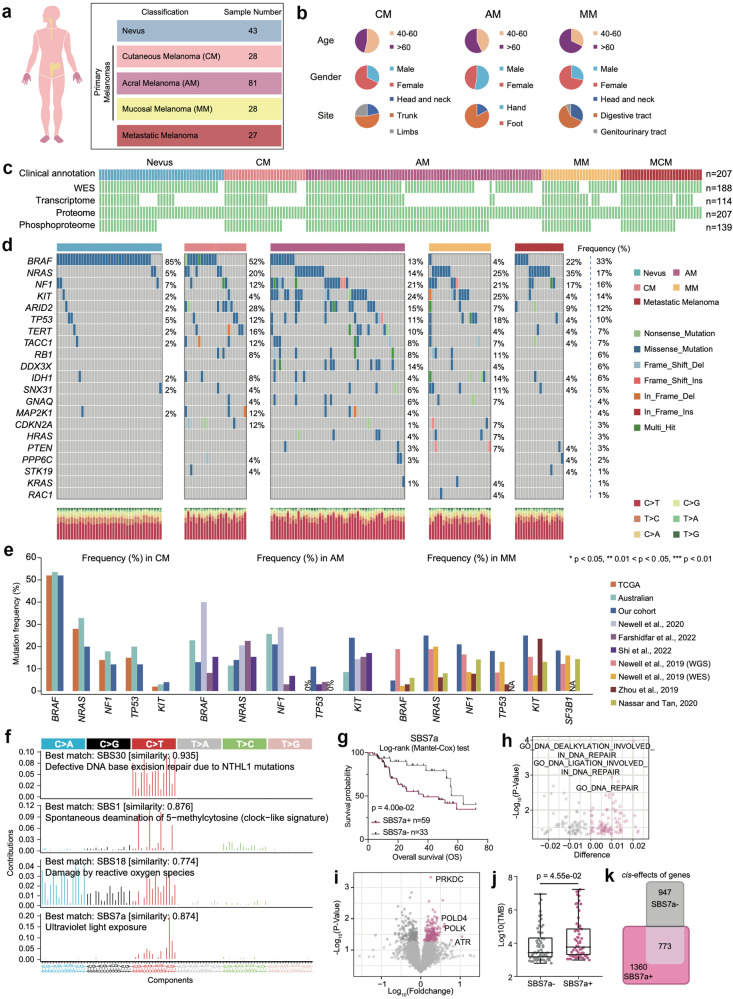
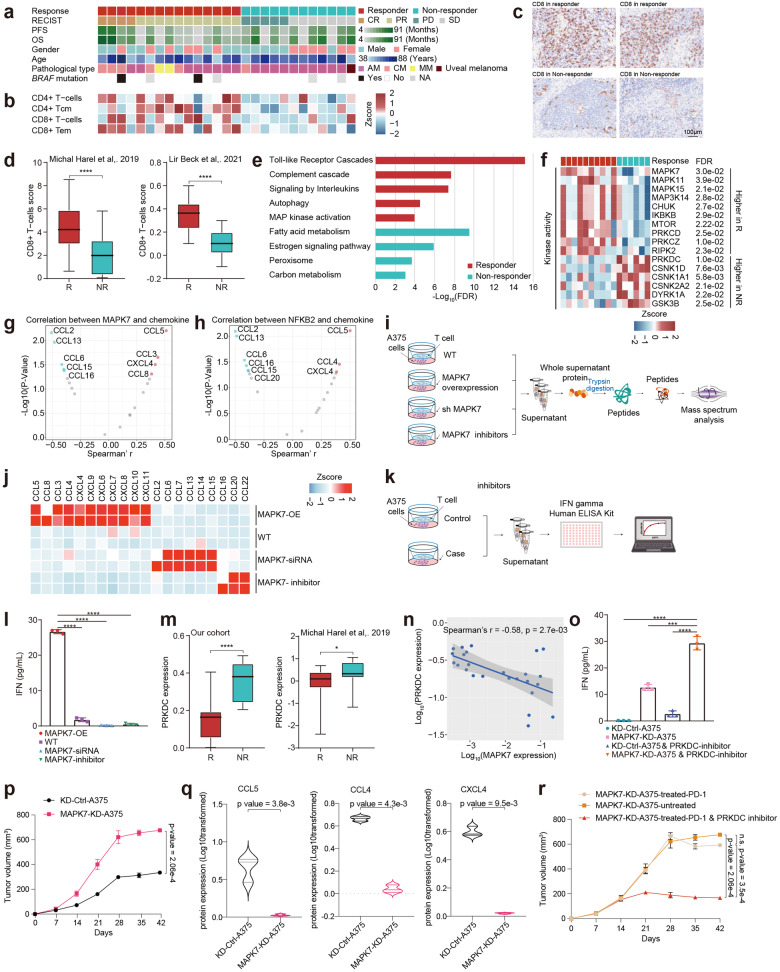
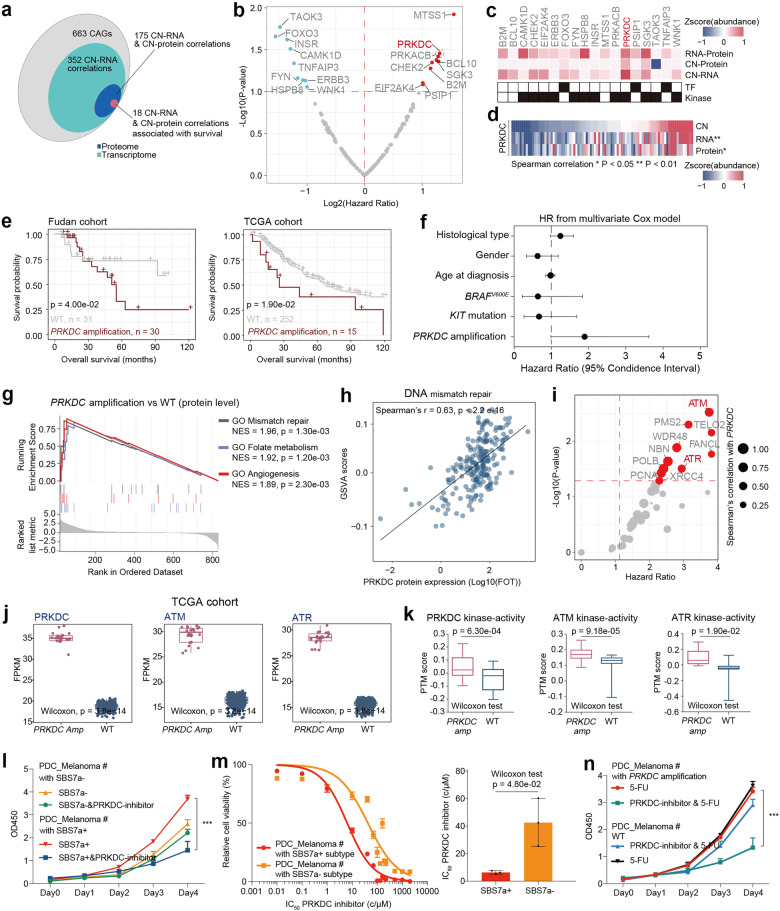
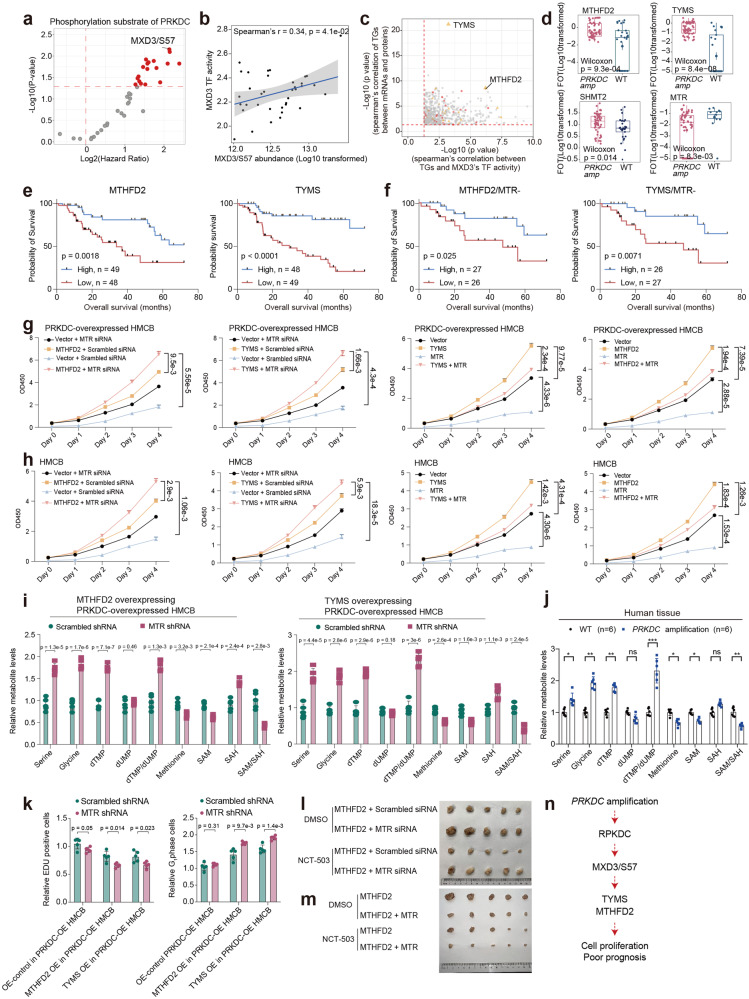
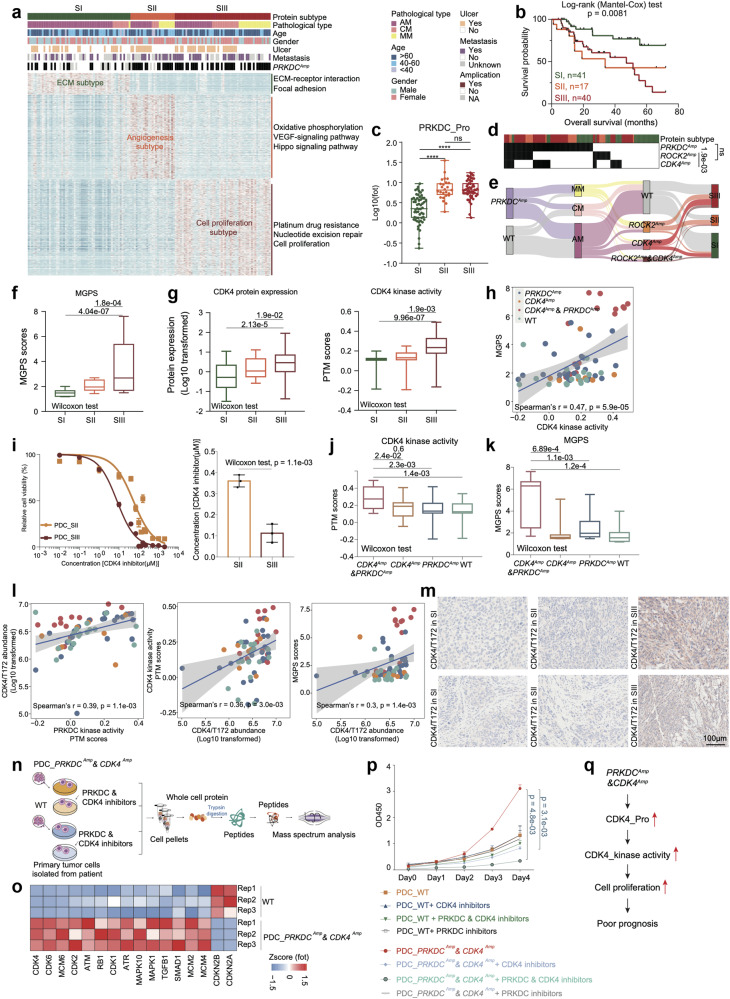
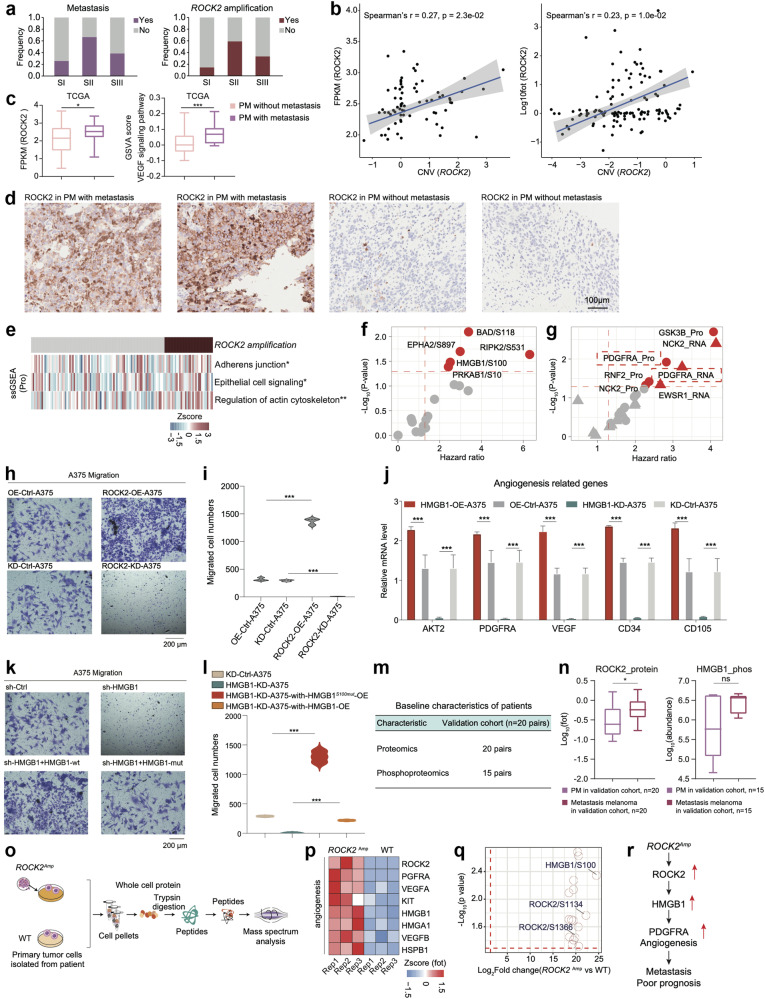
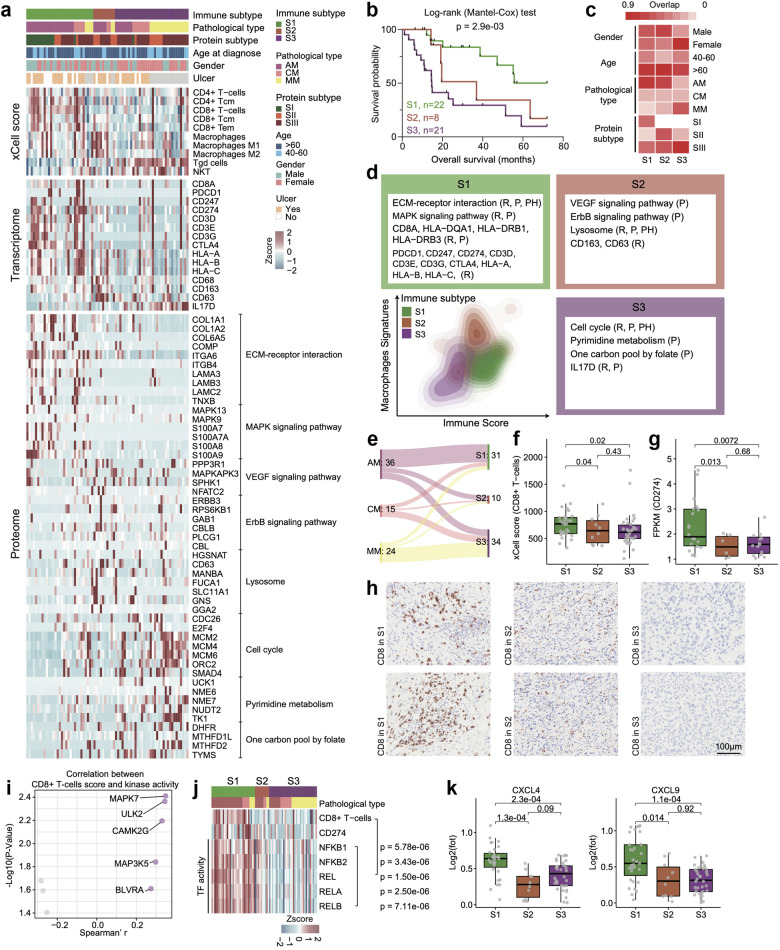
Melanoma is one of the most prevalent skin cancers, with high metastatic rates and poor prognosis. Understanding its molecular pathogenesis is crucial for improving its diagnosis and treatment. Integrated analysis of multi-omics data from 207 treatment-naïve melanomas (primary-cutaneous-melanomas (CM, n = 28), primary-acral-melanomas (AM, n = 81), primary-mucosal-melanomas (MM, n = 28), metastatic-melanomas (n = 27), and nevi (n = 43)) provides insights into melanoma biology. Multivariate analysis reveals that PRKDC amplification is a prognostic molecule for melanomas. Further proteogenomic analysis combined with functional experiments reveals that the cis-effect of PRKDC amplification may lead to tumor proliferation through the activation of DNA repair and folate metabolism pathways. Proteome-based stratification of primary melanomas defines three prognosis-related subtypes, namely, the ECM subtype, angiogenesis subtype (with a high metastasis rate), and cell proliferation subtype, which provides an essential framework for the utilization of specific targeted therapies for particular melanoma subtypes. The immune classification identifies three immune subtypes. Further analysis combined with an independent anti-PD-1 treatment cohort reveals that upregulation of the MAPK7-NFKB signaling pathway may facilitate T-cell recruitment and increase the sensitivity of patients to immunotherapy. In contrast, PRKDC may reduce the sensitivity of melanoma patients to immunotherapy by promoting DNA repair in melanoma cells. These results emphasize the clinical value of multi-omics data and have the potential to improve the understanding of melanoma treatment.
黑色素瘤是最常见的皮肤癌之一,具有高转移率和不良预后。了解其分子发病机制对于改善其诊断和治疗至关重要。对来自207例未经治疗的黑色素瘤(原发性皮肤黑色素瘤(CM,n = 28)、原发性肢端黑色素瘤(AM,n = 81)、原发性黏膜黑色素瘤(MM,n = 28)、转移性黑色素瘤(n = 27)和痣(n = 43))的多组学数据进行综合分析,为黑色素瘤生物学提供了见解。多变量分析显示,PRKDC扩增是黑色素瘤的一个预后分子。进一步的蛋白质基因组分析结合功能实验表明,PRKDC扩增的顺式效应可能通过激活DNA修复和叶酸代谢途径导致肿瘤增殖。基于蛋白质组的原发性黑色素瘤分层定义了三种与预后相关的亚型,即细胞外基质亚型、血管生成亚型(转移率高)和细胞增殖亚型,这为针对特定黑色素瘤亚型使用特定靶向治疗提供了重要框架。免疫分类识别出三种免疫亚型。进一步分析结合一个独立的抗PD - 1治疗队列显示,MAPK7 - NFKB信号通路的上调可能促进T细胞募集并增加患者对免疫治疗的敏感性。相反,PRKDC可能通过促进黑色素瘤细胞中的DNA修复来降低黑色素瘤患者对免疫治疗的敏感性。这些结果强调了多组学数据的临床价值,并有可能增进对黑色素瘤治疗的理解。