Section of Medicine, Faculty of Science and Medicine, University of Fribourg, Fribourg, Switzerland.
Commun Biol. 2024 Jul 23;7(1):891. doi: 10.1038/s42003-024-06531-9.
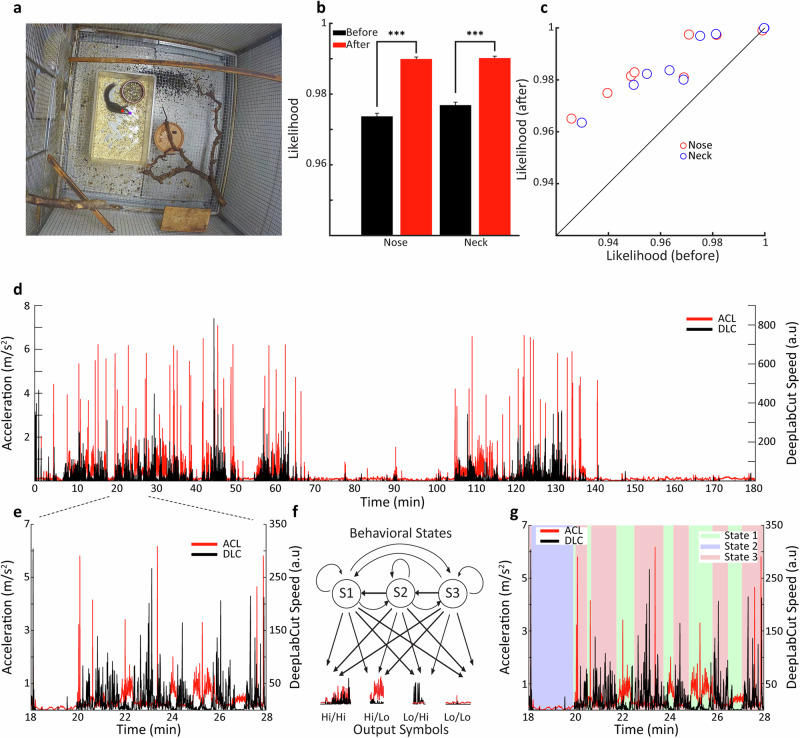
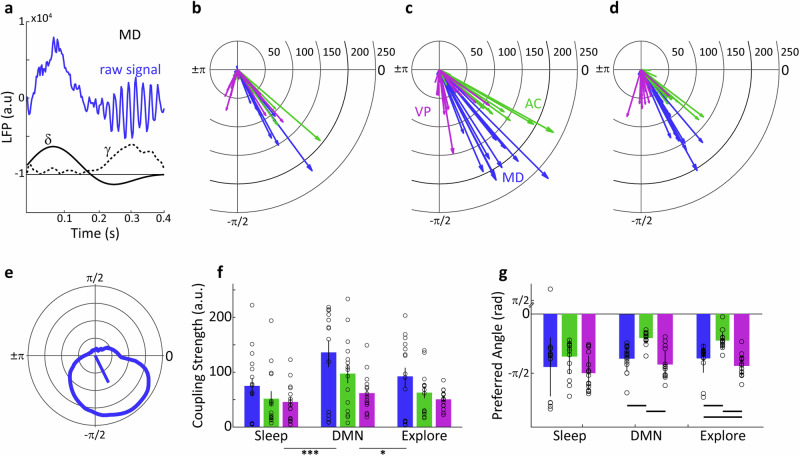
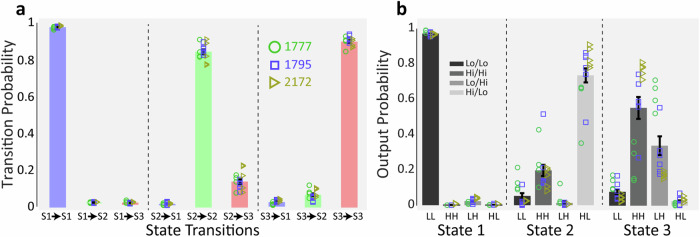
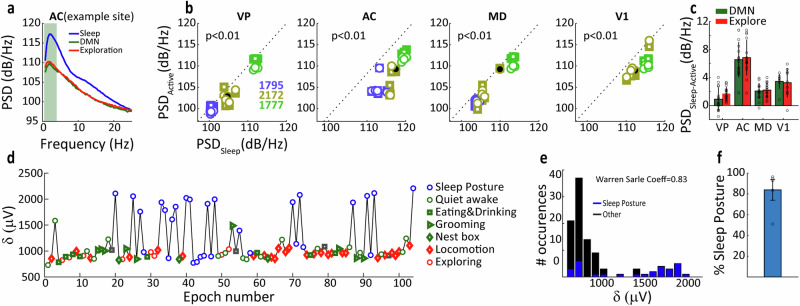
Humans and other animals readily transition from externally to internally focused attention, and these transitions are accompanied by activation of the default mode network (DMN). The DMN was considered a cortical network, yet recent evidence suggests subcortical structures are also involved. We investigated the role of ventral pallidum (VP) and mediodorsal thalamus (MD) in DMN regulation in tree shrew, a close relative of primates. Electrophysiology and deep learning-based classification of behavioral states revealed gamma oscillations in VP and MD coordinated with gamma in anterior cingulate (AC) cortex during DMN states. Cross-frequency coupling between gamma and delta oscillations was higher during DMN than other behaviors, underscoring the engagement of MD, VP and AC. Our findings highlight the importance of VP and MD in DMN regulation, extend homologies in DMN regulation among mammals, and underline the importance of thalamus and basal forebrain to the regulation of DMN.
人类和其他动物很容易从外部关注过渡到内部关注,这些过渡伴随着默认模式网络(DMN)的激活。DMN 被认为是一个皮质网络,但最近的证据表明,皮质下结构也参与其中。我们研究了腹侧苍白球(VP)和中背侧丘脑(MD)在树鼩(灵长类动物的近亲)DMN 调节中的作用。电生理学和基于深度学习的行为状态分类显示,VP 和 MD 中的伽马振荡与 DMN 状态下前扣带回皮质(AC)中的伽马振荡协调。DMN 期间,伽马和德尔塔振荡之间的交叉频率耦合高于其他行为,突出了 MD、VP 和 AC 的参与。我们的发现强调了 VP 和 MD 在 DMN 调节中的重要性,扩展了哺乳动物 DMN 调节中的同源性,并强调了丘脑和基底前脑对 DMN 调节的重要性。