Marks Markus, Qiuhan Jin, Sturman Oliver, von Ziegler Lukas, Kollmorgen Sepp, von der Behrens Wolfger, Mante Valerio, Bohacek Johannes, Yanik Mehmet Fatih
Institute of Neuroinformatics ETH Zürich and University of Zürich, Switzerland.
Neuroscience Center Zurich, ETH Zürich and University of Zürich, Switzerland.
Nat Mach Intell. 2022 Apr;4(4):331-340. doi: 10.1038/s42256-022-00477-5. Epub 2022 Apr 21.
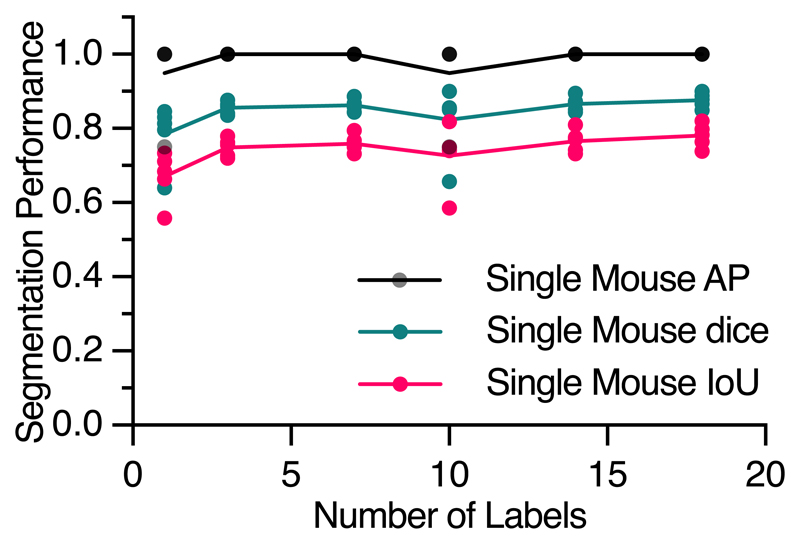
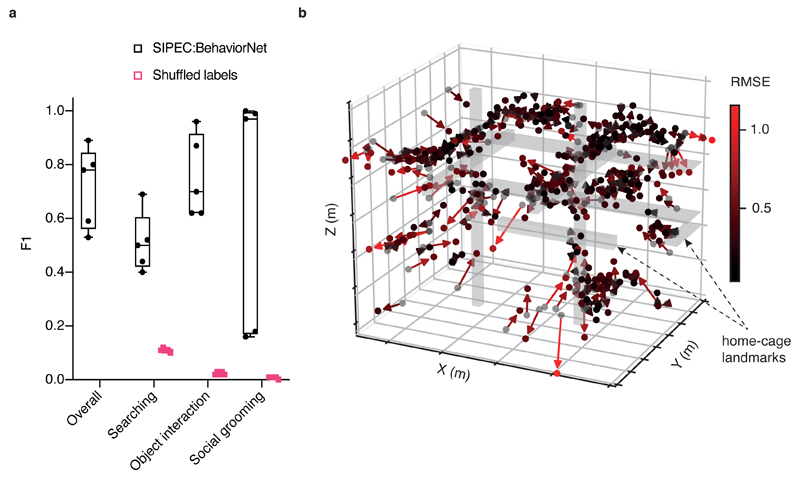
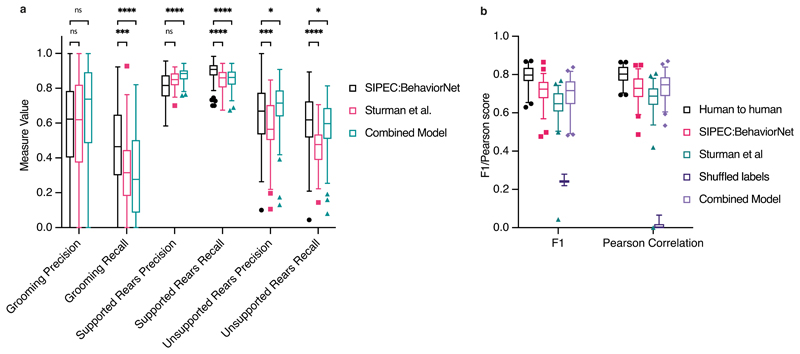
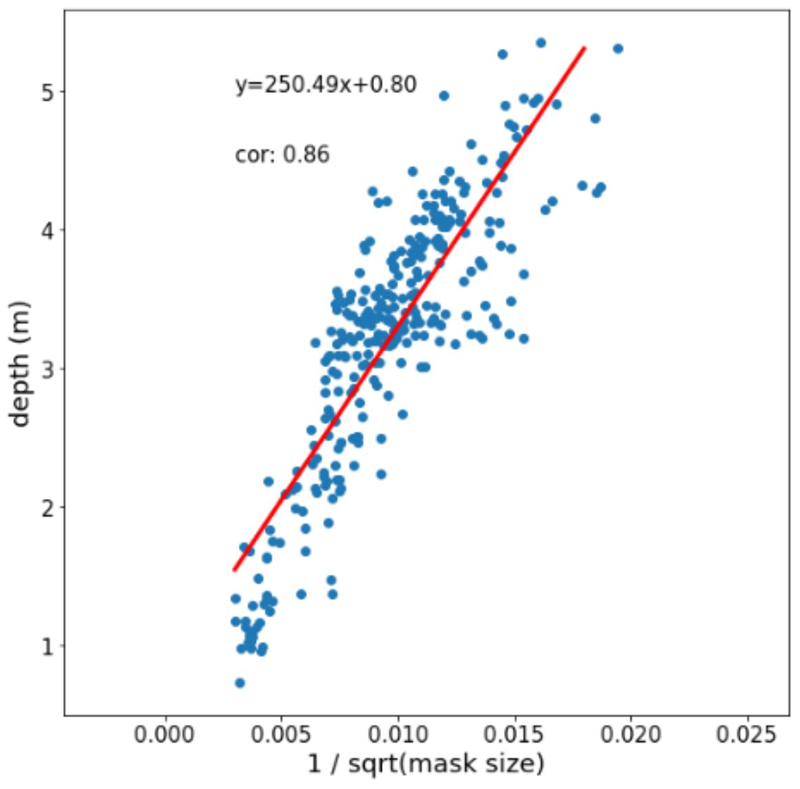
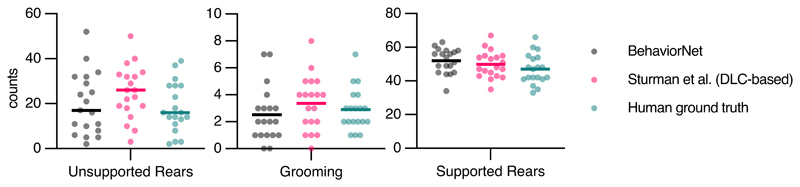
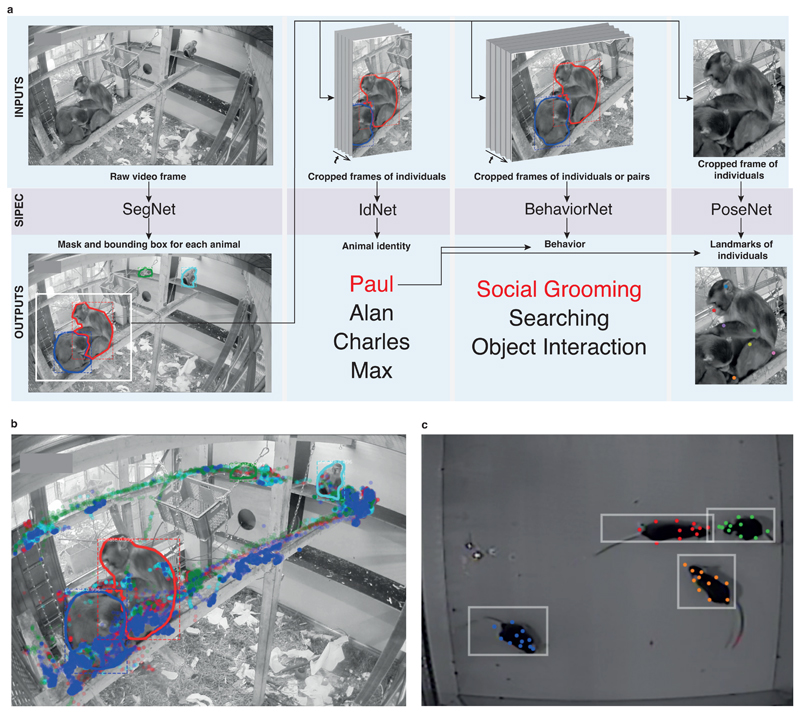
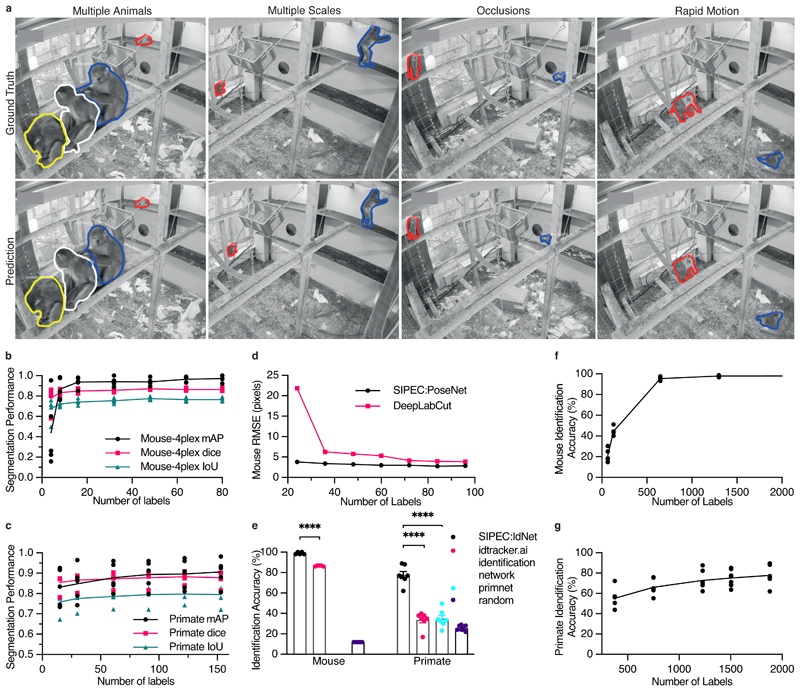
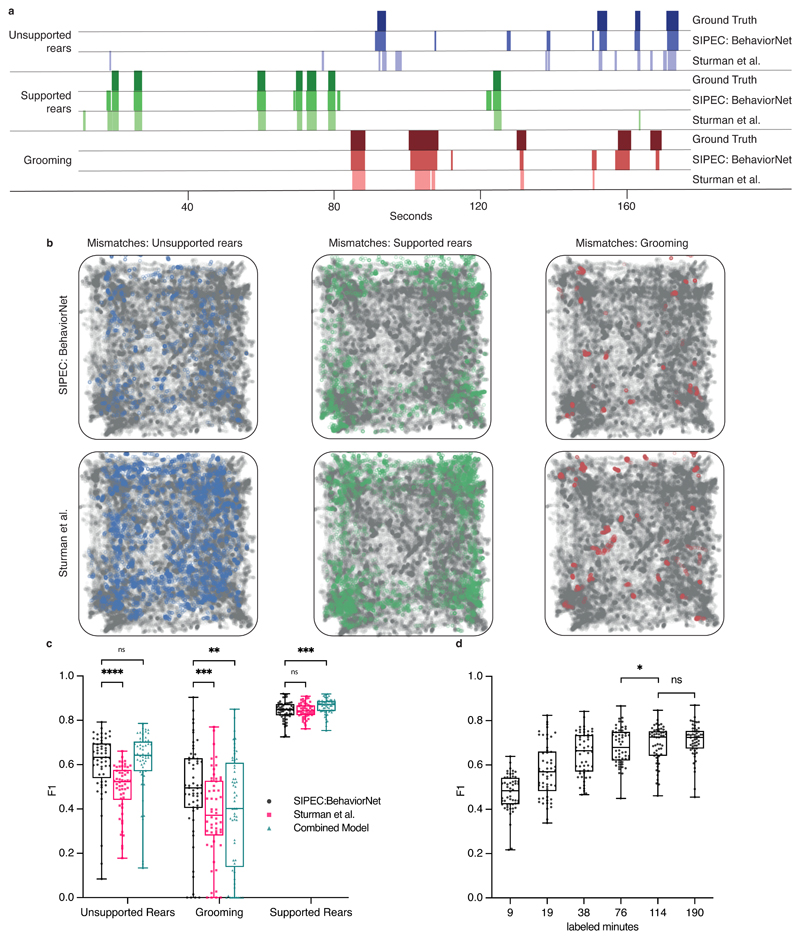
The quantification of behaviors of interest from video data is commonly used to study brain function, the effects of pharmacological interventions, and genetic alterations. Existing approaches lack the capability to analyze the behavior of groups of animals in complex environments. We present a novel deep learning architecture for classifying individual and social animal behavior, even in complex environments directly from raw video frames, while requiring no intervention after initial human supervision. Our behavioral classifier is embedded in a pipeline (SIPEC) that performs segmentation, identification, pose-estimation, and classification of complex behavior, outperforming the state of the art. SIPEC successfully recognizes multiple behaviors of freely moving individual mice as well as socially interacting non-human primates in 3D, using data only from simple mono-vision cameras in home-cage setups.
从视频数据中对感兴趣的行为进行量化,常用于研究脑功能、药物干预效果和基因改变。现有方法缺乏分析复杂环境中动物群体行为的能力。我们提出了一种新颖的深度学习架构,用于对个体和社会动物行为进行分类,即使在直接从原始视频帧获取的复杂环境中,且在初始人工监督之后无需干预。我们的行为分类器嵌入在一个管道(SIPEC)中,该管道执行复杂行为的分割、识别、姿态估计和分类,性能优于现有技术。SIPEC仅使用来自笼内设置的简单单目视觉相机的数据,就能成功识别自由移动的单个小鼠以及进行社会互动的非人类灵长类动物的多种三维行为。