Department of Urology, First Affiliated Hospital, Sun Yat-sen University, Guangzhou, China.
Department of Urology, Sun Yat-sen University Cancer center, Guangzhou, China.
Nat Commun. 2024 Jul 23;15(1):6215. doi: 10.1038/s41467-024-50369-y.
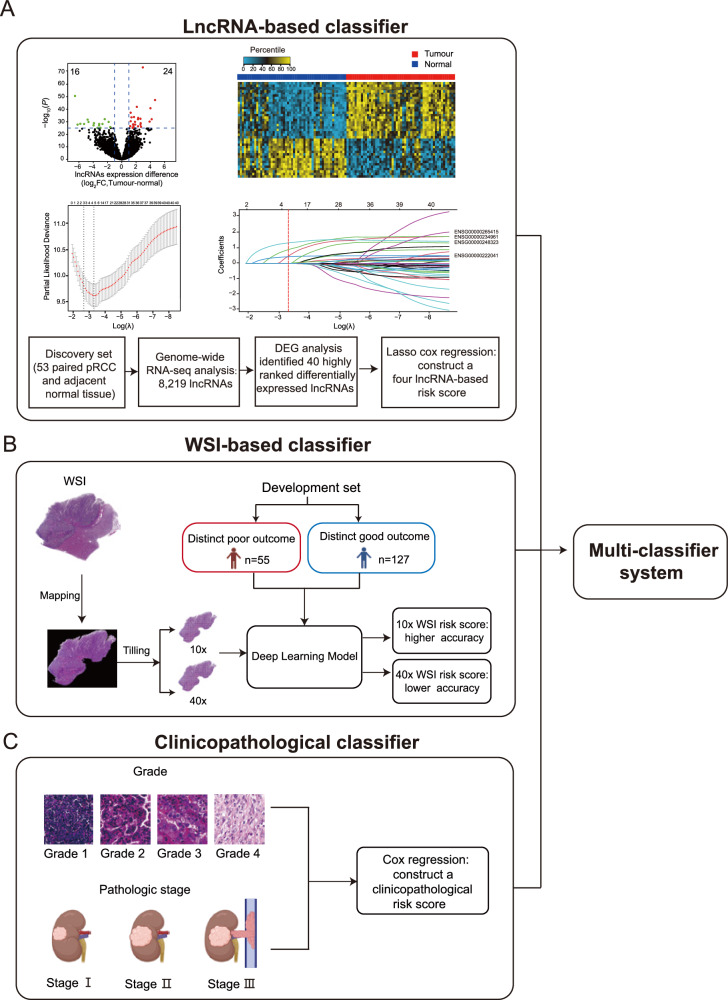
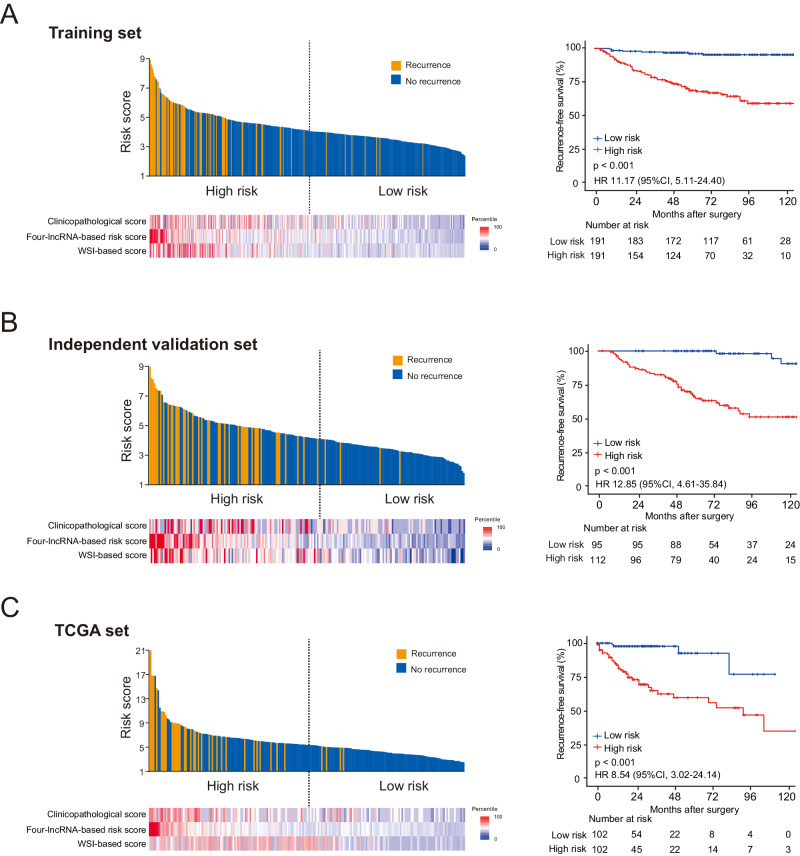
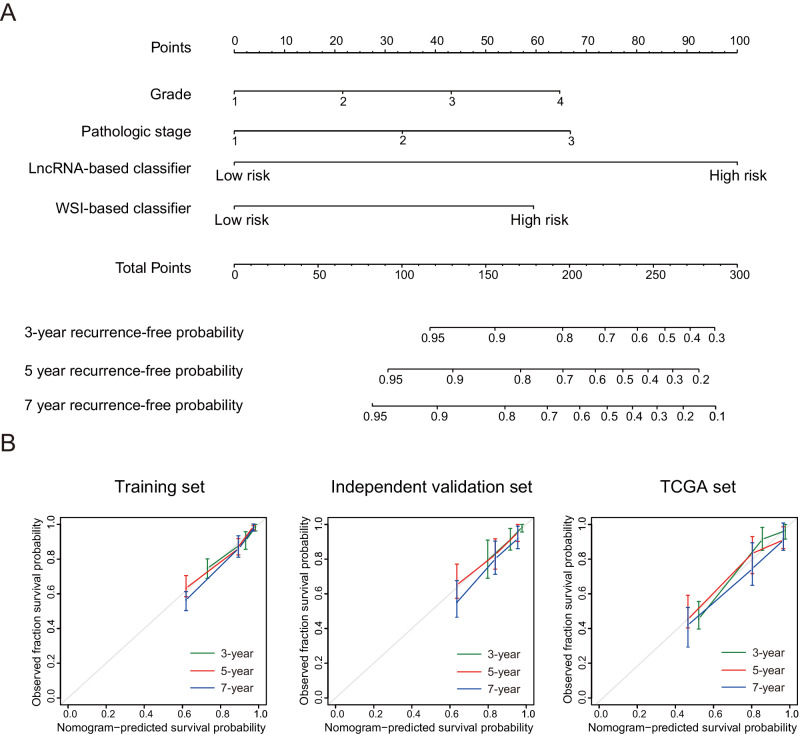
Integrating genomics and histology for cancer prognosis demonstrates promise. Here, we develop a multi-classifier system integrating a lncRNA-based classifier, a deep learning whole-slide-image-based classifier, and a clinicopathological classifier to accurately predict post-surgery localized (stage I-III) papillary renal cell carcinoma (pRCC) recurrence. The multi-classifier system demonstrates significantly higher predictive accuracy for recurrence-free survival (RFS) compared to the three single classifiers alone in the training set and in both validation sets (C-index 0.831-0.858 vs. 0.642-0.777, p < 0.05). The RFS in our multi-classifier-defined high-risk stage I/II and grade 1/2 groups is significantly worse than in the low-risk stage III and grade 3/4 groups (p < 0.05). Our multi-classifier system is a practical and reliable predictor for recurrence of localized pRCC after surgery that can be used with the current staging system to more accurately predict disease course and inform strategies for individualized adjuvant therapy.
将基因组学和组织学相结合用于癌症预后具有广阔的前景。在这里,我们开发了一种多分类器系统,该系统整合了基于长链非编码 RNA 的分类器、基于深度学习的全切片图像分类器和临床病理分类器,以准确预测手术后局限性(I-III 期)乳头状肾细胞癌(pRCC)的复发情况。多分类器系统在训练集和两个验证集中均显著提高了无复发生存率(RFS)的预测准确性,优于三个单分类器单独使用的情况(C 指数 0.831-0.858 比 0.642-0.777,p<0.05)。在我们的多分类器定义的高风险 I/II 期和 1/2 级组中,RFS 明显差于低风险 III 期和 3/4 级组(p<0.05)。我们的多分类器系统是一种实用且可靠的预测工具,可用于预测手术后局限性 pRCC 的复发情况,可与当前的分期系统结合使用,以更准确地预测疾病进程,并为个体化辅助治疗提供信息。