CNRS, IFCE, INRAE, Université de Tours, PRC, Nouzilly, France.
PLoS One. 2024 Jul 24;19(7):e0306601. doi: 10.1371/journal.pone.0306601. eCollection 2024.
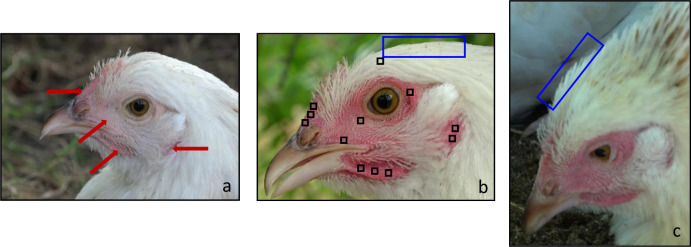
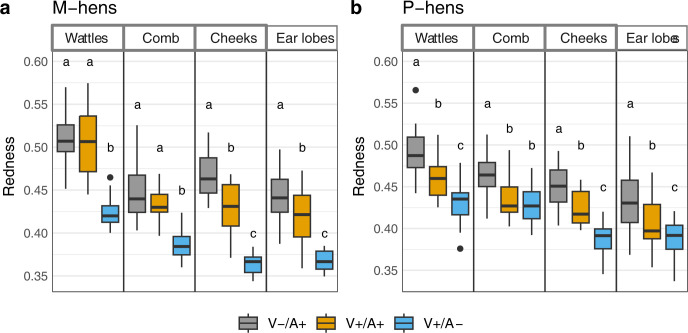
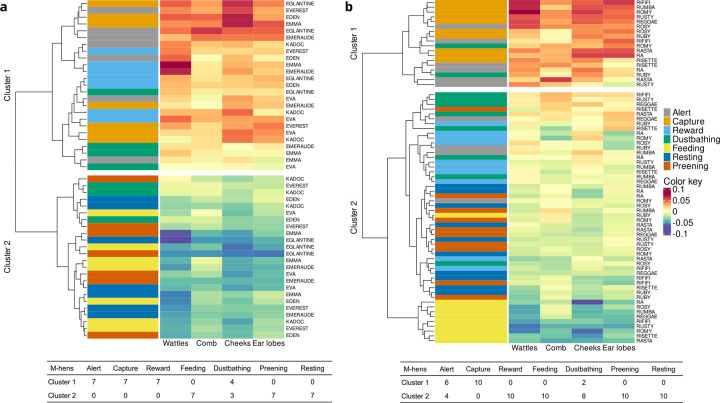
The study of facial expressions in mammals provided great advances in the identification of their emotions and then in the comprehension of their sentience. So far, this area of research has excluded birds. With a naturalist approach, we analysed facial blushing and feather displays in domestic fowl. Hens were filmed in situations contrasting in emotional valence and arousal level: situations known to indicate calm states (positive valence / low arousal), have rewarding effects (positive valence / high arousal) or induce fear-related behaviour (negative valence / high arousal). Head feather position as well as skin redness of comb, wattles, ear lobes and cheeks varied across these situations. Skin of all four areas was less red in situations with low arousal compared to situations with higher arousal. Furthermore, skin redness of the cheeks and ear lobes also varied depending on the valence of the situation: redness was higher in situations with negative valence compared to situations with positive valence. Feather position also varied with the situations. Feather fluffing was mostly observed in positively valenced situations, except when hens were eating. We conclude that hens have facial displays that reveal their emotions and that blushing is not exclusive to humans. This opens a promising way to explore the emotional lives of birds, which is a critical step when trying to improve poultry welfare.
对哺乳动物面部表情的研究极大地促进了对其情绪的识别,进而促进了对其感知能力的理解。到目前为止,这一研究领域还排除了鸟类。我们采用自然主义的方法,分析了家禽的面部变红和羽毛展示。在情绪效价和唤醒水平不同的情况下拍摄母鸡:已知这些情况表明母鸡处于平静状态(正效价/低唤醒)、有奖励作用(正效价/高唤醒)或引起与恐惧相关的行为(负效价/高唤醒)。头部羽毛的位置以及鸡冠、肉垂、耳垂和脸颊的皮肤变红情况因这些情况而异。与高唤醒水平的情况相比,所有四个区域的皮肤在低唤醒水平的情况下颜色较浅。此外,脸颊和耳垂的皮肤变红情况也因情况的效价而异:与正效价情况相比,负效价情况的皮肤更红。羽毛的位置也随着情况的变化而变化。除了母鸡在进食时,母鸡在情绪积极的情况下通常会出现羽毛蓬松的现象。我们的结论是,母鸡有可以揭示其情绪的面部表情,而且脸红并非人类独有。这为探索鸟类的情感生活开辟了一条有希望的途径,这是改善家禽福利的关键一步。