Chang S Emily, Pesek Taylor, Pote Timothy R, Hull Joshua, Geissinger Jack, Simon Athulya A, Alemi Mohammad Mehdi, Asbeck Alan T
Department of Biomedical Engineering and Mechanics, Virginia Tech, Blacksburg, Virginia, USA.
Department of Mechanical Engineering, Virginia Tech, Blacksburg, Virginia, USA.
Wearable Technol. 2021 Jan 11;1:e10. doi: 10.1017/wtc.2020.10. eCollection 2020.
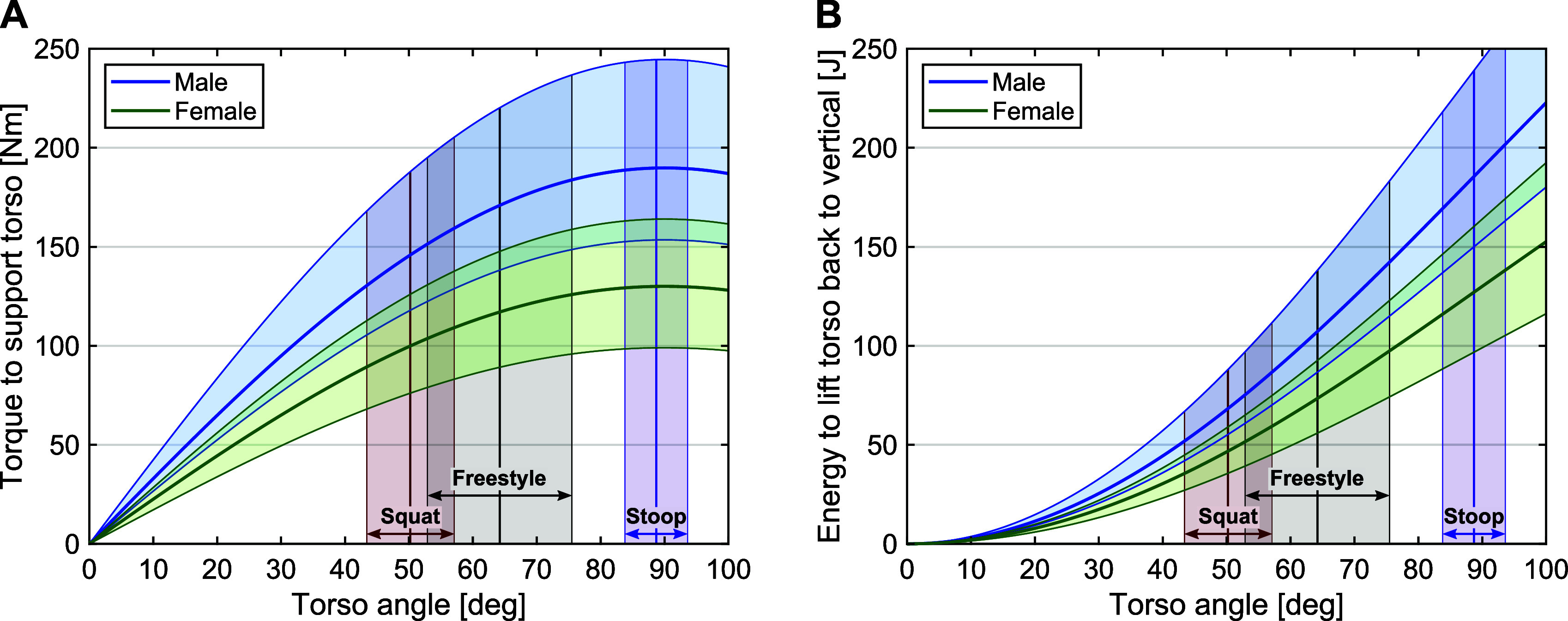
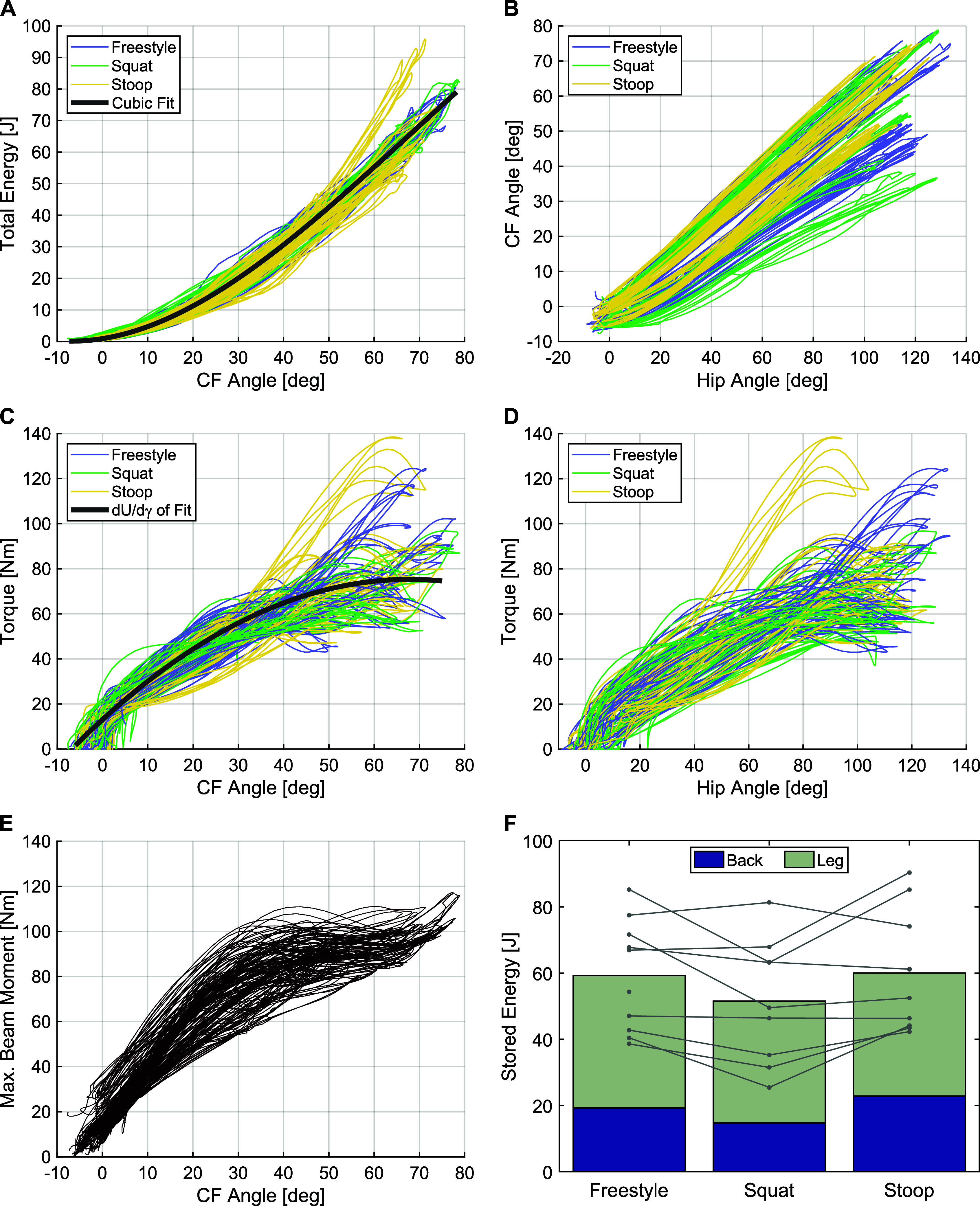
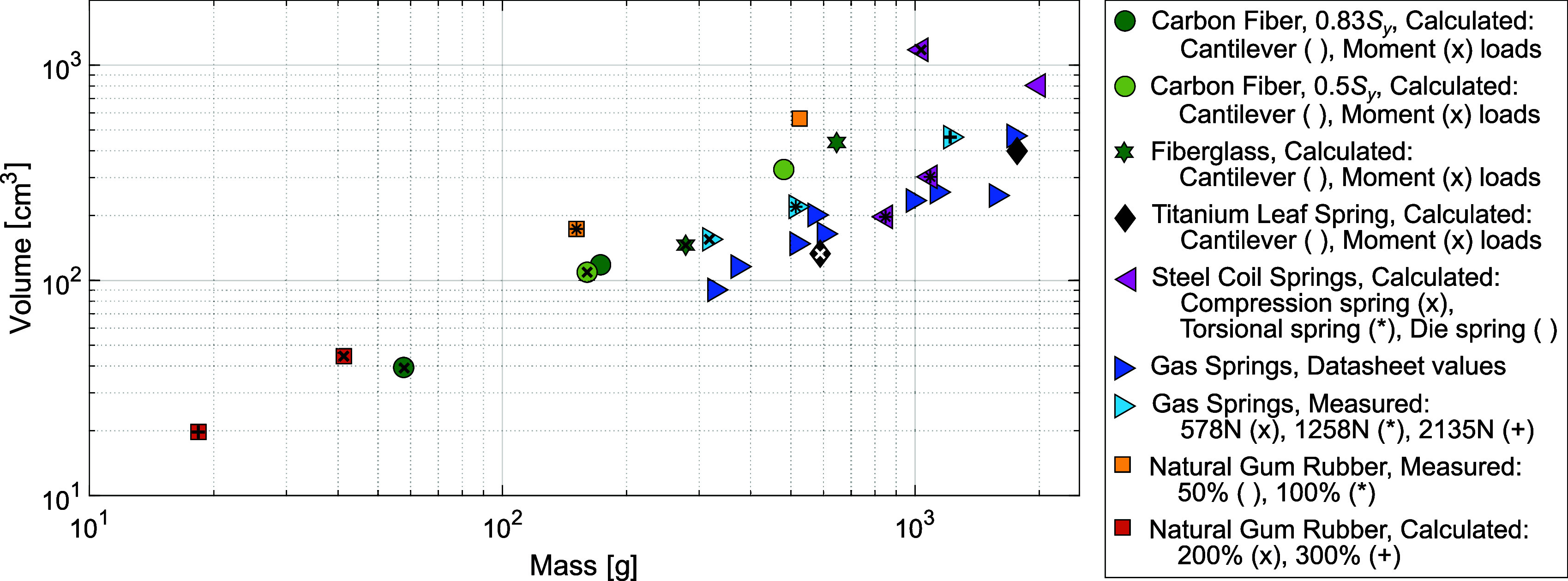
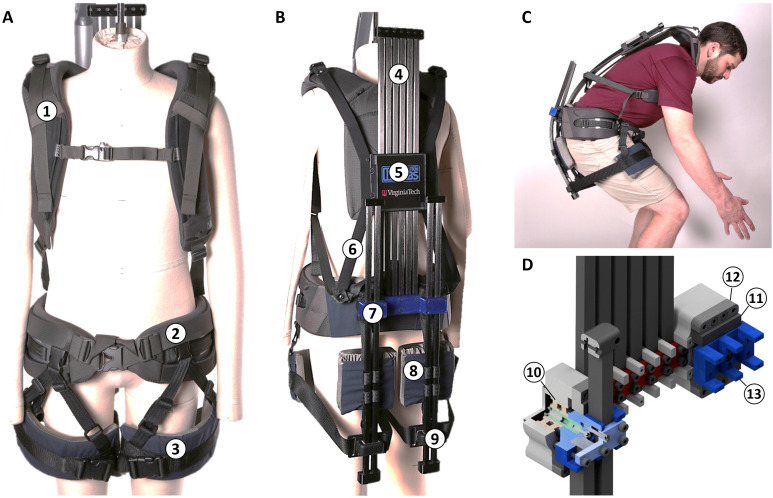
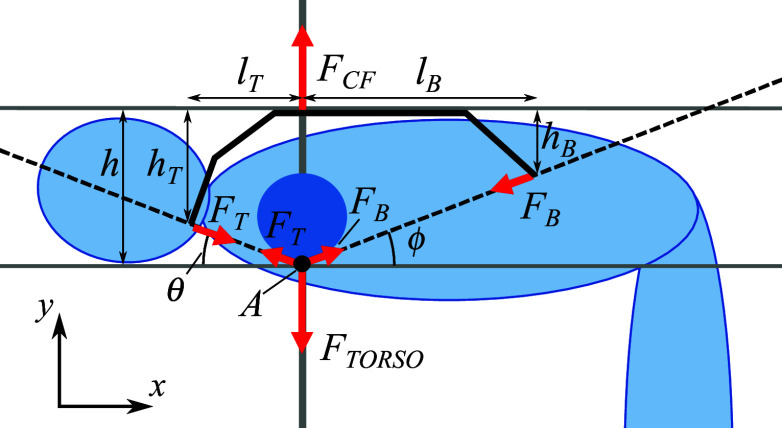
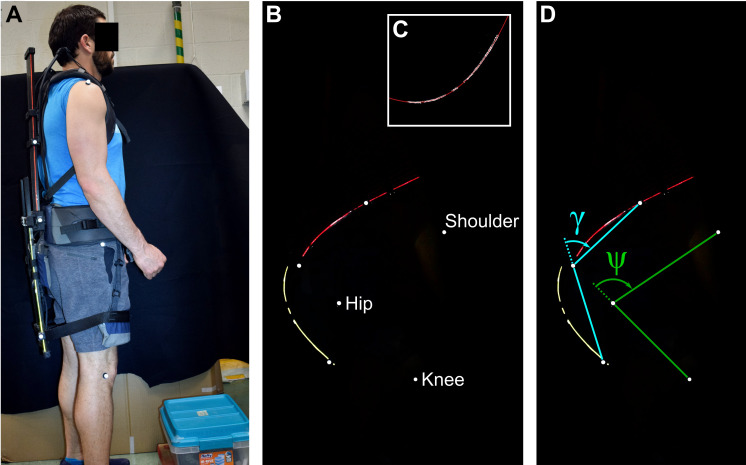
We present a passive (unpowered) exoskeleton that assists the back during lifting. Our exoskeleton uses carbon fiber beams as the sole means to store energy and return it to the wearer. To motivate the design, we present general requirements for the design of a lifting exoskeleton, including calculating the required torque to support the torso for people of different weights and heights. We compare a number of methods of energy storage for exoskeletons in terms of mass, volume, hysteresis, and cycle life. We then discuss the design of our exoskeleton, and show how the torso assembly leads to balanced forces. We characterize the energy storage in the exoskeleton and the torque it provides during testing with human subjects. Ten participants performed freestyle, stoop, and squat lifts. Custom image processing software was used to extract the curvature of the carbon fiber beams in the exoskeleton to determine the stored energy. During freestyle lifting, it stores an average of 59.3 J and provides a peak torque of 71.7 Nm.
我们展示了一种在举重过程中辅助背部的被动(无动力)外骨骼。我们的外骨骼使用碳纤维梁作为储存能量并将其返还给穿戴者的唯一方式。为推动该设计,我们提出了举重外骨骼设计的一般要求,包括计算为不同体重和身高的人支撑躯干所需的扭矩。我们从质量、体积、滞后现象和循环寿命方面比较了多种外骨骼能量存储方法。然后我们讨论了我们外骨骼的设计,并展示了躯干组件如何实现力的平衡。我们对外骨骼中的能量存储及其在人体受试者测试期间提供的扭矩进行了表征。十名参与者进行了自由式、弯腰和深蹲举重。使用定制图像处理软件提取外骨骼中碳纤维梁的曲率以确定存储的能量。在自由式举重过程中,它平均存储59.3焦耳的能量,并提供71.7牛米的峰值扭矩。