Department of Rheumatology and Immunology, Nanjing Drum Tower Hospital Clinical College of Nanjing University of Chinese Medicine, Nanjing, Jiangsu, China.
Department of Rheumatology and Immunology, Nanjing Drum Tower Hospital Clinical College of Xuzhou Medical University, Nanjing, Jiangsu, China.
Lupus Sci Med. 2024 Jul 24;11(2):e001220. doi: 10.1136/lupus-2024-001220.
To investigate the role of curcumin in the treatment of lupus nephritis (LN) by inhibiting the migration of neutrophils and the underlying mechanism involved.
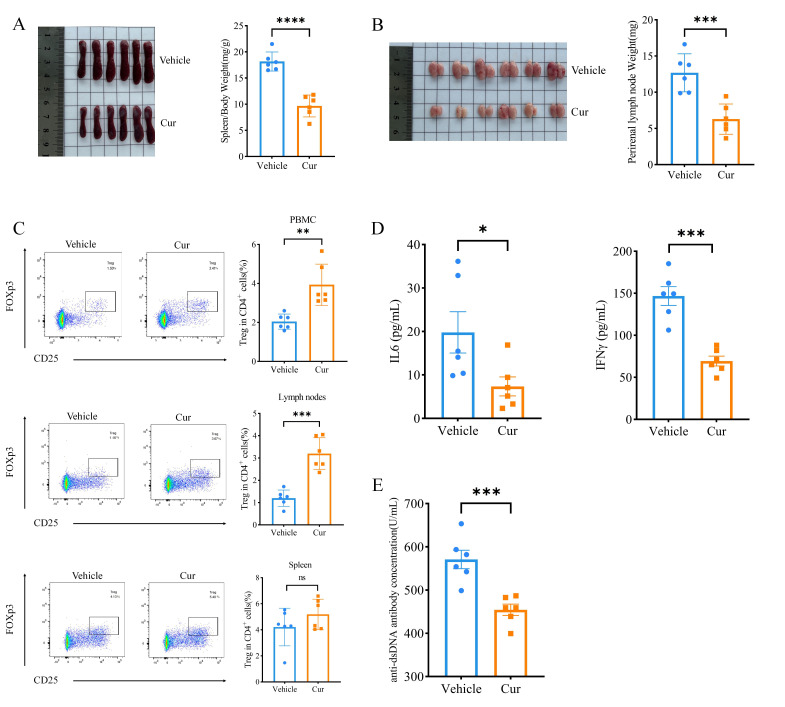
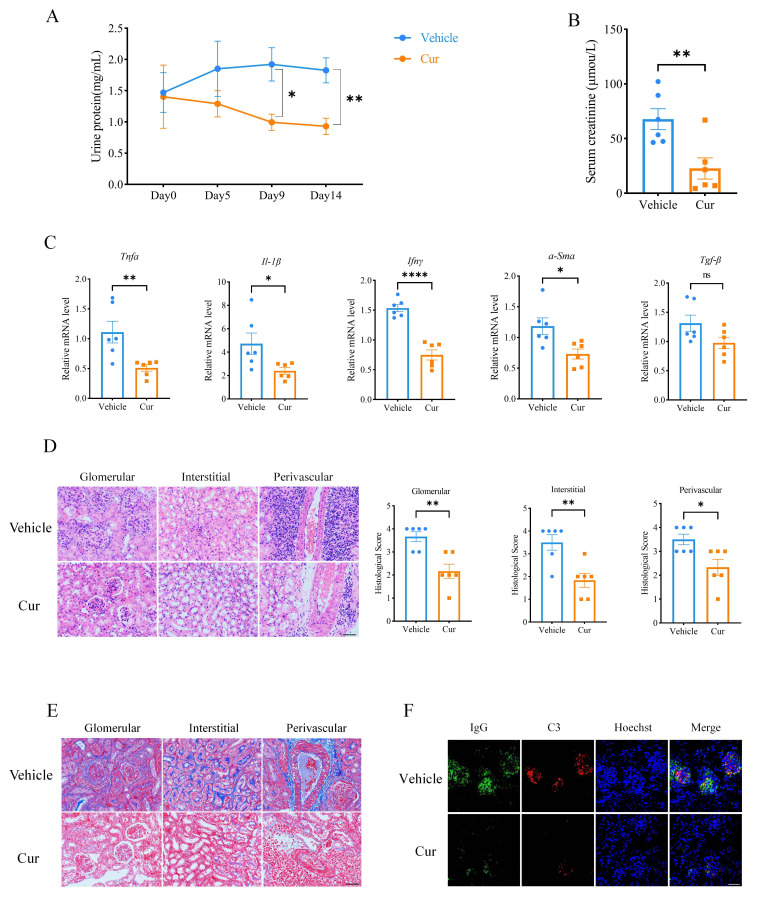
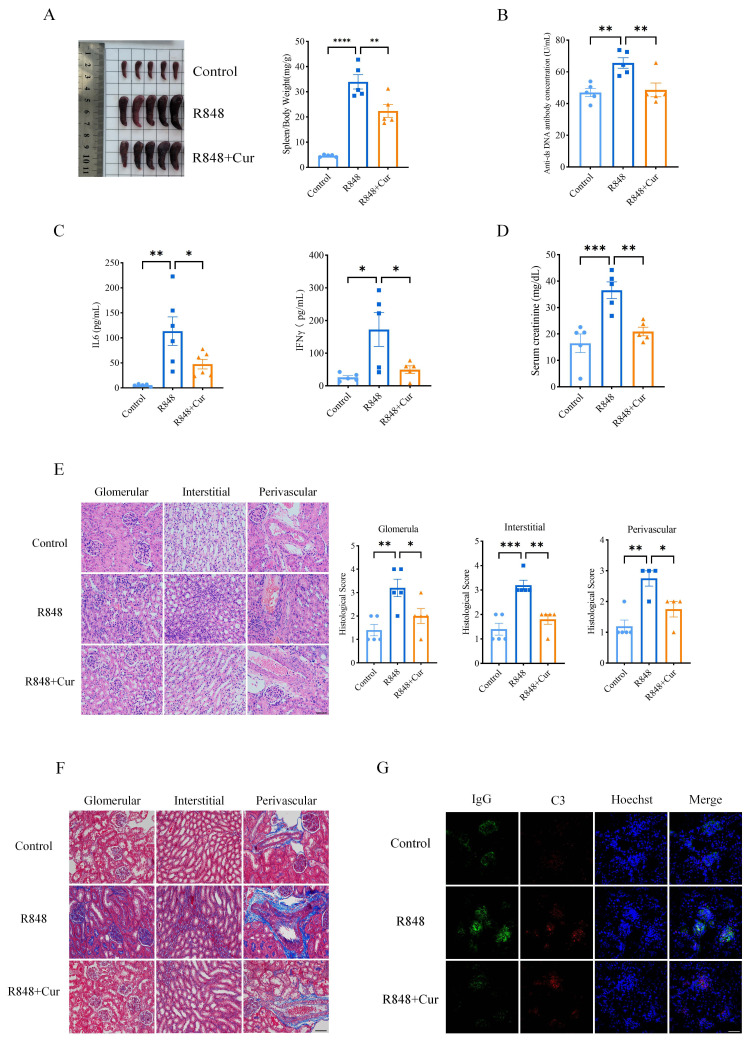
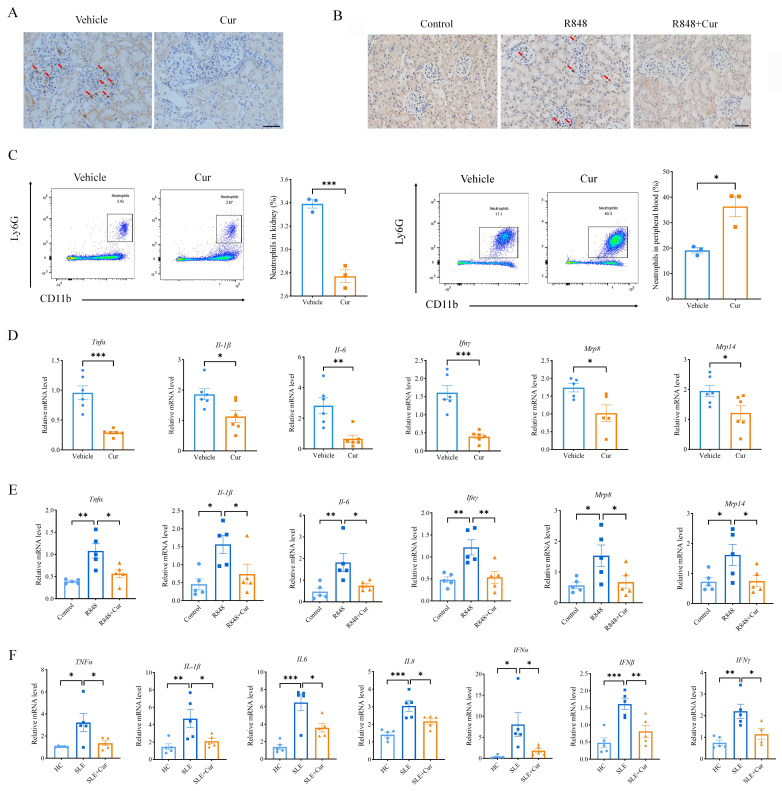
Two lupus mouse models, MRL/lpr mice and R848-treated mice, were treated with 50 mg/kg curcumin by intraperitoneal injection. H&E and Masson staining were used to estimate histopathological changes in the kidney. Immunofluorescence was used to assess the deposition of immune complexes. The expression of inflammatory factors was detected by enzyme-linked immunosorbent assay (ELISA) and real-time reverse transcription polymerase reaction (RT-PCR), and the protein expression was detected by western blotting.
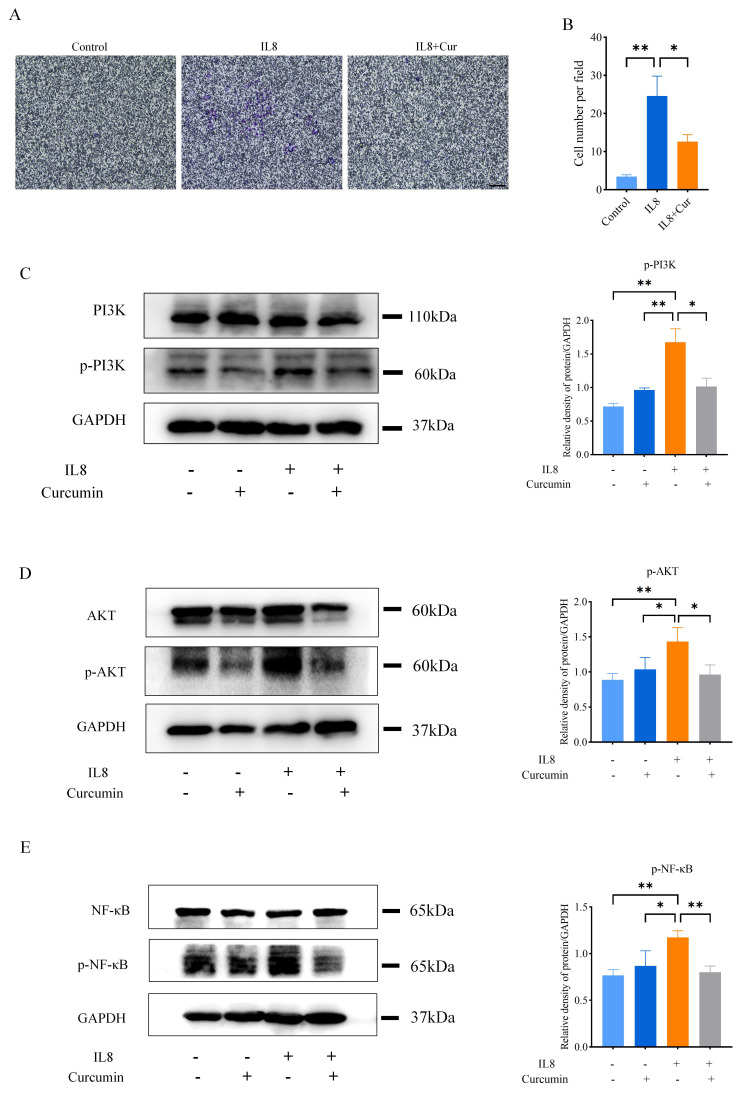
We revealed the remarkable potential of curcumin in improving inflammatory conditions in both MRL/lpr mice and R848-induced lupus mice. Curcumin effectively decelerates the progression of inflammation and diminishes the infiltration of neutrophils and their release of pivotal inflammatory factors, thereby reducing inflammation in renal tissues. Mechanistically, curcumin significantly inhibits the expression of p-PI3K, p-AKT and p-NF-κB, which are upregulated by interleukin-8 to induce neutrophil migration and renal inflammation, thereby reducing neutrophil migration and the release of inflammatory factors.
Curcumin significantly inhibits the recruitment of neutrophils and the release of proinflammatory factors in the kidney by inhibiting the PI3K/AKT/NF-κB signalling pathway, providing new therapeutic targets and medication strategies for the treatment of LN.
通过抑制中性粒细胞迁移,探讨姜黄素在狼疮肾炎(LN)治疗中的作用及其潜在机制。
腹腔注射 50mg/kg 姜黄素治疗 MRL/lpr 小鼠和 R848 诱导的狼疮小鼠模型。H&E 和 Masson 染色评估肾脏组织学变化。免疫荧光法评估免疫复合物沉积。酶联免疫吸附试验(ELISA)和实时逆转录聚合酶反应(RT-PCR)检测炎症因子表达,Western blot 检测蛋白表达。
姜黄素在 MRL/lpr 小鼠和 R848 诱导的狼疮小鼠模型中均显著改善炎症状态。姜黄素可减缓炎症进展,减少中性粒细胞浸润及其关键炎症因子的释放,减轻肾脏组织炎症。机制上,姜黄素显著抑制白细胞介素-8 上调的 p-PI3K、p-AKT 和 p-NF-κB 的表达,从而抑制中性粒细胞迁移和炎症因子释放。
姜黄素通过抑制 PI3K/AKT/NF-κB 信号通路,显著抑制肾脏中性粒细胞募集和促炎因子释放,为 LN 的治疗提供了新的治疗靶点和药物策略。