Student Scientific Group of Psychiatry, Faculty of Medicine, Wroclaw Medical University, 50-369 Wroclaw, Poland.
Department of Psychiatry, Faculty of Medicine, Wroclaw Medical University, 50-369 Wroclaw, Poland.
Nutrients. 2024 Jul 21;16(14):2366. doi: 10.3390/nu16142366.
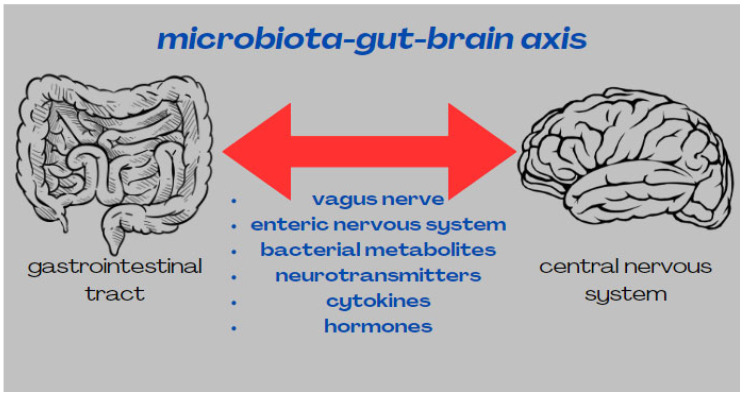
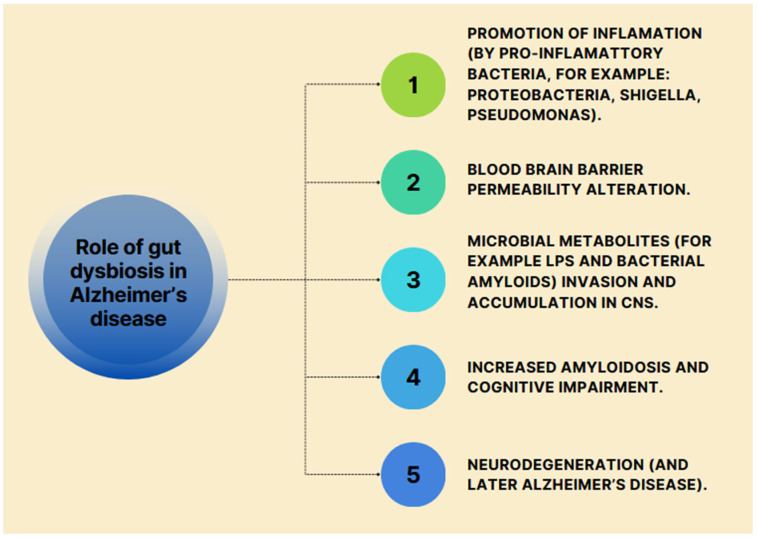
Alzheimer's disease is the most common cause of dementia globally. The pathogenesis is multifactorial and includes deposition of amyloid-β in the central nervous system, presence of intraneuronal neurofibrillary tangles and a decreased amount of synapses. It remains uncertain what causes the progression of the disease. Nowadays, it is suggested that the brain is connected to the gastrointestinal tract, especially the enteric nervous system and gut microbiome. Studies have found a positive association between AD and gastrointestinal diseases such as periodontitis, infection, inflammatory bowel disease and microbiome disorders. and its metabolites can enter the CNS via the oropharyngeal olfactory pathway and may predispose to the onset and progression of AD. Periodontitis may cause systemic inflammation of low severity with high levels of pro-inflammatory cytokines and neutrophils. Moreover, lipopolysaccharide from oral bacteria accompanies beta-amyloid in plaques that form in the brain. Increased intestinal permeability in IBS leads to neuronal inflammation from transference. Chronic inflammation may lead to beta-amyloid plaque formation in the intestinal tract that spreads to the brain via the vagus nerve. The microbiome plays an important role in many bodily functions, such as nutrient absorption and vitamin production, but it is also an important factor in the development of many diseases, including Alzheimer's disease. Both the quantity and diversity of the microbiome change significantly in patients with AD and even in people in the preclinical stage of the disease, when symptoms are not yet present. The microbiome influences the functioning of the central nervous system through, among other things, the microbiota-gut-brain axis. Given the involvement of the microbiome in the pathogenesis of AD, antibiotic therapy, probiotics and prebiotics, and faecal transplantation are being considered as possible therapeutic options.
阿尔茨海默病是全球最常见的痴呆症病因。其发病机制是多因素的,包括中枢神经系统中淀粉样β的沉积、神经元内神经纤维缠结的存在以及突触数量的减少。目前尚不清楚是什么导致了疾病的进展。如今,人们认为大脑与胃肠道相连,特别是与肠神经系统和肠道微生物组相连。研究发现,AD 与胃肠道疾病如牙周炎、感染、炎症性肠病和微生物组紊乱之间存在正相关关系。而且,其代谢物可以通过口咽嗅觉途径进入中枢神经系统,并可能导致 AD 的发病和进展。牙周炎可能导致轻度全身炎症,伴有高水平的促炎细胞因子和中性粒细胞。此外,口腔细菌的脂多糖伴随β-淀粉样蛋白形成斑块,在大脑中形成斑块。IBS 中的肠道通透性增加导致神经元炎症从转移。慢性炎症可能导致肠道中β-淀粉样斑块形成,通过迷走神经传播到大脑。微生物组在许多身体功能中发挥着重要作用,如营养吸收和维生素生产,但它也是许多疾病发展的重要因素,包括阿尔茨海默病。AD 患者甚至在疾病的临床前阶段(即症状尚未出现时),其微生物组的数量和多样性都发生了显著变化。微生物组通过微生物群-肠道-大脑轴等途径影响中枢神经系统的功能。鉴于微生物组参与 AD 的发病机制,抗生素治疗、益生菌和益生元以及粪便移植正在被考虑作为可能的治疗选择。