Santana Tamires M, Caria Sarah J, Carlini Giovanna C G, Rogero Marcelo M, Donato José, Tavares Mariana R, Castro Inar A
LADAF. Department of Food and Experimental Nutrition, Faculty of Pharmaceutical Sciences, University of São Paulo, Av. Lineu Prestes, 580, B14, São Paulo 05508-900, Brazil.
Food Research Center (FoRC), CEPID-FAPESP, Research Innovation and Dissemination Centers São Paulo Research Foundation, Av. Lineu Prestes, 580, B14, São Paulo 05508-900, Brazil.
J Clin Biochem Nutr. 2024 Jul;75(1):40-45. doi: 10.3164/jcbn.23-124. Epub 2024 Apr 27.
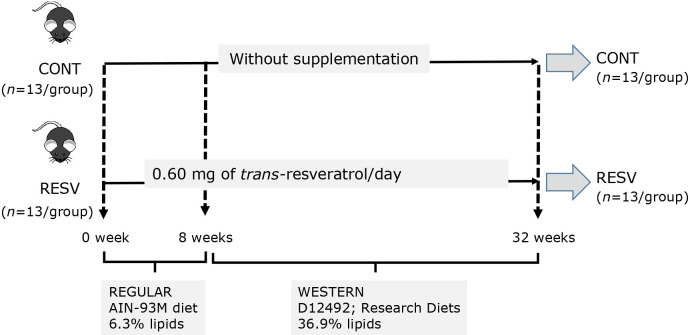
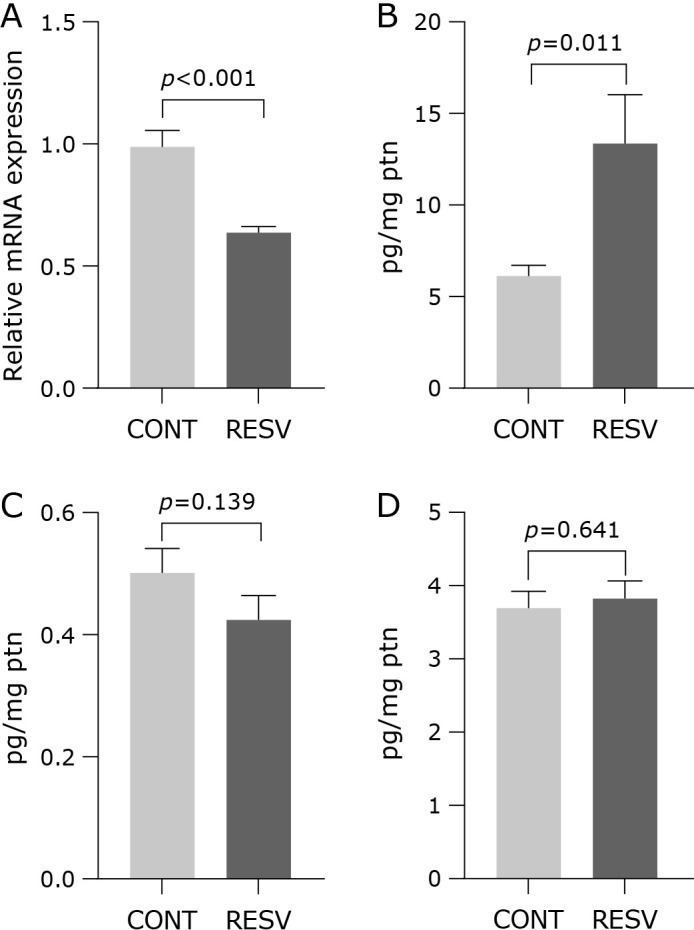
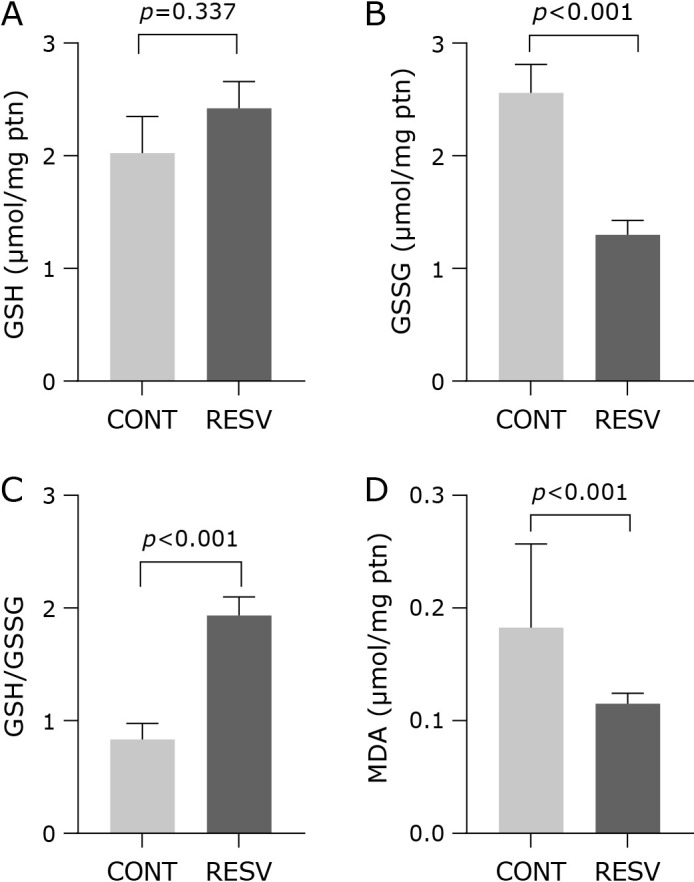
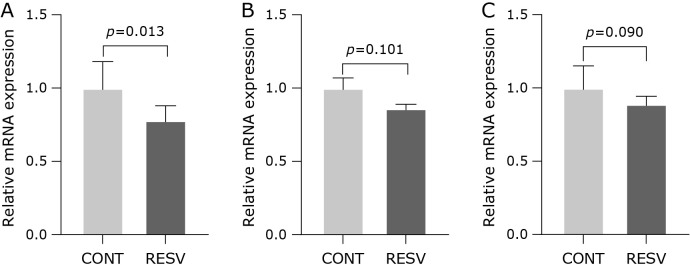
-resveratrol, a widely used supplement for humans, aims to enhance the body's antioxidant defense. Studies suggest that it exerts anti-inflammatory and antioxidant effects by activating the nuclear factor erythroid 2-related factor 2 (Nrf2). In order to evaluate this hypothesis, LDLr mice were fed a Western diet to induce liver inflammation and oxidative stress. One group was fed a diet containing 0.60 mg/day of -resveratrol (RESV), while another group received no dietary supplementation (CONT). Oxidative stress biomarkers and inflammatory cytokines were assessed in liver homogenates. It was observed that -resveratrol decreased hepatic oxidative stress by increasing the GSH/GSSG ratio and reducing malondialdehyde (MDA) concentration. However, the RESV group exhibited a reduction in Nrf2 relative expression compared to CONT. Additionally, -resveratrol supplementation reduced nuclear factor-κB (NF-κB) expression but led to an increase in IL-6, with no significant changes observed in tumor necrosis factor-α (TNF-α) and interleukin-10 (IL-10) concentrations. Overall, these findings indicate that the antioxidant impact induced by -resveratrol supplementation in hepatic tissue did not correlate with increase of inflammatory cytokines and Nrf2 relative expression. Further exploration of alternative mechanisms, such as direct radical scavenger activity, is warranted to elucidate the antioxidant effect.
白藜芦醇是一种广泛应用于人类的补充剂,旨在增强人体的抗氧化防御能力。研究表明,它通过激活核因子红细胞2相关因子2(Nrf2)发挥抗炎和抗氧化作用。为了评估这一假设,给低密度脂蛋白受体(LDLr)基因敲除小鼠喂食西式饮食以诱导肝脏炎症和氧化应激。一组喂食含有0.60毫克/天白藜芦醇(RESV)的饮食,而另一组不进行饮食补充(CONT)。在肝脏匀浆中评估氧化应激生物标志物和炎性细胞因子。观察到白藜芦醇通过提高谷胱甘肽/氧化型谷胱甘肽(GSH/GSSG)比值和降低丙二醛(MDA)浓度来降低肝脏氧化应激。然而,与CONT组相比,RESV组的Nrf2相对表达有所降低。此外,补充白藜芦醇可降低核因子κB(NF-κB)表达,但导致白细胞介素-6(IL-6)增加,肿瘤坏死因子-α(TNF-α)和白细胞介素-10(IL-10)浓度未观察到显著变化。总体而言,这些发现表明,补充白藜芦醇在肝脏组织中诱导的抗氧化作用与炎性细胞因子增加和Nrf2相对表达无关。有必要进一步探索其他机制,如直接的自由基清除活性,以阐明其抗氧化作用。