Yarmand Sazin, Rashidkhani Bahram, Alimohammadi Arezoo, Shateri Zainab, Shakeri Mahboobeh, Sohrabi Zahra, Nouri Mehran
Department of Community Nutrition, School of Nutrition and Food Sciences, Shiraz University of Medical Sciences, Shiraz, Iran.
Department of Community Nutrition, Faculty of Nutrition and Food Technology, National Nutrition and Food Technology Research Institute, Shahid Beheshti University of Medical Sciences, Tehran, Iran.
J Health Popul Nutr. 2024 Jul 31;43(1):111. doi: 10.1186/s41043-024-00605-4.
The benefit of adherence to a plant-based diet concerning colorectal cancer (CRC) has not been investigated among Middle Eastern population. This study aimed to investigate how adherence to a plant-based diet influences the risk of CRC in this understudied population.
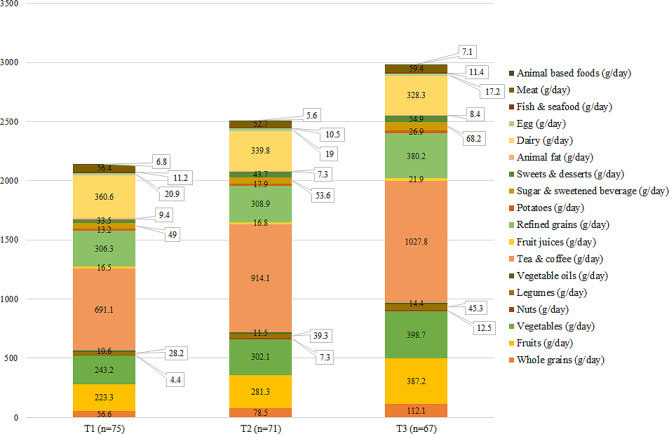
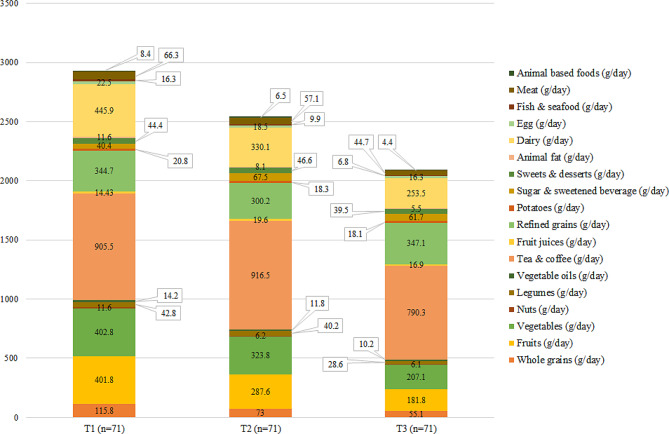
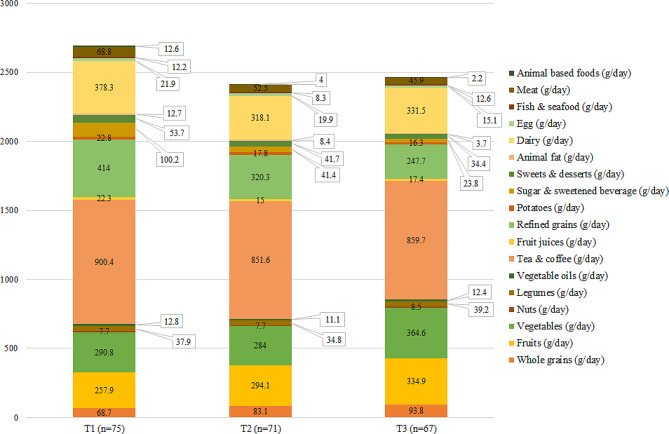
This case-control study was conducted in the CRC surgery departments of general hospitals in Tehran, Iran. A total of 71 individuals with newly diagnosed CRC (cases) and 142 controls subjects free of cancer and acute illness were concurrently recruited from the same hospital. Dietary information was collected using a semi-quantitative 168-item food frequency questionnaire. Dietary patterns were characterized using the plant-based diet index (PDI), unhealthy plant-based diet index (uPDI) and healthy plant-based diet index (hPDI). Multivariate logistic regression was employed to assess the association between these dietary patterns and the risk of CRC.
After adjusting the potential confounders, the risk of CRC was significantly lower in the highest tertile of hPDI compared to the lowest tertile (odds ratio (OR) = 0.21; 95% confidence interval (CI): 0.07-0.56, representing 79% risk reduction). Conversely, the risk of CRC was significantly higher in the highest tertile of uPDI compared to the lowest tertile (OR = 6.76; 95% CI: 2.41-18.94). PDI was no significant associated with the risk of CRC.
This study found that higher scores on the hPDI was significantly associated with a decrease risk of CRC, while greater adherence to the uPDI contributed to a significantly increase risk.
在中东人群中,尚未对坚持以植物为基础的饮食对结直肠癌(CRC)的益处进行研究。本研究旨在调查在这个研究较少的人群中,坚持以植物为基础的饮食如何影响患CRC的风险。
本病例对照研究在伊朗德黑兰综合医院的CRC外科进行。从同一家医院同时招募了71名新诊断为CRC的患者(病例组)和142名无癌症及急性疾病的对照受试者。使用半定量的168项食物频率问卷收集饮食信息。使用植物性饮食指数(PDI)、不健康植物性饮食指数(uPDI)和健康植物性饮食指数(hPDI)来描述饮食模式。采用多因素逻辑回归评估这些饮食模式与CRC风险之间的关联。
在调整潜在混杂因素后,与最低三分位数相比,hPDI最高三分位数的CRC风险显著降低(优势比(OR)=0.21;95%置信区间(CI):0.07 - 0.56,代表风险降低79%)。相反,与最低三分位数相比,uPDI最高三分位数的CRC风险显著更高(OR = 6.76;95% CI:2.41 - 18.94)。PDI与CRC风险无显著关联。
本研究发现,hPDI得分较高与CRC风险降低显著相关,而对uPDI的更高坚持则导致风险显著增加。