Division of Biomedical Sciences, School of Medicine, University of California, Riverside, Riverside, CA, USA.
College of Medicine, Howard University, Washington, D.C., USA.
J Neuroinflammation. 2024 Aug 2;21(1):189. doi: 10.1186/s12974-024-03176-7.
Infection with the protozoan parasite Toxoplasma gondii leads to the formation of lifelong cysts in neurons that can have devastating consequences in the immunocompromised. In the immunocompetent individual, anti-parasitic effector mechanisms and a balanced immune response characterized by pro- and anti-inflammatory cytokine production establishes an asymptomatic infection that rarely leads to neurological symptoms. Several mechanisms are known to play a role in this successful immune response in the brain including T cell production of IFNγ and IL-10 and the involvement of CNS resident cells. This limitation of clinical neuropathology during chronic infection suggests a balance between immune response and neuroprotective mechanisms that collectively prevent clinical manifestations of disease. However, how these two vital mechanisms of protection interact during chronic Toxoplasma infection remains poorly understood.
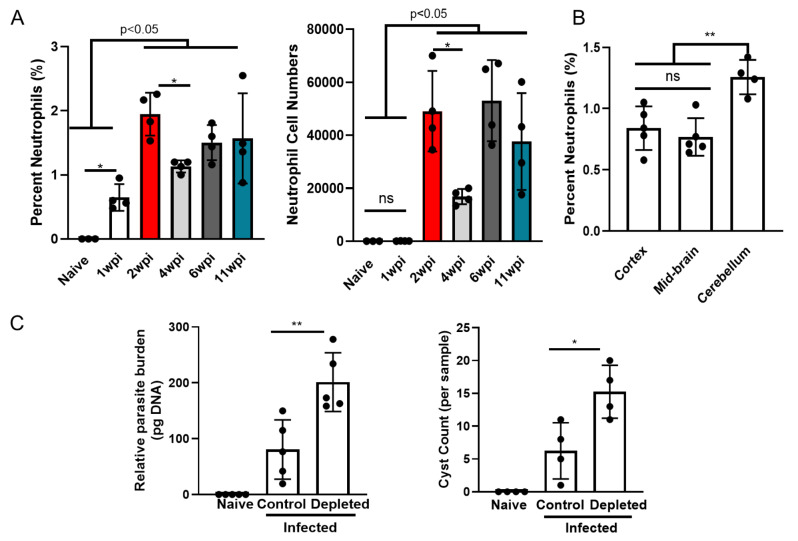
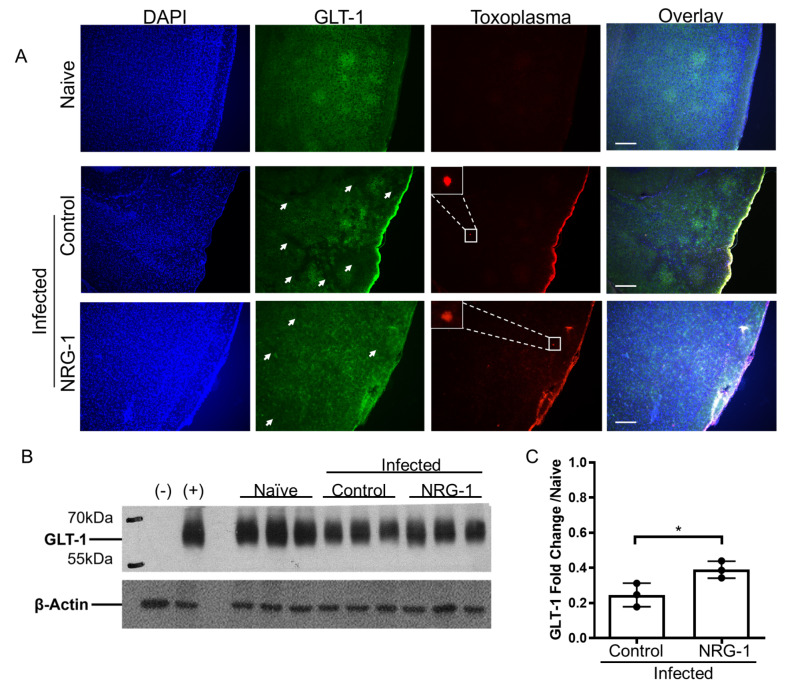
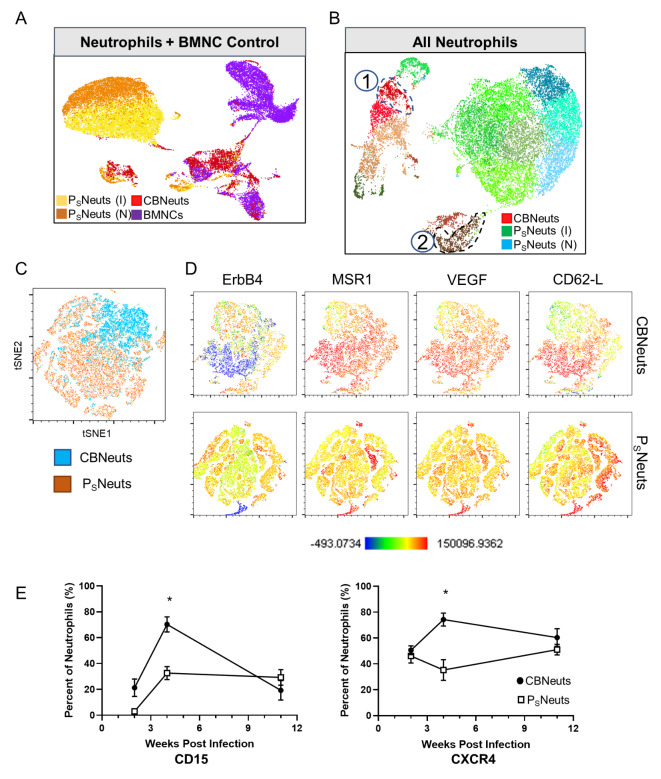
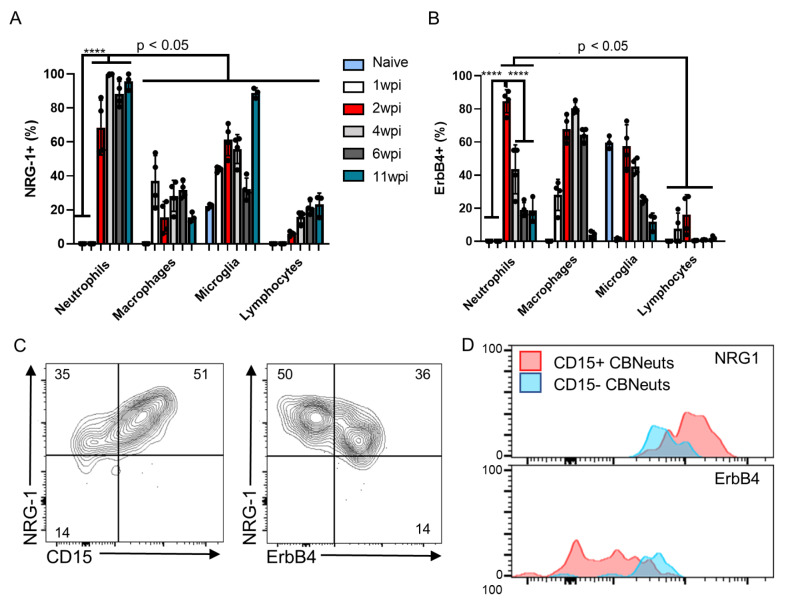
This study demonstrates a previously undescribed connection between innate neutrophils found chronically in the brain, termed "chronic brain neutrophils" (CBNeuts), and neuroprotective mechanisms during Toxoplasma infection. Lack of CBNeuts during chronic infection, accomplished via systemic neutrophil depletion, led to enhanced infection and deleterious effects on neuronal regeneration and repair mechanisms in the brain. Phenotypic and transcriptomic analysis of CBNeuts identified them as distinct from peripheral neutrophils and revealed two main subsets of CBNeuts that display heterogeneity towards both classical effector and neuroprotective functions in an age-dependent manner. Further phenotypic profiling defined expression of the neuroprotective molecules NRG-1 andErbB4 by these cells, and the importance of this signaling pathway during chronic infection was demonstrated via NRG-1 treatment studies.
In conclusion, this work identifies CBNeuts as a heterogenous population geared towards both classical immune responses and neuroprotection during chronic Toxoplasma infection and provides the foundation for future mechanistic studies of these cells.
刚地弓形虫感染会导致神经元内形成终生囊肿,如果宿主免疫功能低下,可能会产生灾难性后果。在免疫功能正常的个体中,抗寄生虫效应机制和以产生促炎和抗炎细胞因子为特征的平衡免疫反应会建立一种无症状感染,很少导致神经症状。已知几种机制在大脑中的这种成功免疫反应中发挥作用,包括 T 细胞产生 IFNγ 和 IL-10 以及中枢神经系统固有细胞的参与。慢性感染期间临床神经病理学的这种局限性表明,免疫反应和神经保护机制之间存在平衡,共同防止疾病的临床表现。然而,在慢性弓形虫感染期间,这两种重要的保护机制如何相互作用仍知之甚少。
本研究表明,在慢性感染期间,先天中性粒细胞(称为“慢性脑中性粒细胞”(CBNeuts))与神经保护机制之间存在以前未描述的联系。通过系统中性粒细胞耗竭在慢性感染中缺乏 CBNeuts 会导致感染增强,并对大脑中的神经元再生和修复机制产生有害影响。CBNeuts 的表型和转录组分析将其鉴定为与外周中性粒细胞不同,并揭示了两种主要的 CBNeuts 亚群,它们以依赖年龄的方式表现出对经典效应器和神经保护功能的异质性。进一步的表型分析定义了这些细胞表达神经保护分子 NRG-1 和 ErbB4,并通过 NRG-1 治疗研究证明了该信号通路在慢性感染期间的重要性。
总之,这项工作确定了 CBNeuts 是一种异质群体,在慢性弓形虫感染期间既针对经典免疫反应,也针对神经保护,并为这些细胞的未来机制研究奠定了基础。