Department of Obstetrics and Gynaecology, Erasmus MC, University Medical Centre Rotterdam, Rotterdam, The Netherlands.
Dutch Research Institute for Transitions, Erasmus University Rotterdam, Rotterdam, The Netherlands.
Int J Health Policy Manag. 2024;13:8115. doi: 10.34172/ijhpm.8115. Epub 2024 Jul 9.
Addressing perinatal health inequities is the joint responsibility of professionals working for local governments, the medical, social, and public health sector. Cross-sectoral collaboration between these professionals is challenging. For such collaborations to succeed, a transition, ie, a fundamental shift in the dominant structure, culture, and practices at the systems level, is necessary. We investigated facilitators and barriers for cross-sectoral collaborations, when addressing perinatal health inequities in the Netherlands. Additionally, we studied how cross-sectoral collaborations can be facilitated by action research.
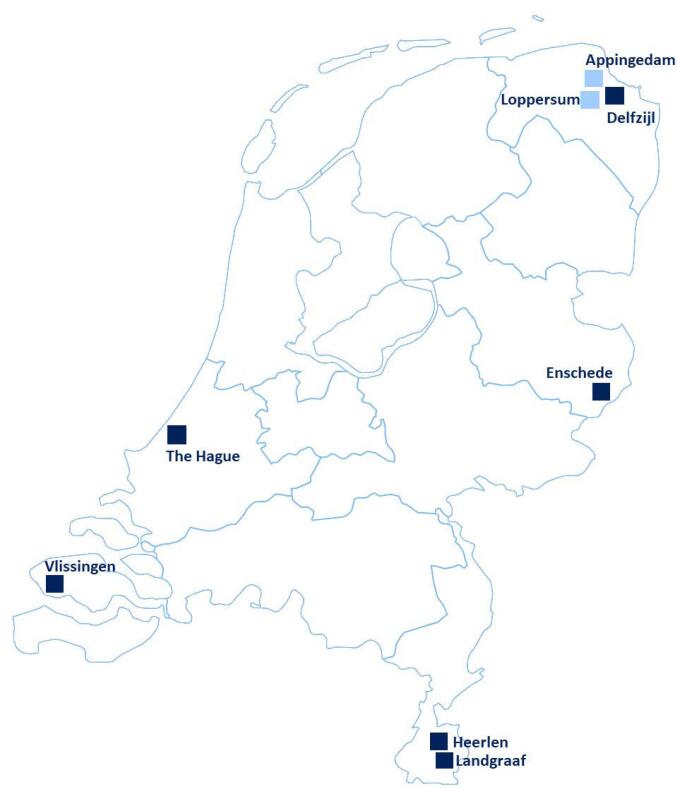
We used interview and questionnaire data of the Healthy Pregnancy 4 All-3 (HP4All-3) program, which resulted from action research in six Dutch municipalities. All interviews were coded using open codes related to facilitators and barriers for cross-sectoral collaboration and categorized into three subgroups: structural, cultural, or practical. The answers to the questionnaire were analyzed and summarized quantitatively.
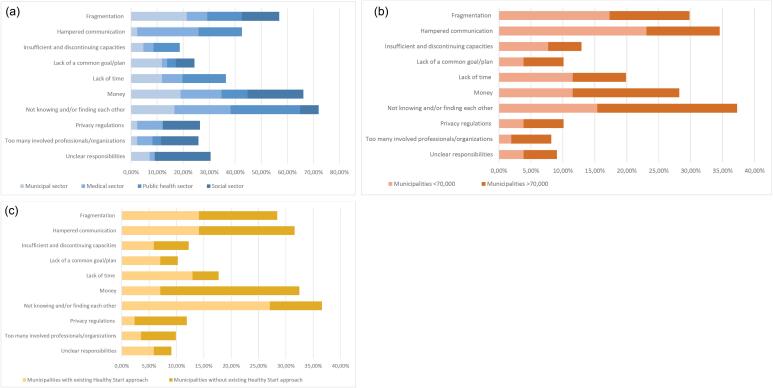
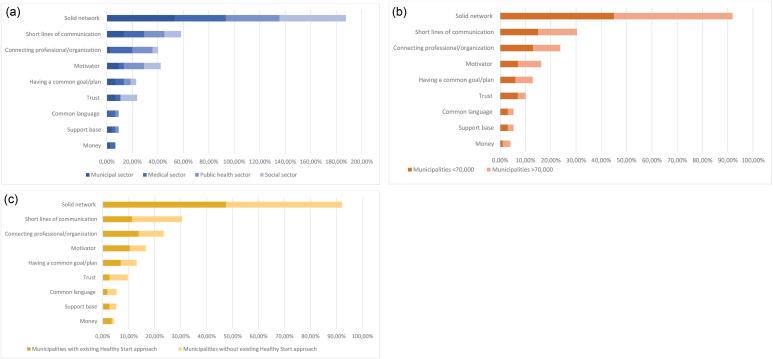
We conducted 53 interviews with a total of 81 professionals. The most important ingredients for cross-sectoral collaborations mentioned by the interviewees were: (1) structural: having a solid network with a clear overview of professionals working in the different sectors, (2) cultural: having a joint vision/goal, and (3) practical: short lines of communication and timely sharing of information. A total of 85 professionals filled in (parts of) the questionnaire. Two-thirds to over 80 percent replied that the HP4All-3 program had an added value in building cross-sectoral collaborations.
Our research shows that cross-sectoral collaborations in the context of perinatal health are hampered by structural, cultural, and practical barriers. Analyzing facilitators and barriers at these three levels helps to identify bottlenecks in cross-sectoral collaboration. Action researchers can be of great advantage in facilitating collaboration, as they can offer an open setting for reflection and instigate a sense of urgency for building collaborations.
解决围产期健康不平等问题是地方政府、医疗、社会和公共卫生部门专业人员的共同责任。这些专业人员之间的跨部门合作具有挑战性。为了使这种合作取得成功,需要进行转型,即在系统层面上从根本上改变主导结构、文化和实践。我们调查了在荷兰解决围产期健康不平等问题时,跨部门合作的促进因素和障碍。此外,我们还研究了行动研究如何促进跨部门合作。
我们使用了 Healthy Pregnancy 4 All-3 (HP4All-3) 计划的访谈和问卷调查数据,该计划是在荷兰六个市的行动研究的结果。所有访谈均使用与跨部门合作的促进因素和障碍相关的开放代码进行编码,并分为结构、文化或实践三个亚组。对问卷的回答进行了分析和总结。
我们对总共 81 名专业人员进行了 53 次访谈。受访者提到的跨部门合作的最重要因素包括:(1)结构:拥有一个稳固的网络,清楚地了解在不同部门工作的专业人员;(2)文化:拥有共同的愿景/目标;(3)实践:沟通渠道简短,及时共享信息。共有 85 名专业人员填写了(部分)问卷。三分之二到超过 80%的人回答说,HP4All-3 计划在建立跨部门合作方面具有附加值。
我们的研究表明,围产期健康背景下的跨部门合作受到结构、文化和实践障碍的阻碍。分析这三个层面的促进因素和障碍有助于确定跨部门合作的瓶颈。行动研究人员在促进合作方面具有很大的优势,因为他们可以提供一个开放的反思环境,并促使建立合作的紧迫感。