Fortuna Gliceida Galarza, Chigarira Beverly, Thomas Vinay Mathew, Sahu Kamal Kant, Kumar Shruti Adidam, Tripathi Nishita, Sayegh Nicolas, Agarwal Neeraj, Swami Umang, Maughan Benjamin L, Li Haoran
Division of Medical Oncology, Department of Internal Medicine, Huntsman Cancer Institute, University of Utah, Salt Lake City, UT, USA.
Division of Medical Oncology, Department of Internal Medicine, The University of Kansas Hospital, KC, KS, USA.
J Kidney Cancer VHL. 2024 Jul 31;11(3):13-22. doi: 10.15586/jkcvhl.v11i3.319. eCollection 2024.
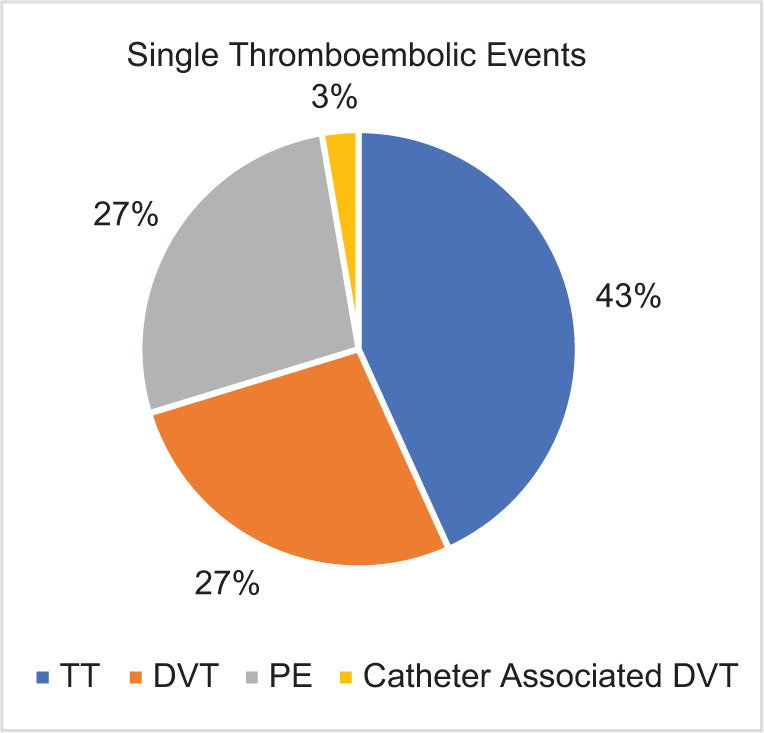
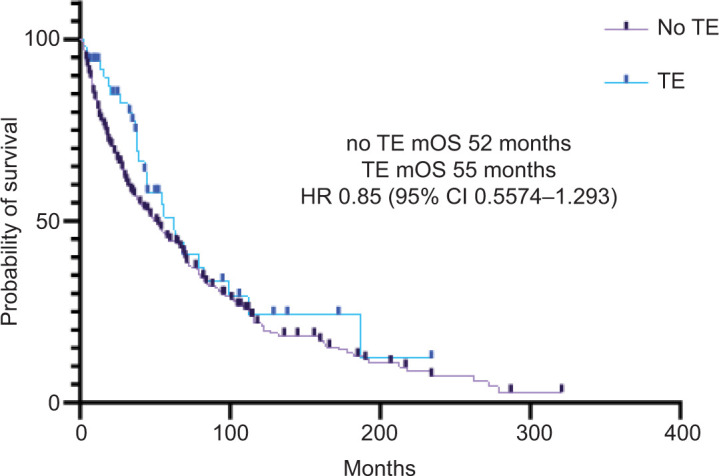
Thromboembolic events (TE) are a common complication in patients with metastatic renal cell carcinoma (mRCC) and are associated with poorer clinical outcomes. However, the incidence of TE and clinical and genomic characteristics of patients with mRCC who develop this complication are poorly understood. Herein, we describe the incidence and clinical features of patients with mRCC with or without TE at our institution, and examine their association with the underlying genomic and transcriptomic characteristics of the tumor. This retrospective study included all consecutive cases of mRCC seen at our institution. A CLIA-certified lab performed tumor genomics and transcriptomics. Patients were classified based on the presence of a TE within the first year of diagnosis. Three hundred and seventy patients with mRCC were included in the study. TE was seen in 11% (42) of the patients. Patients with favorable International mRCC Database Consortium (IMDC) risk were less likely to develop a TE. In contrast, patients receiving combination treatment with a tyrosine kinase inhibitor (TKI) and an immune checkpoint inhibitor were more likely to develop a TE. No difference in overall survival among patients with or without TE was observed (52 vs. 55 months; HR 0.85, 95% CI 0.5574-1.293, p = 0.24). The most upregulated pathways in mRCC with TEs versus those without were the xenobiotic metabolism and mTORC1 signaling pathways. Our findings suggest potential biomarkers that, after external validation, could be used to better select patients who would benefit from prophylactic anticoagulation.
血栓栓塞事件(TE)是转移性肾细胞癌(mRCC)患者的常见并发症,且与较差的临床结局相关。然而,TE的发生率以及发生该并发症的mRCC患者的临床和基因组特征尚不清楚。在此,我们描述了我院有或无TE的mRCC患者的发生率和临床特征,并研究了它们与肿瘤潜在基因组和转录组特征的关联。这项回顾性研究纳入了我院所有连续的mRCC病例。一家经CLIA认证的实验室进行了肿瘤基因组学和转录组学分析。根据诊断后第一年内是否存在TE对患者进行分类。370例mRCC患者纳入研究。11%(42例)的患者出现TE。国际mRCC数据库联盟(IMDC)风险良好的患者发生TE的可能性较小。相比之下,接受酪氨酸激酶抑制剂(TKI)和免疫检查点抑制剂联合治疗的患者发生TE的可能性更大。有或无TE的患者总生存期无差异(52个月对55个月;HR 0.85,95%CI 0.5574 - 1.293,p = 0.24)。与无TE的mRCC相比,有TE的mRCC中上调最明显的通路是外源性物质代谢和mTORC1信号通路。我们的研究结果提示了潜在的生物标志物,经外部验证后,可用于更好地选择能从预防性抗凝治疗中获益的患者。