Ekemezie Chinenye L, Melnikov Sergey V
Biosciences Institute, Newcastle University, Newcastle upon Tyne, United Kingdom.
Medical School of Newcastle University, Newcastle upon Tyne, United Kingdom.
Front Microbiol. 2024 Jul 29;15:1436579. doi: 10.3389/fmicb.2024.1436579. eCollection 2024.
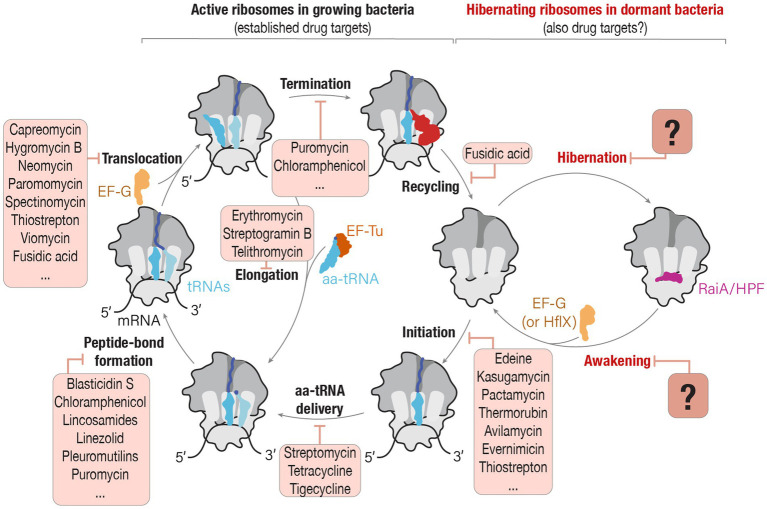
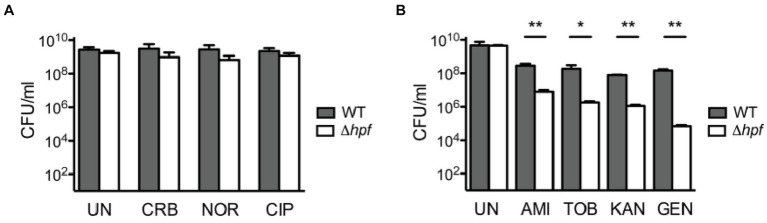
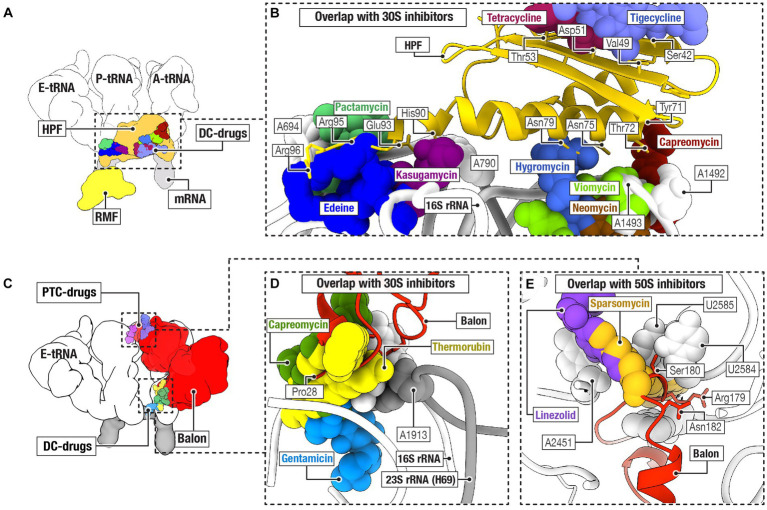
When ribosome-targeting antibiotics attack actively growing bacteria, they occupy ribosomal active centers, causing the ribosomes to stall or make errors that either halt cellular growth or cause bacterial death. However, emerging research indicates that bacterial ribosomes spend a considerable amount of time in an inactive state known as ribosome hibernation, in which they dissociate from their substrates and bind to specialized proteins called ribosome hibernation factors. Since 60% of microbial biomass exists in a dormant state at any given time, these hibernation factors are likely the most common partners of ribosomes in bacterial cells. Furthermore, some hibernation factors occupy ribosomal drug-binding sites - leading to the question of how ribosome hibernation influences antibiotic efficacy, and vice versa. In this review, we summarize the current state of knowledge on physical and functional interactions between hibernation factors and ribosome-targeting antibiotics and explore the possibility of using antibiotics to target not only active but also hibernating ribosomes. Because ribosome hibernation empowers bacteria to withstand harsh conditions such as starvation, stress, and host immunity, this line of research holds promise for medicine, agriculture, and biotechnology: by learning to regulate ribosome hibernation, we could enhance our capacity to manage the survival of microorganisms in dormancy.
当靶向核糖体的抗生素攻击活跃生长的细菌时,它们会占据核糖体的活性中心,导致核糖体停滞或产生错误,从而使细胞生长停止或导致细菌死亡。然而,新出现的研究表明,细菌核糖体在一种称为核糖体休眠的非活性状态下会花费大量时间,在这种状态下,它们会与底物解离并与称为核糖体休眠因子的特殊蛋白质结合。由于在任何给定时间,60%的微生物生物量处于休眠状态,这些休眠因子可能是细菌细胞中核糖体最常见的伙伴。此外,一些休眠因子占据核糖体药物结合位点——这就引发了一个问题,即核糖体休眠如何影响抗生素疗效,反之亦然。在这篇综述中,我们总结了关于休眠因子与靶向核糖体的抗生素之间物理和功能相互作用的当前知识状态,并探讨了使用抗生素不仅靶向活性核糖体而且靶向休眠核糖体的可能性。由于核糖体休眠使细菌能够抵御饥饿、应激和宿主免疫等恶劣条件,这一研究领域在医学、农业和生物技术方面具有前景:通过学会调节核糖体休眠,我们可以提高管理处于休眠状态的微生物生存的能力。